

Has this ever happened to you? It’s one of those weeks with a thousand things to handle, errands at the bank, a pediatrician appointment, a report due on a tight deadline, and, with so much going on, you get home at night and realize you forgot to thaw the chicken. You open the freezer and there it is, hard as a rock, exactly where it was this morning. That’s when you start wondering how to thaw chicken without taking any risks, because dinner still has to get made.
The short answer: the safest way is in the fridge, a day ahead. If you forgot, cold water and the microwave also work, as long as the chicken goes into the pan right after. The counter, the sink and hot water are out. I pulled together what the U.S. Department of Agriculture’s Food Safety and Inspection Service (FSIS/USDA) recommends, with how long each method takes, so you can choose based on the time you actually have today.
It’s the same logic as the article on how to thaw meat the right way, except chicken calls for two extra precautions: don’t rinse the raw chicken, and cook it all the way through.
How to thaw chicken in the fridge: the safest way if you can plan ahead
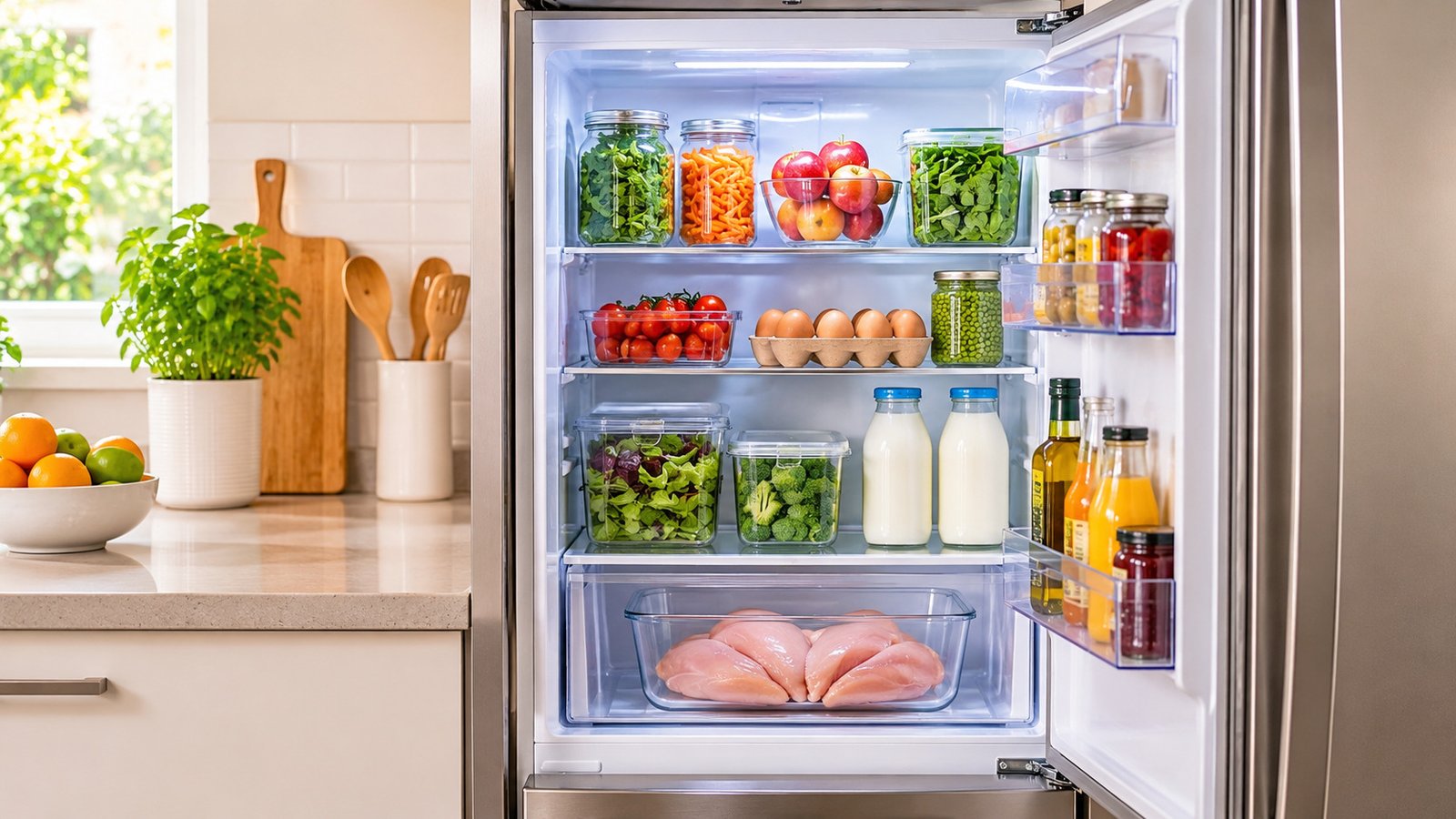
When it comes to thawing chicken safely, the FSIS guide to safe defrosting says it’s best to plan ahead and thaw in the refrigerator, kept at 40 °F (4 °C) or below. It’s also the only method where the chicken can wait calmly after it has thawed. The steps are short:
- Take the chicken out of the freezer and leave it in its sealed package.
- Set it in a deep dish or a container, because the juice that drips from raw chicken can’t drip onto anything else.
- Keep it on the bottom shelf, below anything that’s ready to eat.
- When it’s time to cook, pour out the liquid in the dish and wash the container with hot, soapy water.
What matters most here is time. According to the FSIS page on chicken from farm to table, boneless breasts, bone-in parts and whole chickens may take 1 to 2 days or longer to thaw in the fridge. Even a small amount, like a pound of boneless chicken breasts, needs a full day. So, in practice, the chicken for tomorrow’s dinner comes out of the freezer tonight, and the whole chicken for Sunday dinner comes out on Friday.
The upside is that, once thawed in the fridge, it keeps another day or two before cooking, according to the same agency. If dinner plans change, you still have time to use it.
Forgot to take it out? How to defrost chicken fast
For the days when you forget, FSIS accepts two more ways to defrost chicken fast, with one condition that applies to both: once it’s thawed, you cook it.
In cold water, in a tightly sealed bag
Put the chicken in a leak-proof bag, press out the air and submerge it in a bowl or in the sink filled with cold tap water. Change the water every 30 minutes so it stays cold. If the bag leaks, the meat gets waterlogged and can still pick up whatever is in the sink, so, when in doubt, use one bag inside another.
By FSIS’s numbers, a 1-pound package of boneless breasts thaws in an hour or less. A whole 3- to 4-pound chicken, or a package of parts that size, takes 2 to 3 hours. In other words, it saves the lunch you remembered first thing in the morning, but not the dinner you remembered at the last minute.
In the microwave, to cook right away
It’s the fastest method and also the one that needs the most attention. Take the chicken off the foam tray, put it in a microwave-safe dish and use the defrost setting, with the weight and power level your microwave’s manual recommends. Every so often, stop and turn the pieces so the heat reaches them evenly.
There’s a reason for the extra care. The same FSIS defrosting guide explains that some areas of the food may become warm and begin to cook during thawing, and that warm part ends up in the “Danger Zone,” between 40 and 140 °F (4 and 60 °C), where bacteria multiply rapidly. So no defrosting at 5 p.m. to cook at 7: once it comes out of the microwave, it goes into the pan, the oven or the air fryer.
In real life, things come up, and you may not be able to give the chicken your full attention at the stove. In that case, cook it any way you can, even if it ends up as shredded chicken for tomorrow, but don’t leave a half-warm piece sitting around waiting.
Thawed? Don’t rinse it, and cook it all the way through
A lot of us learned to rinse raw chicken in the sink before seasoning it (and let’s be honest, it’s almost a family tradition). But FSIS does not recommend washing raw poultry, because bacteria can splash onto the sink, the counters, the utensils and other food. The same agency points out that cooking to the right temperature is what kills the germs on chicken.
So the move is straight from the bag to the cutting board or the dish you season in. Use one cutting board just for raw meat and, before touching anything else, wash your hands, the knife and the board with soap and water.
Then comes the step that matters most with chicken, which is cooking. FSIS sets a safe minimum internal temperature of 165 °F (74 °C), measured with a food thermometer in the thickest part of the breast and the innermost part of the thigh and wing.
If you don’t have a food thermometer, it’s worth considering one, because it settles the question once and for all, especially with thick pieces and whole chickens.
No time at all: can you cook frozen chicken?
Yes, and FSIS says it’s safe, as long as it’s in the oven or on the stove. Cooking time goes up by about 50%, so a piece that would take 40 minutes in the oven ends up taking about an hour.
The same guidance has two exceptions: don’t use a slow cooker or the microwave to cook chicken that’s still frozen. In those two cases, the agency says to thaw it first.
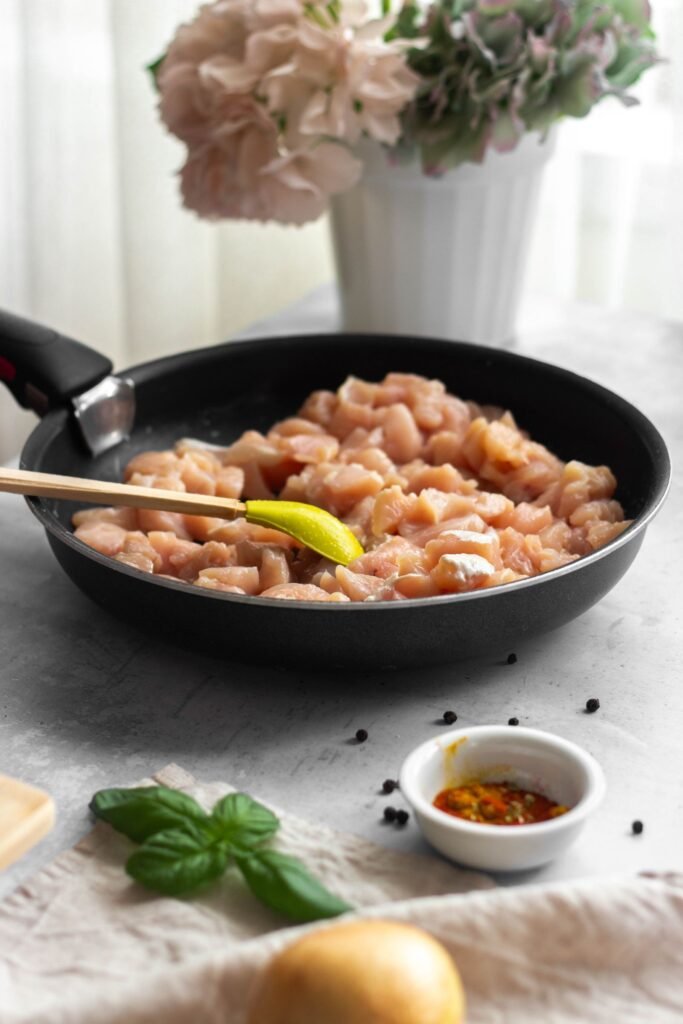
In practice, cooking from frozen works best with separate pieces, like thighs, wings or thin cutlets, which heat evenly. If the chicken froze into one stuck-together block, separate the pieces as soon as they loosen in the pan, so the heat reaches all of them. And the thermometer matters twice as much here, because it’s easy for chicken to brown on the outside and stay raw in the middle.
And if even that doesn’t fit into your day, change the menu without guilt. Move the chicken to the fridge so it becomes tomorrow’s dinner, and tonight make one of the quick and easy dinner recipes here on the blog.
How long does thawed chicken last? And can it go back in the freezer?
Thawed in the fridge, it lasts another day or two, as I mentioned above. Thawed in cold water or in the microwave, the clock runs out right away.
As for refreezing, FSIS says chicken thawed in the refrigerator can be refrozen raw, while chicken thawed in cold water or in the microwave should be cooked before it goes back in the freezer. At home, the simplest path is to thaw only the portion for one meal. If you end up with leftover cooked chicken, then it can go in the freezer.
All of this gets easier when chicken goes into the freezer already split into flat portions, one per meal, which tend to thaw faster than a thick block. With your weekly meal plan set, taking the chicken out of the freezer becomes one more item on the night-before list. And writing the date on the bag helps you use up whatever has been in there longest, the same idea behind a FIFO pantry.
What to do tonight
If tomorrow’s chicken is still in the freezer, move it to the fridge now, in a deep dish on the bottom shelf. Forgot? Cold water or the microwave, and straight into the pan. However you thaw it, the final rule is the same: no rinsing, and 165 °F (74 °C) in the center.
This content is for informational purposes only and does not replace advice from a registered dietitian or other health professional.