
You are packing for Brazil and the question pops up: can I drink the water from the hotel tap? And what about the ice in that caipirinha? It is a fair question, because in Brazil’s big cities the water leaves the plant treated, yet almost nobody drinks it straight from the tap.
The short answer: in São Paulo, Rio and the other state capitals, tap water in Brazil comes out of the treatment plant meeting the Ministry of Health’s drinking water standard, so technically it is safe. Even so, Brazilians filter it before drinking, and the sensible move for a traveler is to do the same: drink bottled or filtered water and use tap water for showering and brushing your teeth. In the countryside, rural areas and the Amazon, do not drink it unless it has been filtered or boiled.
Is tap water in Brazil safe to drink?
On paper, yes. Treated water has to meet Ordinance GM/MS No. 888/2021 (in Portuguese), which sets what water may and may not contain to be fit for drinking. The weak spot is the journey: between the plant and your glass, the water travels through miles of pipes and sits in the building’s or hotel’s water tank, where it can pick up rust, sediment or an odd taste.
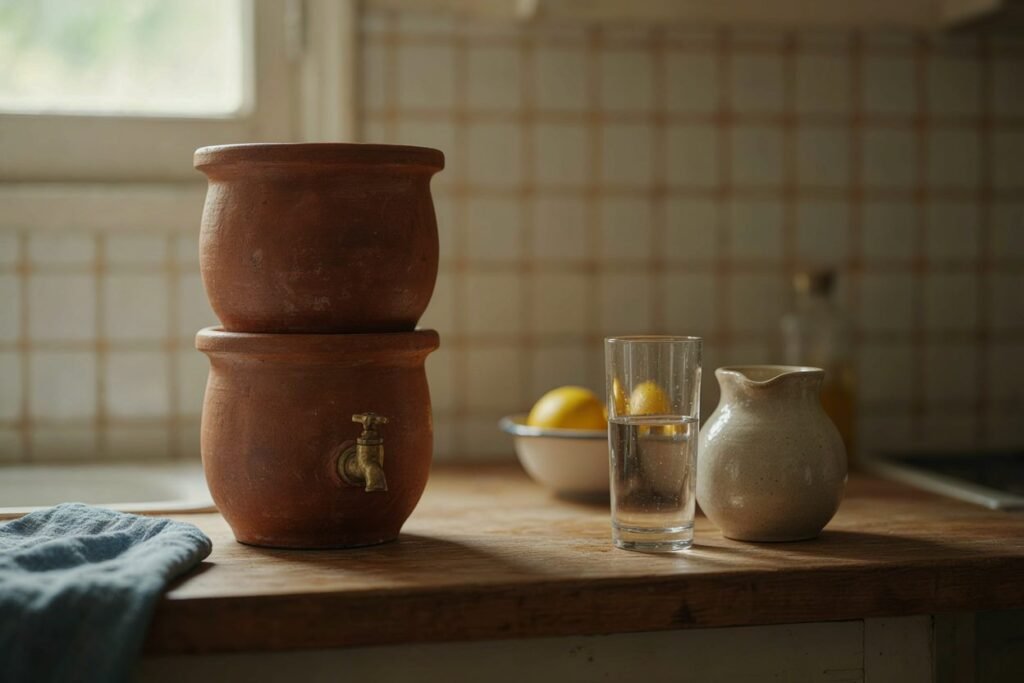
That is why drinking water in Brazilian homes almost always goes through a filter first, and you will often see a faucet filter or the classic clay filter in the kitchen.
It is worth adding here what Brazilians themselves think about the water. Speaking as a Brazilian, I can tell you that, almost unanimously, we prefer to buy bottled mineral water rather than drink straight from the tap, even when the water company’s reports say the water is safe to drink. If even the locals hesitate, it is wise for you to skip tap water too. And if you are planning a longer stay, consider buying a faucet-mounted water filter: it removes the chlorine smell and, depending on the model, also traps heavy metals that may be dissolved in the water, so check what the packaging says.
What to do during your trip
At the hotel. Ask at the front desk whether the water in your room is filtered. If it is not, or if you are unsure, buy mineral water for drinking and use the tap only for showering and brushing your teeth.
In restaurants and bars. To order bottled water, ask for “água mineral sem gás” (still) or “com gás” (sparkling). If you are curious about the second one, here is whether sparkling water is bad for you.
Ice. Ice is only as safe as the water it was made from. If you do not know where it came from, especially at beach stalls or improvised parties, order your drink “sem gelo” (no ice). At the supermarket, sealed, branded bags of ice are the safest choice.
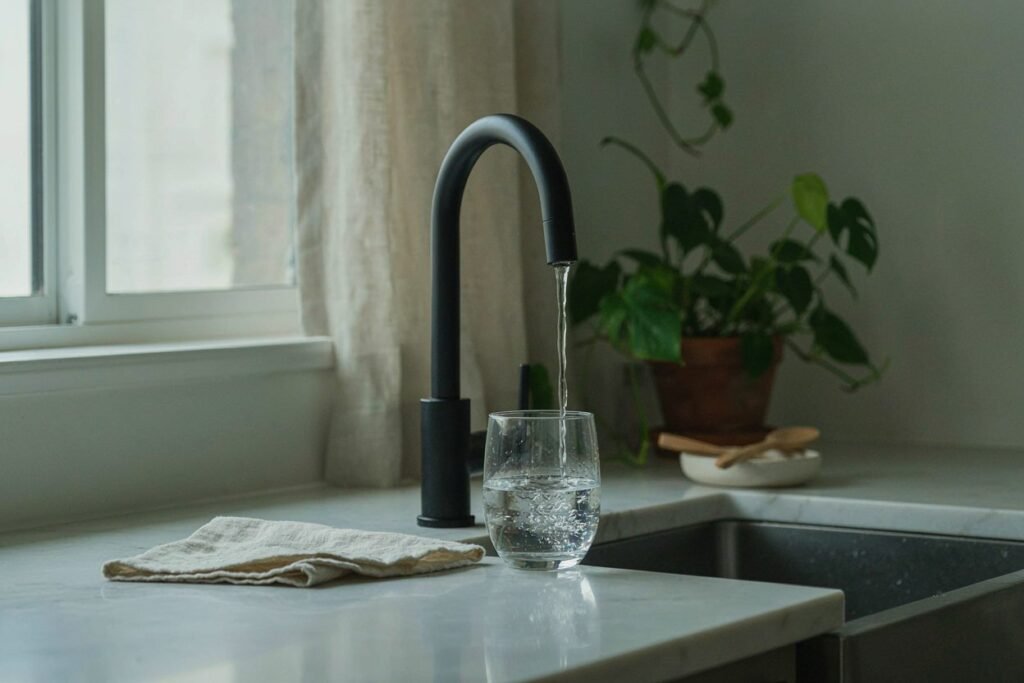
Brushing your teeth. In cities with treated water, tap water is fine. In rural areas, cabins with a well, or anywhere the water comes out discolored, use bottled water, especially for children, who tend to swallow some.
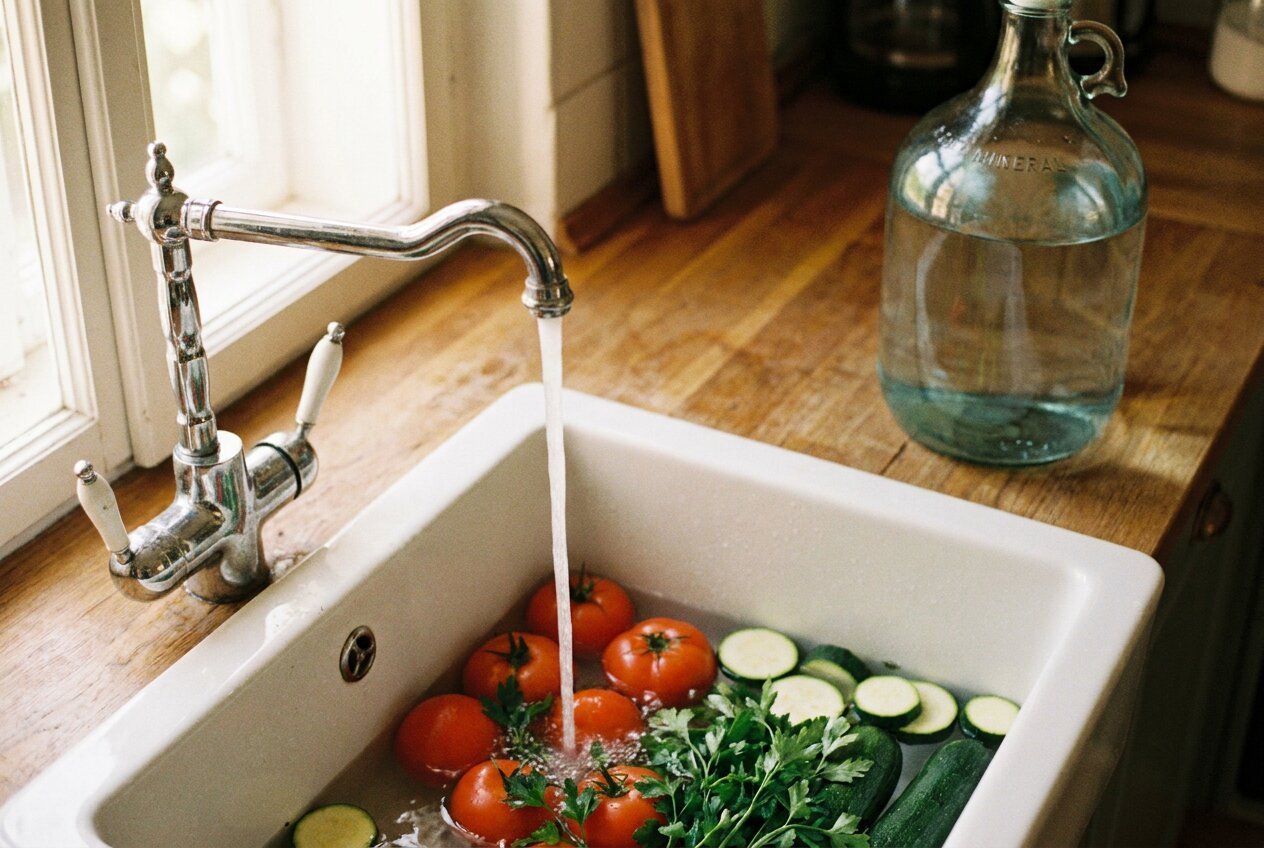
Fruit and vegetables. If you are cooking in a rental apartment, wash produce under the tap and soak anything eaten raw, like lettuce and strawberries, for 10 minutes in water with a food-safe sanitizer, as the Ministry of Health leaflet (in Portuguese) explains. Then rinse.
By region
What makes sense changes a lot from one place to another:
| Where you are | Can you drink from the tap? | What to do |
|---|---|---|
| São Paulo, Rio and other capitals | It is treated, but locals filter it | Drink bottled or filtered water; tap water is fine for showering and brushing your teeth. |
| Older buildings and small hotels | Better not | If it comes out yellowish, let it run for a few seconds and do not drink it. |
| Countryside and small towns | Depends on the town | Drink bottled or filtered water. |
| Rural areas, the Amazon and cabins with a well | No | Bottled, filtered or boiled water only. |
| After a water outage or if it looks cloudy | No | Wait until it clears or boil it for 5 minutes. |
If you need to boil water, Brazil’s Ministry of Health (in Portuguese) recommends 5 minutes, counted from when it starts to boil.
Can you drink tap water in São Paulo?
In São Paulo the water is treated by Sabesp, and the city government publishes monthly checks in the VIGIAGUA Bulletin (in Portuguese). Still, as in the rest of the country, people drink filtered or bottled water, especially in older buildings.
And in Rio de Janeiro?
In Rio, the annual report from Águas do Rio (in Portuguese) lists monthly results for chlorine, turbidity and coliforms. The city has had episodes of water tasting and smelling earthy, as in January 2020, so the rule is the same: for drinking, bottled or filtered.
If someone feels unwell
If you get diarrhea on the trip, the priority is not to get dehydrated: sip bottled water and, if needed, use an oral rehydration solution. Our article on homemade oral rehydration solution explains how to make it and when to see a doctor.
Still have questions?
Does boiling make the water safe?
Boiling it for 5 minutes kills bacteria and viruses, but it does not remove sediment, rust or the chlorine taste. It is a good emergency fix.
Why does the water sometimes come out white?
It is almost always air bubbles, common after a water outage. Let the glass sit for a minute: if it clears from the bottom up, it was air. If it stays cloudy or smells odd, do not drink it.
Are fresh juices made with tap water?
It depends on the place. Many juices (“sucos”) are made with water or ice, so if you are unsure, ask whether they use filtered water or order the juice “sem gelo”.
Can I shower with tap water?
Yes. In cities with treated water it is fine. In rural areas or with well water, just avoid swallowing it and use bottled water to brush your teeth.
To wrap up
Tap water in Brazil is safe when it leaves the plant in the big cities, but locals do not drink it straight from the tap. On your trip, stick to bottled or filtered water, be careful with ice of unknown origin and, outside the capitals, do not drink it unless it has been filtered or boiled.
This content is for information only. It does not replace advice from a doctor.