

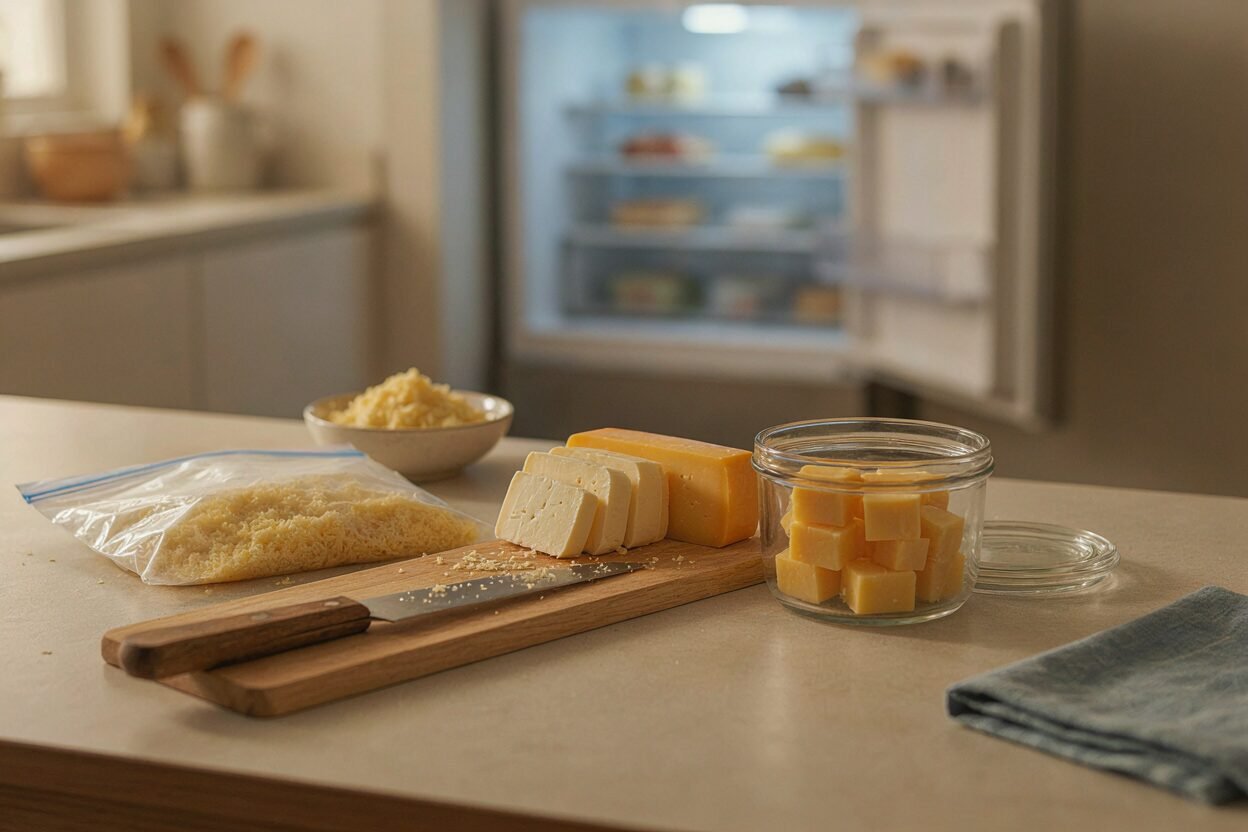
Maybe this has happened to you: mozzarella was on sale at the grocery store, you brought home a big block and, a week later, half of it is still in the fridge, already threatening to grow mold. Then comes the question: can you freeze cheese, or does it come out of the freezer crumbly and bland?
Yes, you can, and the freezer doesn’t make cheese unsafe. What it changes is the texture, so the real question is which cheese you’re freezing and what you plan to do with it afterwards. Firm cheeses, like mozzarella, cheddar, provolone and Parmesan, do very well, especially if they’re headed for a hot dish. Fresh and creamy cheeses, like ricotta, cottage cheese and cream cheese, tend to come back watery or grainy.
Can you freeze cheese? What the freezer really changes
Cheese is a mix of water, fat and protein, and that mix is exactly what the freezer disrupts. When the water freezes, it forms ice crystals that break up the cheese’s structure, and when it thaws, some of that water doesn’t go back where it was. That’s why frozen cheese usually comes out more crumbly and mealy, as explained by Nebraska Extension at the University of Nebraska–Lincoln, which also notes that the flavor holds up. The moister the cheese, the more ice forms and the bigger the damage, which is where the general rule comes from: firm cheeses freeze better than fresh ones.
Safety is a different story. The USDA Food Safety and Inspection Service (FSIS) explains that freezing to 0 °F (-18 °C) doesn’t kill bacteria, molds and yeasts, it only makes them inactive, and that they become active again once the food thaws. If the piece was already past its best in the fridge, freezing won’t fix it, so the right move is to freeze cheese while it’s still fresh, within its date, right after you buy it or open the package.
So don’t wait for that week from the example above to go by before deciding to freeze the cheese. In practice, the decision comes down to two questions: is the cheese firm or moist, and will you eat it as is or melted? With those two answers in mind, it’s easy to open the fridge and know what goes into the freezer.
Which cheeses can be frozen and which are best avoided
I put the most common cheeses in this table, based on guidance from Nebraska Extension and the National Center for Home Food Preservation.
| Cheese | Does it freeze well? | Best use afterwards |
|---|---|---|
| Mozzarella (low-moisture block) | Yes, as a block, sliced or shredded | Pizza, lasagna, grilled cheese, casseroles |
| Cheddar, Monterey Jack, Gouda | Yes | Hot sandwiches, quesadillas, mac and cheese |
| Parmesan and other hard cheeses | Yes, very well, ideally grated | Pasta, sauces, soups, for topping |
| Provolone and Swiss | Yes | Baked, grilled, fillings |
| Halloumi and other grilling cheeses | Yes, the texture changes a little | In a skillet, on the grill or in the air fryer |
| Blue cheeses | Yes, but they crumble | Sauces and fillings |
| Ricotta and cottage cheese | Not recommended | They turn grainy and release whey |
| Cream cheese and processed cheese slices | Not recommended | The water separates and the texture falls apart |
| Brie and camembert | Better avoided | The rind and center lose their texture |
The cheeses that freeze well
The winning group is firm, low-moisture cheese. Mozzarella, which tends to be the cheese that piles up most in the fridge of anyone with kids, freezes well in any shape, so you can freeze mozzarella without worry, especially if it’s going to become pizza or lasagna, which melt everything and hide any change in texture. Parmesan is the easiest of all, since it’s already dry and almost always goes grated on top of pasta. Grilling cheeses and semi-firm cheeses also hold up well, but they come out a little more crumbly, so I’d save those for cooking instead of serving them in cubes.
The cheeses it’s best not to freeze
On the other side are fresh and creamy cheeses. Nebraska Extension says cream cheese and cottage cheese don’t freeze well, and the National Center for Home Food Preservation adds ricotta and processed cheese slices to the same list, because the whey separates and the texture turns grainy or watery. If there’s no other option and the ricotta is going into a baked pie or lasagna filling, you can use it, but the smarter move is to buy these cheeses in smaller packages and eat them within their fridge life.
How to freeze cheese, step by step
The step-by-step has a single goal: keep the cheese in contact with air as little as possible, because air is what dries it out and gives it that freezer taste.
- Choose the shape by how you’ll use it. Think about the recipe the cheese will end up in, because grating a cheese that came out of the freezer crumbly is more work than freezing it already shredded.
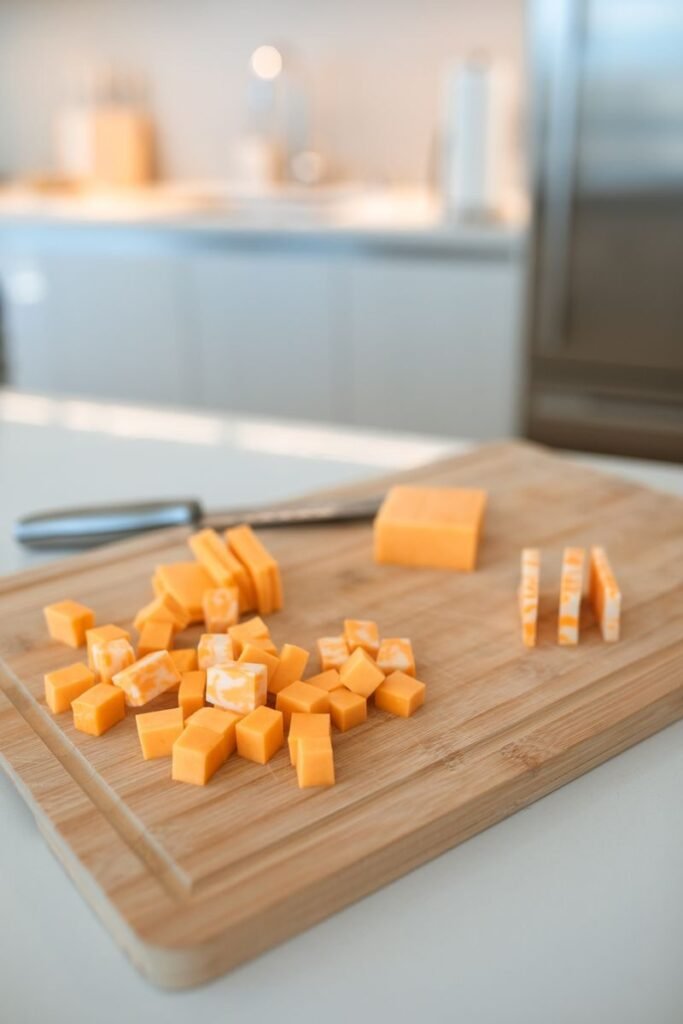
- Cut it into small portions. The National Center for Home Food Preservation recommends pieces of half a pound (about 225 g) or less, because smaller pieces freeze and thaw more evenly. For everyday use, I’d go even smaller, about the amount for one pizza or one family snack.
- Wrap it in two layers. First tight plastic wrap and, on top, a freezer bag with the air pressed out, or a container with a tight-fitting lid. Slices need a sheet of wax or parchment paper between them so they don’t stick and you can take out only what you need.
- Flatten shredded cheese. Spread it in a thin layer in the bag so it doesn’t turn into one solid block and you can break off just what the recipe needs. Unopened bags of shredded cheese can go into the freezer in their own package, as Nebraska Extension advises.
- Label it. Write the type of cheese and the date it went in, so you always know what to use first. A piece of masking tape and a pen does the job.
How long cheese lasts in the freezer
According to the FSIS, food kept frozen at 0 °F (-18 °C) stays safe indefinitely, and what time takes away is flavor and texture. For quality, these are the time frames I found:
| Type of cheese | Time for best quality | Source |
|---|---|---|
| Hard cheeses, like cheddar, Swiss and Parmesan, in pieces | Up to 6 months | National Center for Home Food Preservation |
| Shredded cheese, like mozzarella and young cheddar | 3 to 4 months | National Center for Home Food Preservation |
| Any cheese once thawed | Use as soon as possible | Nebraska Extension |
In practice, I’d treat the shorter end of each range as the goal, because a home freezer opens and closes all day long and the cheese feels that change. Past that point, it doesn’t become dangerous, it just slowly loses its appeal.
How to thaw cheese and use it afterwards
Rule number one: never thaw it at room temperature, because that’s where microbes start multiplying again. Instead, move the cheese to the fridge ahead of time; the National Center for Home Food Preservation suggests 24 to 48 hours for shredded cheese, which gives the moisture time to go back into it. It’s the same plan-ahead logic I explain in the guide on how to thaw meat the right way.
Most of the time, though, you don’t even need to thaw it. Shredded or sliced cheese can go frozen straight onto pizza, lasagna, an omelet, soup or a grilled sandwich, because the heat of cooking does the work. And if a whole piece is going to be grated, it grates even better half-frozen and firm than once it’s fully softened.
Once thawed, use it right away. Nebraska Extension notes that cheese that has been frozen works best cooked, and I agree: frozen mozzarella can look rubbery on a cheese board, but in a grilled cheese nobody notices the difference.
How to fit frozen cheese into your family routine
When mozzarella or Parmesan goes on sale, you can buy more, portion it the same day and have Friday’s pizza and Sunday’s pasta covered for weeks. Think about it: in a house with kids, cheese disappears into snacks, sandwiches and after-school toast, and having portions ready in the freezer saves you that dash to the store for a single ingredient.
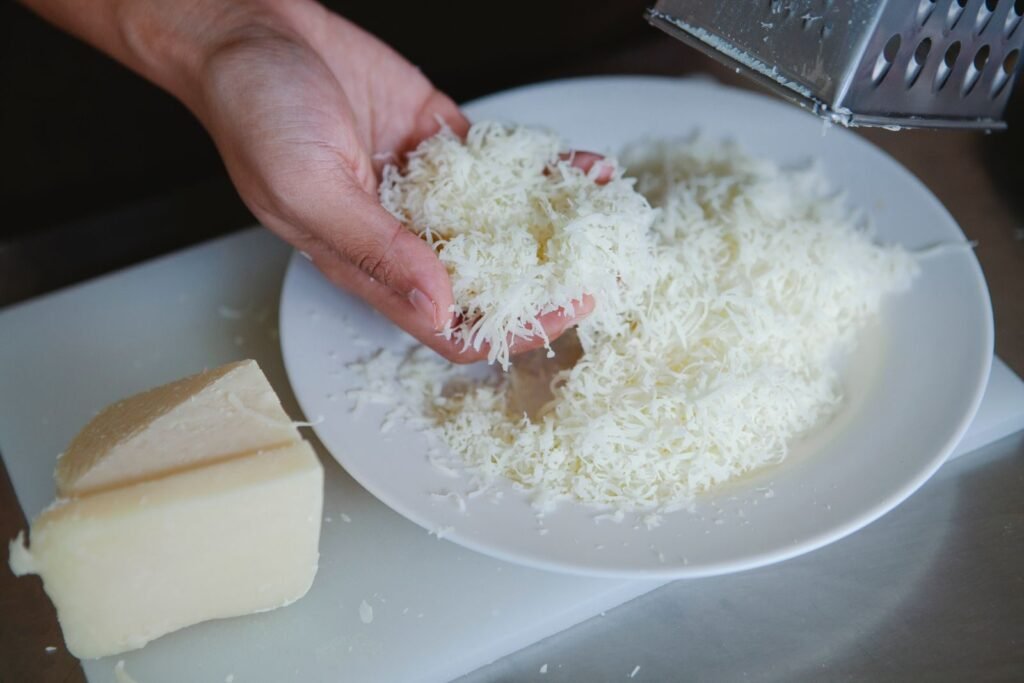
The trick that saves the most time is shredding everything at once. Set aside half an hour on shopping day, shred the whole block (a food processor makes it much faster), divide it into bags with the amount for one recipe and freeze. It fits right in with the day you already organize the week’s food, along with portions of frozen cooked rice and the cheap weekly meal plan.
There’s just one thing I’d keep separate: cheese that goes into a school lunch box or that kids eat plain, in cubes, tastes better bought fresh and kept in the fridge. Frozen cheese is for what goes into the oven, the toaster or the skillet, where texture makes no difference at all.

How to keep frozen cheese in good shape
Always keep cheese on the same shelf or in the same drawer, with the newest packages behind, so you use what went in first, and the dated label shows at a glance what’s reaching the end of its time.
It’s also worth watching for signs that the cheese has lost quality. Dry, whitish edges usually show up when air got into the package, which the FSIS calls freezer burn: it’s a quality issue, not a safety one, so you can cut off the dried part and use the rest in a recipe. But if the cheese comes out of the freezer with a sour smell, an odd taste or mold that isn’t typical of its type, it goes in the trash, because, as we saw at the start, the freezer only pauses what was already happening.
Still have questions?
Can you refreeze cheese that has been thawed?
Yes, if it thawed in the fridge. The FSIS says it’s safe to refreeze in that case, but warns that quality drops because of the lost moisture. Cheese that thawed outside the fridge doesn’t go back into the freezer.
Can you freeze bagged shredded cheese?
Yes, and it’s one of the easiest. Unopened, it goes in its original bag; I’d just wipe the bag clean before putting it in the freezer. If it’s already open, move it to a freezer bag and press out the air before sealing.
Can you freeze cheese in its store packaging, unopened?
Yes, if the package is vacuum-sealed and intact, because it already keeps out air. A tray with thin plastic film dries out more, so it’s worth putting a freezer bag over it.
To wrap up
Yes, you can freeze cheese, as long as it’s a firm one, like mozzarella, cheddar, Parmesan or provolone, well wrapped and labeled. Thaw it in the fridge or use it straight in hot dishes, and keep fresh, creamy cheeses, like ricotta, cottage cheese and cream cheese, out of the freezer.
This content is informational and does not replace advice from a dietitian or other health professional.