
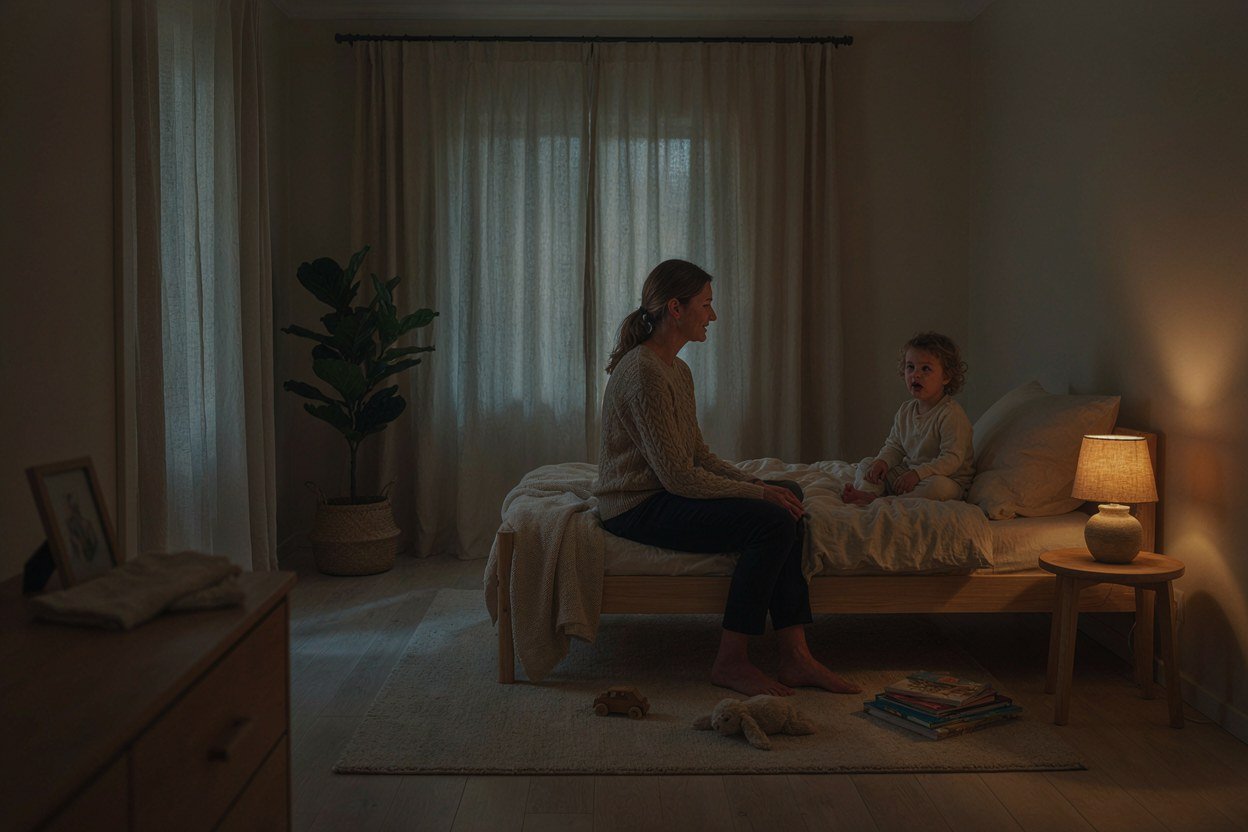
Picture the scene: the house is finally quiet and, out of nowhere, a scream comes from the kids’ room. You rush in and find your child sitting up in bed, eyes wide open, crying as if they’d seen a monster, but they don’t recognize you and even push your arm away. A few minutes later they lie down and sleep as if nothing happened, and the one who spends the rest of the night awake is you.
Night terrors in children are an incomplete awakening from deep sleep, usually in the first few hours after a child falls asleep. The child screams, cries and seems terrified, but is still asleep and almost never remembers anything the next day. During an episode, the best thing to do is stay close, make sure they don’t get hurt and wait for it to pass, without trying to wake them.
At our house, none of my three kids has gone through this so far. Because it’s such a scare, I’ve gathered what pediatric societies and sleep specialists explain.
What they are and why the child doesn’t wake up
They are a parasomnia, the name for behaviors that happen during sleep, like sleepwalking. According to the Sleep Medicine Department of the São Paulo Pediatric Society (SPSP) (in Portuguese), in Brazil, they happen in the deep sleep of early night: one part of the brain wakes up, which is why they scream and move, and another part is still asleep, which is why they don’t really see you.
The eyes are open, the heart races and the child sweats, but calling their name doesn’t help. Pediatric neurologist Leticia Soster, from Hospital Israelita Albert Einstein in São Paulo, told the Brazilian health site Portal Drauzio Varella (in Portuguese) that an episode usually comes one to two hours after the child falls asleep and lasts from thirty seconds to about five minutes. The UK’s National Health Service (NHS), for its part, mentions episodes that can last up to 15 minutes and sometimes happen more than once in the same night.
The NHS notes that they are most common between ages 3 and 8, and the Brazilian Society of Pediatrics (SBP) scientific paper on parasomnias (in Portuguese) estimates they affect about 6% of children, dropping to 2% in adolescence. They tend to run in families and, according to the SPSP, are not linked to mental illness. The American Academy of Pediatrics (HealthyChildren.org) also explains that, unlike a nightmare, the child will not remember them.
Night terrors vs. nightmares
The answer changes what you do. With a nightmare, the child really wakes up, remembers the dream and wants a cuddle. With a night terror, they stay asleep and, if you keep trying to comfort them, they may get even more agitated. The table, based on information from the SPSP and the NHS, sums up the clues.
| Feature | Night terror | Nightmare |
|---|---|---|
| When it happens | First half of the night, in deep sleep | Second half of the night, in REM sleep (dream sleep) |
| Does the child wake up? | No, they seem awake but are still asleep | Yes, they wake up frightened |
| Do they recognize their parents? | Usually not, and may even push you away | Yes, and usually want to be held |
| Do they remember it the next day? | Almost never | They usually remember and talk about the dream |
| Do they go back to sleep? | Quickly, without help | It may take a while, because of the fear |
What causes the episodes
The exact cause isn’t known, but specialists link them to the brain’s development, as it’s still learning to move from deep sleep to waking up. The SPSP and the NHS mention these triggers:
- Short or late sleep, like the day the nap didn’t happen and bedtime was much later.
- Extreme tiredness after a party, a trip or a long outing.
- Fever or illness.
- Stress and anxiety, like changing schools or a new sibling arriving.
- Sleeping somewhere different, at grandma’s house or in a hotel.
- Noise, a light suddenly switched on or a full bladder.
- Some medicines and health problems that disrupt sleep, like sleep apnea (when breathing stops for moments, often with snoring), restless legs syndrome and migraine.
What to do during an episode
The instinct is to pick them up, turn on the light and call out loudly until the child wakes up, and that’s exactly what tends to make it worse. The SBP paper explains that trying to make contact with the child during the episode doesn’t work and can even make it last longer. So the approach is different:
- Take a breath and walk to the room without rushing, because the episode passes on its own.
- Check safety first: if they got up, stand between them and the stairs, the window or the sharp corner of the furniture, because that’s your main job there.
- Don’t try to wake or shake them. The NHS points out that they may not recognize you and may get more upset if you try to comfort them.
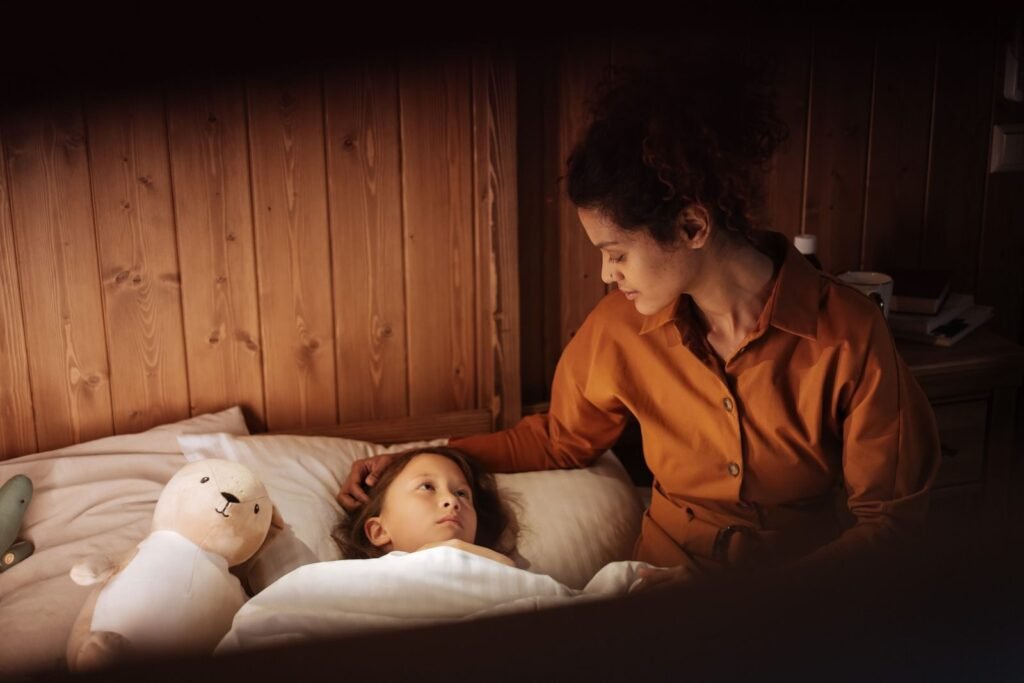
- If they allow it, hold them gently so they don’t fall out of bed and speak softly, in a calm voice. If they push you away, let go and just stay nearby.
- Low light and a quiet room, with no TV on and no phone screen in their face.
- Wait. When their body relaxes, tuck the blanket in and let them go back to sleep on their own, without questions.
What not to do
Yelling, shaking or taking the child out of bed makes the episode worse, according to the SPSP. The next morning, I’d hold back the urge to tell them every detail, especially since they don’t remember, and hearing that they screamed all night can make a child afraid to go to sleep. If they ask, a simple answer is enough.
How to prevent them: routine, sleep diary and scheduled awakening
Enough sleep and a fixed schedule
The advice that shows up in every source is to avoid sleep deprivation. The SPSP recommends regular times for going to bed and waking up seven days a week, and avoiding stimulating activities and foods after dark. In practice: an earlier bedtime on hectic days and keeping the nap for kids who still need it. The ideas in the post on sleep hygiene with kids help you set up the evening ritual.
A sleep diary for two weeks
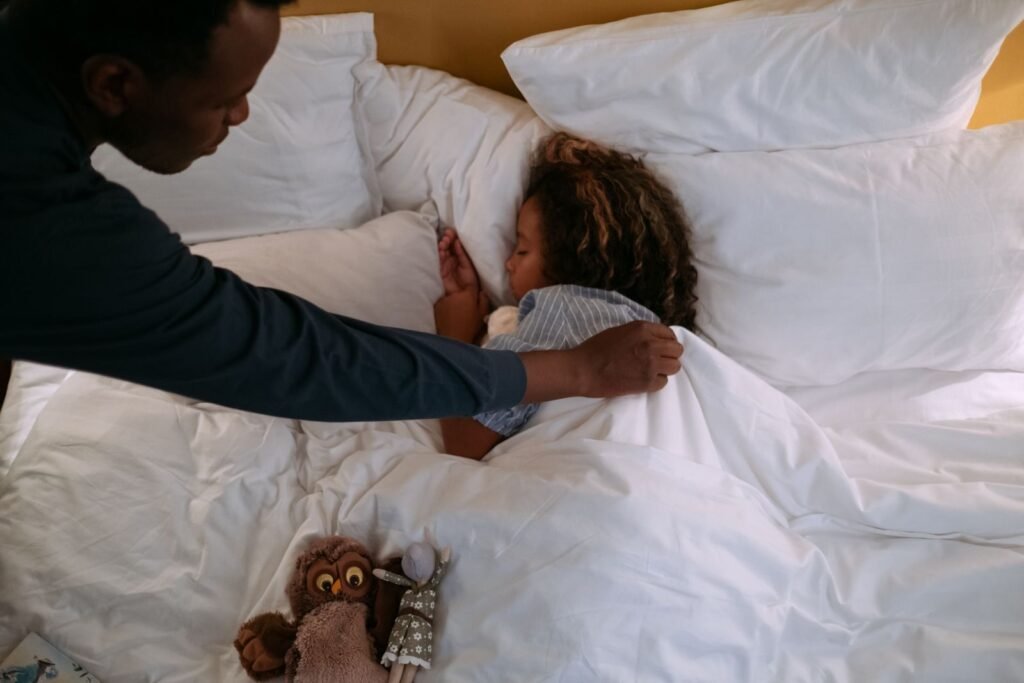
The NHS suggests keeping a sleep diary to find out what’s behind the episodes. In two weeks the pattern usually shows up. Write down every day:
- What time the child fell asleep and whether they napped.
- What time the episode happened, how long it lasted and what they did.
- What was different that day: a party, a fever, an argument, screens until late or a heavy dinner.
- How they woke up and what their mood was like the next day.
If you can, record a short video of an episode. The Brazilian sleep clinic Instituto do Sono (in Portuguese) notes that home videos help document the episode for the doctor.
Scheduled awakening
When the diary shows the episode always comes at the same time, there’s a simple technique called scheduled awakening. The NHS advises waking the child 15 minutes before the usual time of the episode, every night, for two weeks. It’s a gentle awakening, just enough for them to open their eyes, and then they go back to sleep.
A safe bedroom, siblings and nights away from home
A safe bedroom
Since the child may get up and even run during an episode, Instituto do Sono’s advice for parasomnias includes avoiding bunk beds, moving the nightstand away, keeping glass objects away from the bed, keeping doors closed and windows locked, and avoiding stairs along the way.
Siblings in the same room
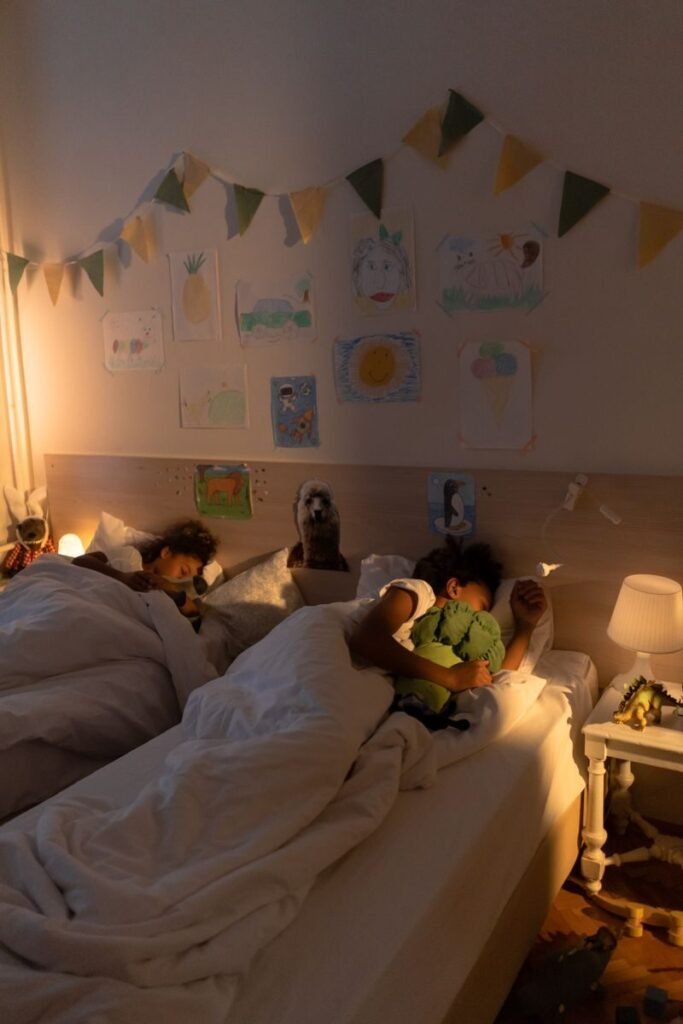
A sibling who shares the room is the one who really gets scared. Explain to them, during the day and in simple words, that sometimes their brother or sister cries in their sleep, that they’re not in pain and that they can call an adult. In the moment, the cuddle goes to the sibling who’s awake, because they’ll remember everything.
Trips, visits and party nights
A different place and tiredness are known triggers, so a night at the grandparents’ house and coming home from a party are prime candidates for an episode. Planning ahead helps: a nap before the party, leaving earlier and bringing their usual stuffed animal. And if your own sleep got broken up, the tips on how to fall asleep fast help parents get back to sleep.
When to see the pediatrician
In most families, this is a phase that passes on its own, but some signs call for an appointment. Based on guidance from the SBP, the SPSP and the NHS, it’s worth seeing the pediatrician when:
- Episodes are very frequent or disrupt the whole family’s sleep.
- The child is sleepy during the day, their school performance drops or their behavior changes.
- They got hurt during an episode.
- Episodes are long, happen several times in the same night and involve the same movements every time, a sign the SBP says should be checked for epilepsy.
- There’s loud snoring or pauses in breathing during sleep, which may point to sleep apnea.
- Episodes started after age 5 or continue after age 12, criteria used by the NHS.
Bring the diary and the video, because that’s what the doctor uses to decide whether a test is needed, like polysomnography, which records sleep overnight. The AAP also advises talking to your child’s doctor if night terrors keep happening. Medication is rarely part of the picture.
Still have questions?
Can babies have night terrors?
Yes, but it’s not typical. The Brazilian Society of Pediatrics says they usually start from age 4, although the neurologist interviewed by Portal Drauzio Varella says they can appear from 9 months of age. In babies, hard crying at night has many other causes, so talk to the pediatrician before drawing conclusions.
Do night terrors go away?
Most of the time they go away on their own as the brain matures and, according to the SPSP, they usually disappear by adolescence.
Can a scary cartoon or movie cause night terrors?
It can act as a trigger. The NHS includes among common causes something that frightened the person, like a scary movie, or that caused stress and worry. That’s why it’s worth turning screens off earlier, choosing calm content and limiting exposure to scenes that might cause fear.
To wrap up
Night terrors are far scarier for the person watching than for the child, who doesn’t even remember them the next day. In the moment, stay close, keep them safe and wait for it to pass without trying to wake them. Afterwards, focus on regular sleep, write down the episodes and see the pediatrician if any warning sign appears.
Informational content. It does not replace advice from a pediatrician or a sleep doctor.