

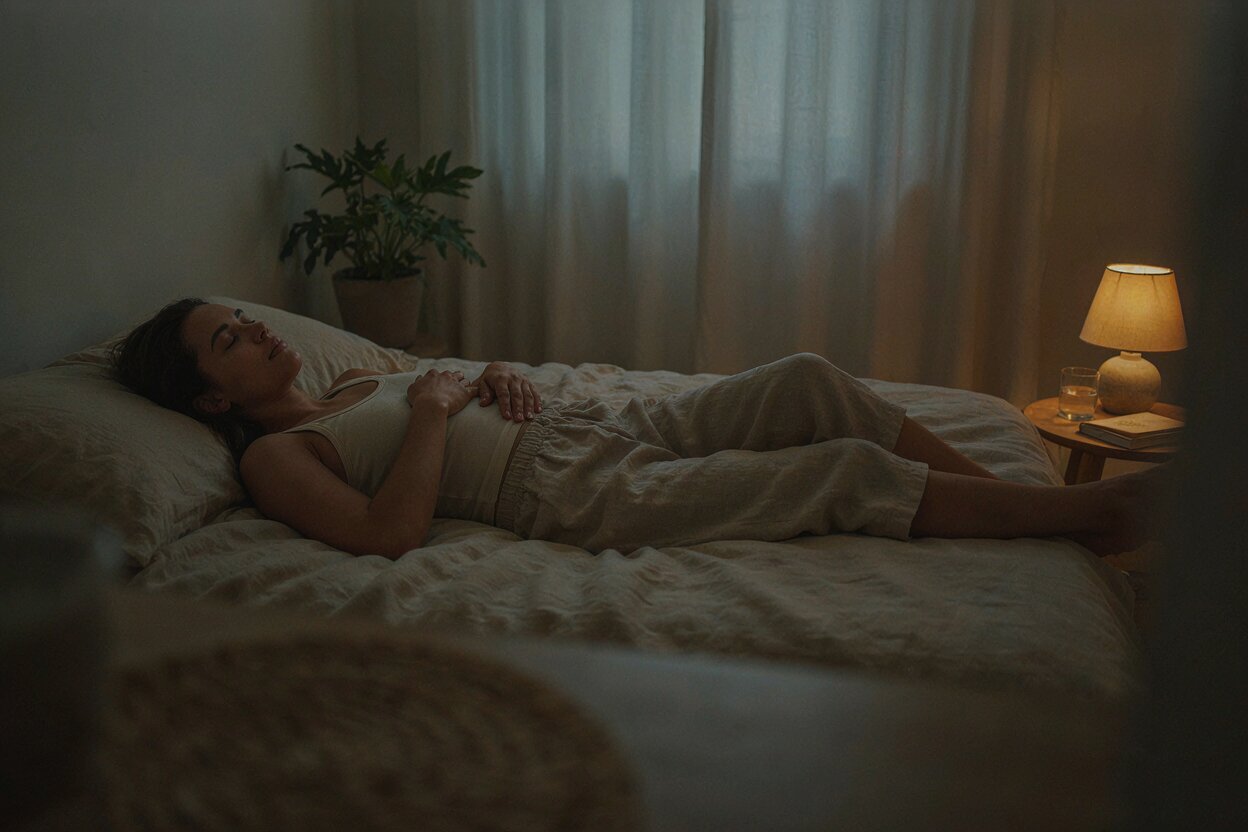
You turn off the light, dead tired, and suddenly your mind decides to replay tomorrow’s meeting and the grocery list. Anyone with kids knows this scene, because the moment the house goes quiet is exactly when your thoughts start making noise, and all you want to know is how to sleep fast.
The first step is to figure out what is keeping you awake. If it is a tense body, use slow breathing or muscle relaxation; if it is a racing mind, write your worries on paper or fill your head with neutral images. And if about 20 minutes go by without sleep, get up and do something calm outside the bed. The focus here is what to do once you are already lying down; the daytime routine, with a fixed schedule, caffeine and screens, is in the guide on how to sleep better.
Why sleep doesn’t come right when you need it most
Trying hard to sleep makes everything worse. The Virtual Health Library of Brazil’s Ministry of Health (in Portuguese) explains that insomnia tends to drag on when a person starts linking bedtime with the effort to fall asleep, with plans for the next day and with excessive attention to worries. The more you fight with your pillow, the more your brain learns that bed is a place for struggle, not rest.
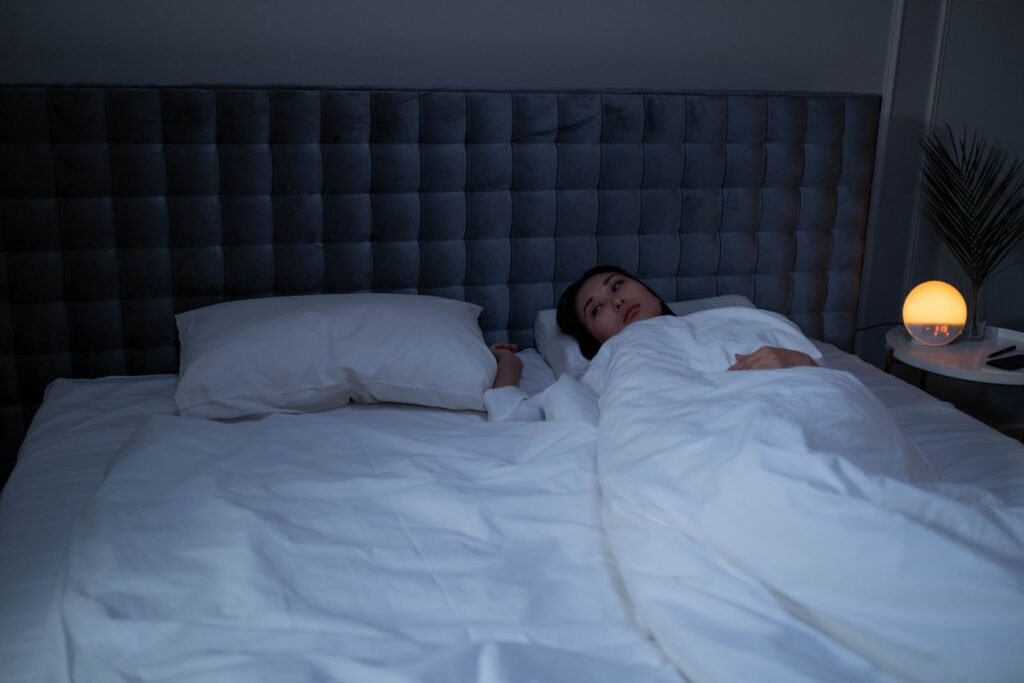
Tense body or racing mind? Pick the right technique
The techniques work in one of two ways: they calm the body, or they pull your attention away from the problem. This table helps you decide where to start:
| What you feel in bed | Where to start |
|---|---|
| Stiff shoulders, clenched jaw, restless body | Progressive muscle relaxation or top-to-bottom relaxation |
| Racing heart, short breaths, anxiety | 4-7-8 breathing or a long exhale |
| Mind going over tasks and problems | A list on paper before turning off the light |
| Loose thoughts jumping from one topic to another | Shuffling words or picturing a calm scene |
| You have tried everything and are getting irritated | Stop trying to sleep and, if needed, get out of bed |
How to fall asleep fast: 8 techniques and how to do each one
They are in the order I would use them on a hard night, from the body to the mind, ending with plan B, which is getting out of bed.
1. 4-7-8 breathing
This is the best-known breathing technique for sleep, and the UK’s National Health Service (NHS) teaches it like this: once you are comfortable in bed, breathe in through your nose for a count of 4, hold your breath for a count of 7 and breathe out through your mouth for a count of 8. Repeat four times. The counting holds your attention on your breath and pushes worries aside. If holding your breath for 7 seconds makes you anxious, just breathe out slowly, for longer than you breathe in.
2. Progressive muscle relaxation
This works for anyone who lies down with a body stiff with tension. Starting with your feet, tense a group of muscles for a few seconds and then let go all at once, paying attention to the difference. Then move up to your calves, thighs, belly, hands, arms, shoulders and, finally, your face.
I did this exercise in the childbirth preparation classes offered by Portugal’s public health service, and I often fell asleep while doing it, listening to the teacher’s voice in the background (she was the one guiding us through the relaxation session). One day I actually snored! It was so loud that I startled myself awake. So it is a technique that really works.
The NHS points out that this exercise takes time to learn, like any other skill, so don’t be discouraged if it feels strange the first night.
3. Top-to-bottom relaxation, the famous “military method”
It is the previous technique without tensing your muscles. Lying down, relax your forehead, eyes, jaw and tongue. Let your shoulders drop, release one arm at a time and empty your chest with a long exhale. Finally, the legs, from the thighs down to the feet. With your body relaxed, picture a still scene, like a boat on a calm lake. Because it is quicker, this is my suggestion for anyone who wakes up in the middle of the night and wants to get back to sleep soon.
4. Picture a calm scene
Choose a peaceful place, real or imagined, and walk through it in detail: the color of the water, the sound of the wind, the temperature of the air. The more detail, the less room is left for tomorrow’s to-do list.
5. Shuffle your thoughts
This one is for a mind that jumps from one topic to another. Pick any word, for example “bed”, and for each letter think of several words that start with it, picturing each thing for a moment: b for banana, boat, button, bear. Because these are random, emotionless things, your mind stays busy with something dull enough not to hook you, and sleep often arrives in the middle of the game.
6. Empty your mind onto paper
If your to-do list is what keeps you up, don’t try to hold it in your memory. Keep a small notebook on the nightstand and, before turning off the light, write down what needs to be done tomorrow and what is worrying you. Your mind understands that nothing will be forgotten and stops reminding you every ten minutes.

7. Stop trying to sleep
It sounds contradictory, but taking the pressure off sleep helps it come. Lie down, keep your eyes open in the dark and think “that’s fine, I’ll just rest”. And turn the clock to the wall, because calculating how many hours are left until the alarm only raises anxiety.
8. Get out of bed after about 20 minutes
If no technique worked and you are already irritated, get up. The guidance from Brazil’s Virtual Health Library is that, if you haven’t fallen asleep after 15 to 30 minutes, you should go to another room to read and only come back when you feel sleepy. Choose something calm with little light, like a slightly boring book or clean laundry to fold; phone and TV are out. This is what teaches your brain to connect the bed with sleep.
The next time you find yourself tossing and turning, go to the kitchen, make a cup of tea and just drink it calmly. Fighting sleep is a losing battle.

When the kids wake you up at night
With a “Mom, I had a nightmare” or a baby who nurses at night, the problem is rarely falling asleep the first time, but getting back to sleep after getting up. Have a short technique already practiced, like top-to-bottom relaxation, to do as soon as you get back into bed. If you need light to tend to your child, choose a dim, warm light, since the Brazilian Sleep Association advises avoiding white or blue light when you have to get up during the night.
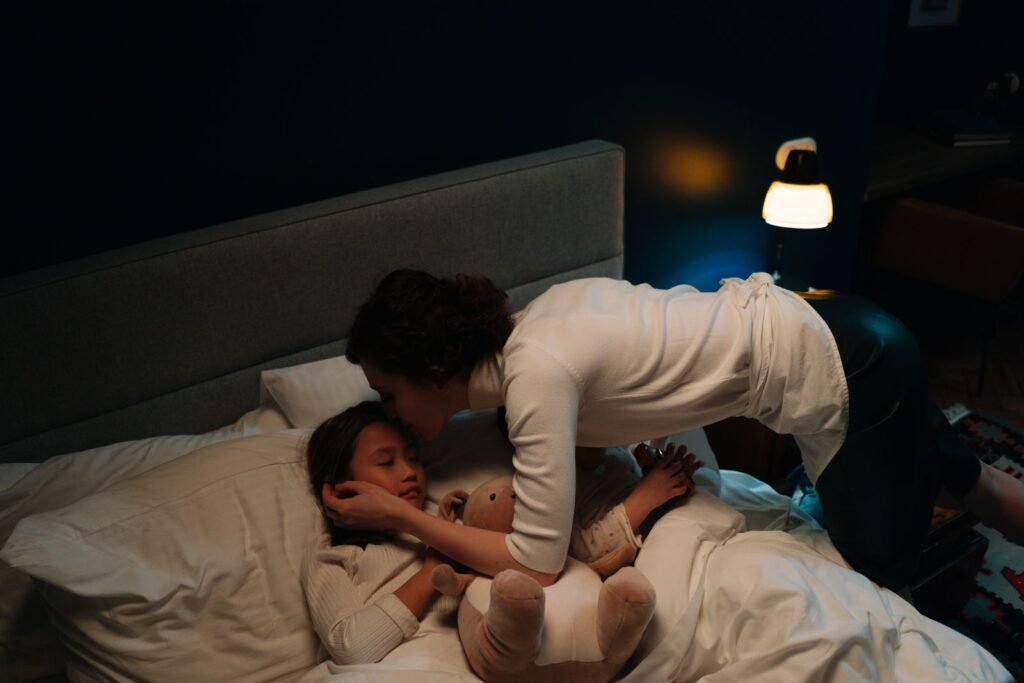
Whenever possible, agree with whoever shares the house with you on who gets up each night, so that some nights are full nights of sleep.
What hurts more than it helps at bedtime
- A glass of wine to relax. The Sleep Week guide from the Brazilian Sleep Association (in Portuguese) explains that alcohol may help you fall asleep, but it can increase how often you wake up during the night.
- Sleeping pills on your own. The same guide advises against sleep medication without a prescription, and that includes melatonin.
- The phone “just to get sleepy”. Besides the light, social media content can leave your mind restless, as the Brazilian Sleep Association warns.
And give your chosen technique time. Relaxation works better when the body already knows the way, so it is worth practicing at calm moments during the day, like on the bus or while the coffee water heats up. Just be careful not to fall asleep and miss your stop or ruin the coffee. I would stick with the same technique for about two weeks before switching, and if your tiredness comes from looking after everyone, self-care habits help make room for rest during the day.
When trouble sleeping calls for professional help
The Brazilian Sleep Association recommends seeing a sleep medicine specialist when there is:
- chronic insomnia, meaning difficulty falling or staying asleep at least three times a week, for at least three months, getting in the way of your day;
- frequent snoring or regularly waking up with a dry mouth;
- pauses in breathing during the night;
- sleepiness during the day;
- discomfort in the legs before sleeping.
The NHS likewise advises seeing a GP if changing your sleeping habits has not helped or if you have had trouble sleeping for months.
Still have questions?
Can you fall asleep in 2 minutes?
That is the promise that circulates with the “military method”, and I found no confirmation of it in any reliable health source. Relaxation shortens the path, but the time varies from person to person.
How to fall asleep fast when you’re not sleepy?
It is better not to lie down yet. Do something calm with little light until your eyes get heavy and only then go to bed, so it stays linked to sleep.
Does a hot shower before bed help?
It can, as long as it is not right before bed. The Sleep Week guide suggests a warm shower 2 to 3 hours before lying down, which fits nicely right after dinner.
To wrap up
To learn how to sleep fast, figure out whether a tense body or a racing mind is keeping you awake and choose a technique for each case. If sleep doesn’t come in about 20 minutes, get up and try again later, without fighting your pillow.
Informational content. It does not replace medical advice.