

If you work from home, you know the scene: you sit down to answer a quick email at eight in the morning and, before you know it, it’s lunchtime, your neck is stiff and your right shoulder feels like it carried the desk. At the office there was the coffee break, the walk to a coworker’s desk, the meeting on another floor, but at home the path between the bed, the desk and the kitchen fits in twenty steps. It may not be exactly like this for you, but anyone who works sitting down knows how the body complains by the end of the day.
Desk exercises are a set of stretches and light movements done during the workday, in short sessions, to prepare your body, make up for hours in the same position and unwind at the end of the day. In Brazil, many companies run this as a workplace program called ginástica laboral, but at home it works the same way and you don’t need any equipment: a sturdy chair and a few minutes are enough.
What desk exercises are and why they’re worth doing at home
Workplace exercise programs started inside companies as a way to reduce pain and injuries caused by repetitive movements and hours in the same posture. But the problem these exercises solve doesn’t depend on your address: someone who spends the day on a laptop in the living room is just as exposed as someone in an office, sometimes even more, because a home table rarely was designed for this.
The Brazilian Ministry of Health protocol on work-related pain (in Portuguese), from 2012, describes repetitive strain injuries and work-related musculoskeletal disorders as damage that comes from overusing the musculoskeletal system combined with a lack of time for it to recover. Pay attention to the second part of that sentence, because that’s where desk exercises come in: they create small recovery breaks during the workday and, as a bonus, move the joints that stayed still for hours on end.
And there’s a benefit that goes beyond your back. The Physical Activity Guidelines for Americans put it plainly: adults should “move more and sit less throughout the day.” So every active break is also one less chunk of sitting in your day, which helps anyone trying to break a sedentary lifestyle without a gym.
Types of desk exercises: before, during and after work
The most common split is based on the moment of the workday:
- Warm-up: done right at the start, to warm up the joints you’ll use most and wake your body up before you sit down.
- Counterbalancing: happens in the middle of the workday and undoes the posture you’ve held for hours, which is why it matters most for people who work sitting down.
- Wind-down: saved for the end of the day, with slower movements and breathing, helping you separate work from the rest of your evening.
There’s also a corrective type, for people who already have a postural imbalance or established pain. That one needs to be designed case by case by a physical therapist, so it isn’t part of the routine below, which is preventive.
Desk exercises at home: a 10-minute routine
I put this routine together based on the ergonomic stretches guide from Cal State LA, which recommends doing these stretches several times throughout the day. What follows is a starter version for people who currently take no breaks at all: three blocks that add up to 10 minutes a day, 3 minutes in the morning, 4 in the middle of the workday and 3 at the end. Once it becomes a habit, stretch each block out. The idea is that no block gets in the way of work, especially since desk exercises that require changing clothes never get done. Do everything slowly, without jerking, and follow the golden rule: a stretch can pull, but it shouldn’t hurt.
| Block | When | Length | Focus |
|---|---|---|---|
| Warm-up | Before opening the first email | 3 minutes | Neck, shoulders, wrists and hands |
| Counterbalancing | Mid-workday, before lunch | 4 minutes | Spine, chest, hips and legs |
| Wind-down | When you close the laptop | 3 minutes | Breathing, backs of the legs and shoulders |
Warm-up block (3 minutes, at the start of the day)
- March in place (1 minute): standing next to the desk, lift your knees one at a time and, at the same time, roll your shoulders back in big circles. It warms the body up before it goes still.
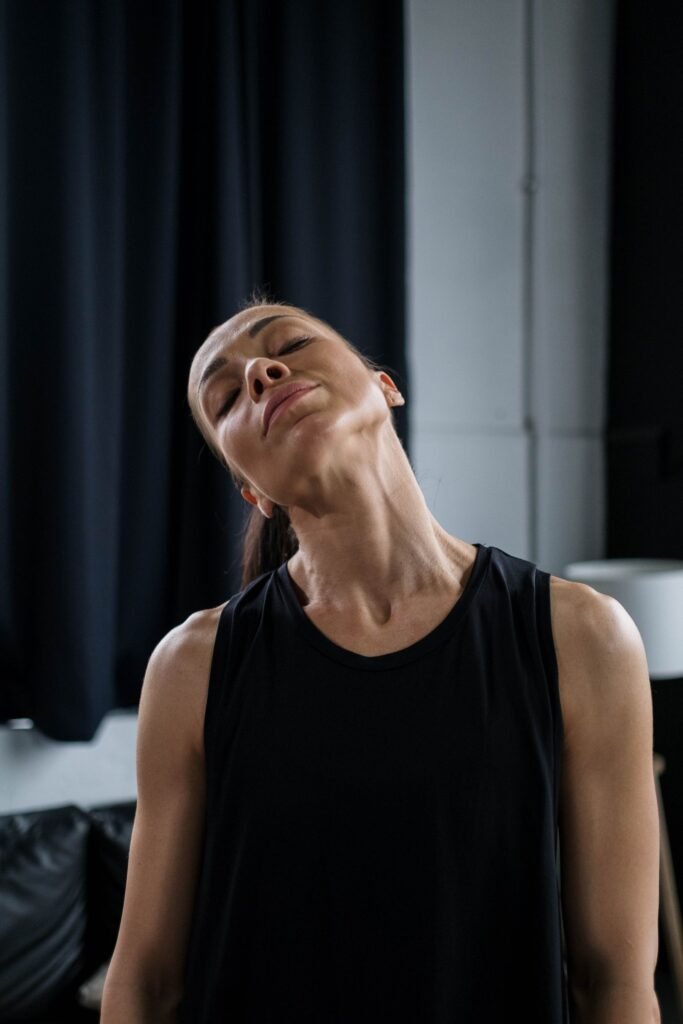
- Neck (1 minute): bring your right ear toward your right shoulder without lifting the shoulder, hold for 10 to 20 seconds and switch sides. Do it twice on each side.
- Wrists and fingers (1 minute): stretch one arm out in front with the palm facing out and gently pull your fingers back with the other hand for 10 to 15 seconds; then do it with the palm facing down. Finish by opening and closing both hands several times, as if squeezing a small ball.
Counterbalancing block (4 minutes, mid-workday)
This is the block people who work sitting down miss most, because it undoes exactly the shoulders-forward, hips-bent posture the chair imposes. Get up from the desk to do it, because just standing already breaks up the time sitting still.
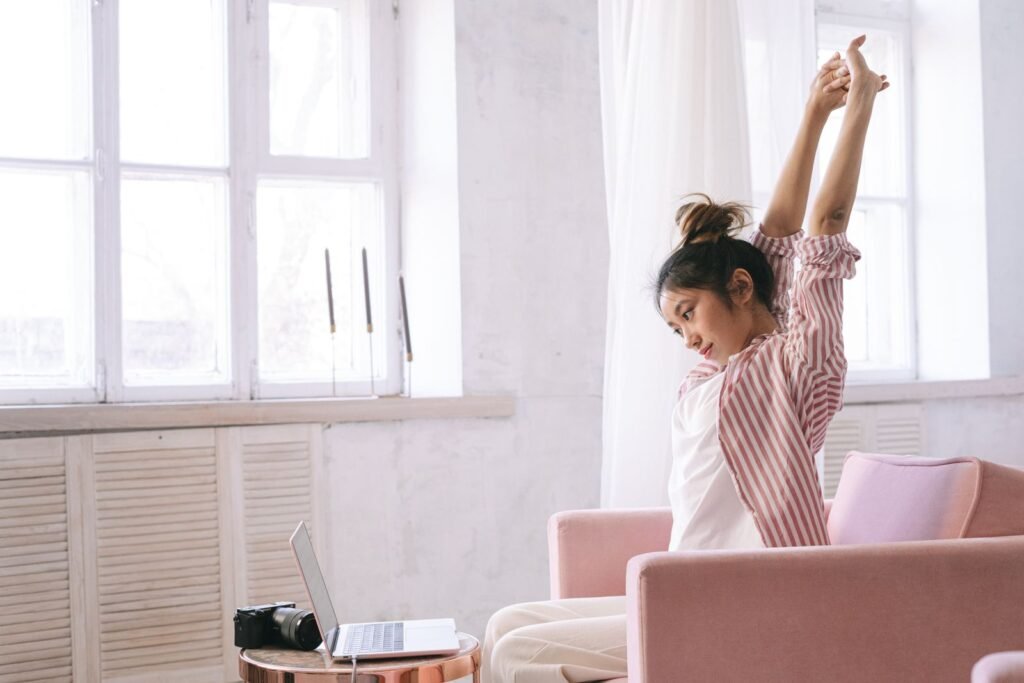
- Arms overhead: interlace your fingers, turn your palms to the ceiling and stretch your arms up, growing tall as if trying to touch the light fixture. Hold for 10 to 20 seconds and repeat three times.
- Chest opener: now interlace your hands behind your back and draw your shoulders back and down, looking straight ahead. It’s the opposite of typing.
- Seated twist: sit at the edge of the chair, feet on the floor, hold the backrest with your right hand and turn your torso to the right without forcing it. Hold for about 15 seconds on each side.
- Sit-to-stand: 10 times, without using your hands, at a relaxed pace. It wakes up your legs and glutes, which have been switched off all morning.
- Calf raises: holding on to the desk, rise up onto your toes and lower back down 15 times, which helps circulation in your calves.
Wind-down block (3 minutes, at the end of the workday)
- Breathing (1 minute): sitting with your feet on the floor, breathe in through your nose for a count of four and breathe out through your mouth very slowly, letting your shoulders drop with each exhale.
- Backs of the legs (1 minute): at the edge of the chair, straighten one leg with the heel on the floor and lean your torso forward with a straight back until you feel a pull behind your thigh. Switch legs.
- Self-massage (1 minute): with your left hand, squeeze and release the muscle between your neck and right shoulder, working slowly downward, then switch sides.
If the breathing in the first step feels good, it’s worth learning about everyday mindfulness, which uses the same body awareness to slow down your mind.
Precautions so you don’t get hurt
Because they’re light, desk exercises seem impossible to get wrong, but movement done in a rush or with too much force can hurt too. That’s why I’d follow three precautions. First, no bouncing to reach farther, because stretching works when it’s held still. Second, if an exercise causes pain, tingling or a shooting sensation, drop it from your routine until you’ve talked to a professional. And finally, start with a small range of motion and increase it over the days, since cold joints don’t like surprises.
With kids at home: how to fit them into your routine
Picture it: you get up for the counterbalancing block and, before the first stretch, someone asks for a snack. The trick is to stop waiting for the perfect moment and tie each block to something that happens anyway.
- The warm-up block can happen while the coffee brews or right after dropping the kids off at school.
- For the counterbalancing block, your cue can be putting lunch on the stove: before heading to the kitchen, four minutes next to the desk.
- With a little one nearby, invite them to copy you. Sit-to-stands turn into a race, and calf raises turn into a ballerina game.
My situation is different: I’m self-employed and work in two sessions of about two hours each, at different times of day, and the rest of the time I’m on my feet, between the kids and the house. But I know that’s not the reality for someone who spends eight hours in front of a computer, and that’s who I put this routine together for.

Take a look at where you work, too, because the couch and the bed are inviting, but they keep your neck bent for hours. The Ministry of Health protocol lists uncomfortable furniture and tools, like a mouse with a short cord and glare on the screen, among the factors that force poor posture. In practice, OSHA recommends keeping the top of the monitor at or slightly below eye level, and a table like that, with your feet flat on the floor, reduces the damage your desk exercises have to make up for later.
How not to forget: from day one to habit
In the first week the novelty helps, but by the second week work gets busy and the break is the first thing to go. What makes the habit stick is taking the decision out of your hands, so set two named alarms on your phone, like “neck and wrists” at 8:30 a.m. and “get up from the chair” at 11:30 a.m., and tie the wind-down block to the moment you close your laptop.
Some days the alarm will go off in the middle of something urgent. In that case, snooze it for 15 minutes, but don’t skip it. If the day gets away from you completely, do the counterbalancing block together with the wind-down block when you close your laptop.
It also works to start smaller than seems necessary. If ten minutes feels like too much, do only the counterbalancing block for a week, because it breaks up your longest stretch of sitting, and then add the others. The same federal guidelines say that “some physical activity is better than none,” so four well-done minutes already count. This kind of care fits with other self-care habits for busy people, which follow the same little-and-often logic. And here’s a challenge: on your next call where you only need to listen, stand up and walk around the house.
When pain calls for more than desk exercises
Desk exercises help prevent problems, but they don’t treat an established injury. The same Ministry of Health protocol notes that symptoms of repetitive strain injuries usually appear gradually, with pain, tingling, a feeling of heaviness and tiredness in the arms, and that many people keep working through the pain until the problem becomes obvious. If any of these signs show up often, get worse with work or wake you up at night, see a doctor or physical therapist, ideally before pushing on with the exercises.
Still have questions?
Do desk exercises help you lose weight?
That’s not their goal. They burn little energy and focus on mobility and relieving tension; for weight, what counts most is your weekly physical activity combined with what you eat.
Do they replace the gym or walking?
No. They’re a complement: they cut down time sitting still and take care of your joints, but they don’t cover the 150 to 300 minutes a week of moderate activity the federal guidelines recommend for adults.
Can pregnant women do these exercises?
In general, gentle stretches are welcome, but twists and balance exercises should be discussed at prenatal appointments, because the body changes each trimester.
Do I need any equipment?
Nothing besides a sturdy chair without wheels for the exercises where you sit down and stand up. If your desk chair has wheels, use a kitchen chair for those.
To wrap up
Desk exercises at home mean splitting 10 minutes into three breaks: preparing your body in the morning, counterbalancing your posture mid-workday and winding down at the end. Tie each block to something in your routine and get help if the pain persists.
Informational content. It does not replace advice from a health professional, such as a doctor, physical therapist or certified fitness professional.