

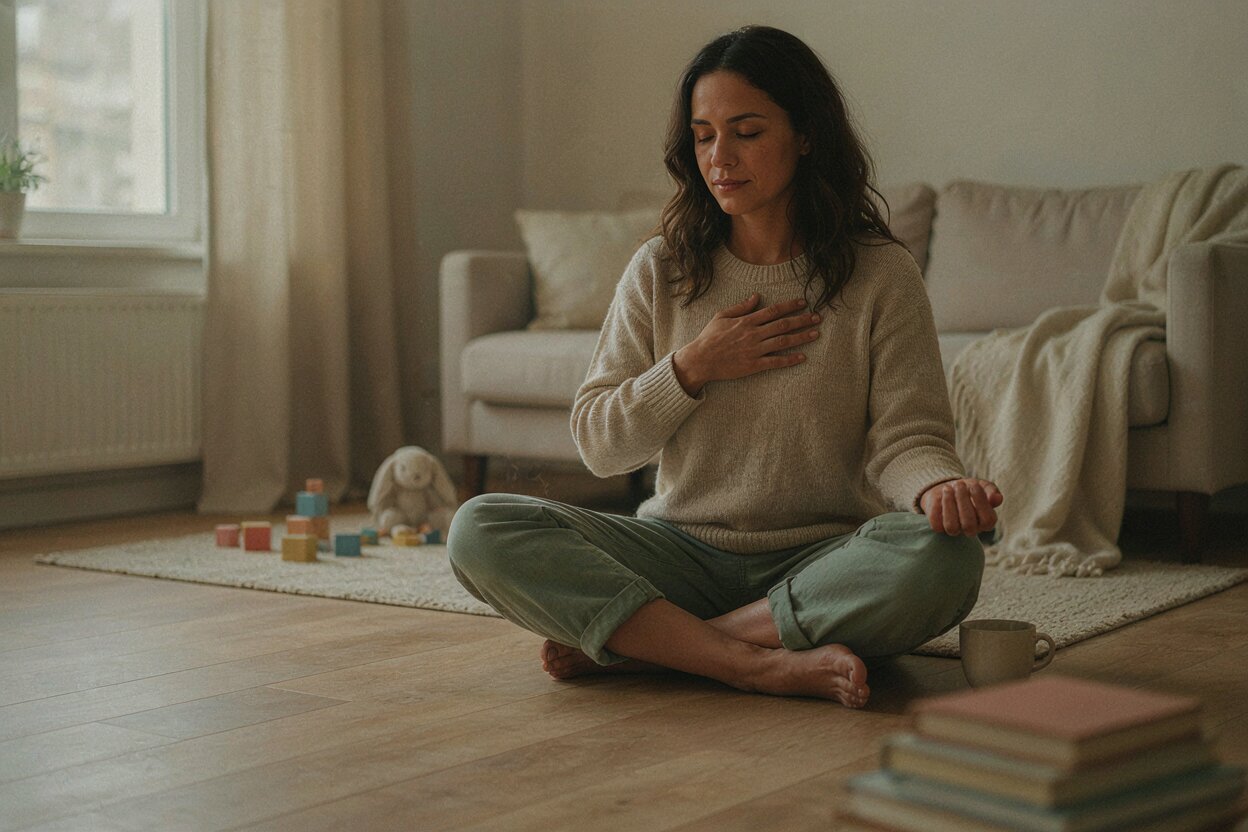
You know when you get to the end of the day and can’t quite remember what you had for lunch, how the drive to the kids’ school went or what you replied to that message? Your mind spent the day somewhere else, planning dinner while listening to your child’s story. That autopilot is exactly what mindfulness tries to switch off, and the good news is that you can train it without setting aside half an hour you don’t have.
Mindfulness is the practice of noticing where your attention is and bringing it back to what is happening right now, without fighting what you feel. You can practice it sitting with your eyes closed, but also while washing the dishes, taking a shower or eating, in exercises that take one to five minutes.
What it is, simply explained
In practice, it is attention training. Professor Marcelo Demarzo, from the Escola Paulista de Medicina in São Paulo, explains in material from Unifesp (in Portuguese) that the idea is to develop the ability to notice where your attention is and bring it back to the present with clarity, reacting less on impulse to everyday triggers.
The definition says nothing about emptying your mind. Your mind will wander, and the exercise lies precisely in noticing that it wandered and coming back. If you think you “can’t meditate because you think too much”, you actually already have plenty of material to train with.
And it is “without judgment”: if you are irritated, you don’t need to fake calm, only notice the irritation with curiosity, something like “my shoulders went up and my jaw locked”. That small space between feeling and reacting is often what prevents the shouting we regret later.
Is meditation the same thing?
They are close relatives. Meditation is the formal practice, where you set aside a few minutes, sit down and pay attention to your breathing or your body. Informal practice is bringing that same attention to everyday activities, like brushing your teeth or folding laundry. For anyone living in a rush, informal practice changes everything, because it takes no extra time.
What we know about the benefits
In Brazil, meditation has been part of the integrative practices offered by the public health system (SUS) since Ordinance No. 849 of 2017 from the Ministry of Health (in Portuguese)., which mentions benefits such as better concentration, better awareness of physical and emotional sensations and less stress.
The National Center for Complementary and Integrative Health (NCCIH), part of the U.S. National Institutes of Health, gathered in a research summary what studies show so far:
- Anxiety and depression: mindfulness-based practices may help, work better than doing nothing and, in some studies, came close to well-established therapies such as cognitive behavioral therapy.
- Sleep: mindfulness meditation may reduce insomnia and improve sleep quality.
- Pain: results are mixed, with better evidence for chronic pain than for acute pain.
In other words, it helps, but it is not a cure for everything. I would stick with what is most certain: a little more calm, focus and sleep, which for anyone with kids is already a lot.
How to practice mindfulness in 1 minute
This exercise is the base for the others and fits into any pause, even in the car before you get out:
- Stop where you are. You don’t need to sit on the floor or close your eyes: just plant your feet and put down whatever is in your hands.
- Feel three full breaths. The air coming in through your nose, your belly or chest rising, the air going out. Don’t try to breathe “right”, just follow along.
- Scan your body. Where is there tension? Shoulders, forehead, jaw? Just notice, and if you feel like letting go, let go.
- Name what you are feeling. Tiredness, hurry, worry about tomorrow’s meeting. Naming helps you look at the feeling from the outside instead of being dragged along by it.
- Go back to what you were doing, paying attention to the first action that comes next, for example your first step or the first sentence you say.
During that minute, your mind will probably pull up a to-do list. When that happens, just notice “I thought about the list” and return to your breath, as many times as needed. That returning is the exercise itself, so it doesn’t count as a mistake.
Exercises to fit into your routine
The next step is to attach this attention to moments that already repeat every day, because the activity itself becomes the reminder:
| Time of day | Where to put your attention | Time |
|---|---|---|
| When you wake up, before your phone | Three breaths and your feet touching the floor | 1 minute |
| In the shower | The water temperature, the smell of the soap, the water running down | 2 to 5 minutes |
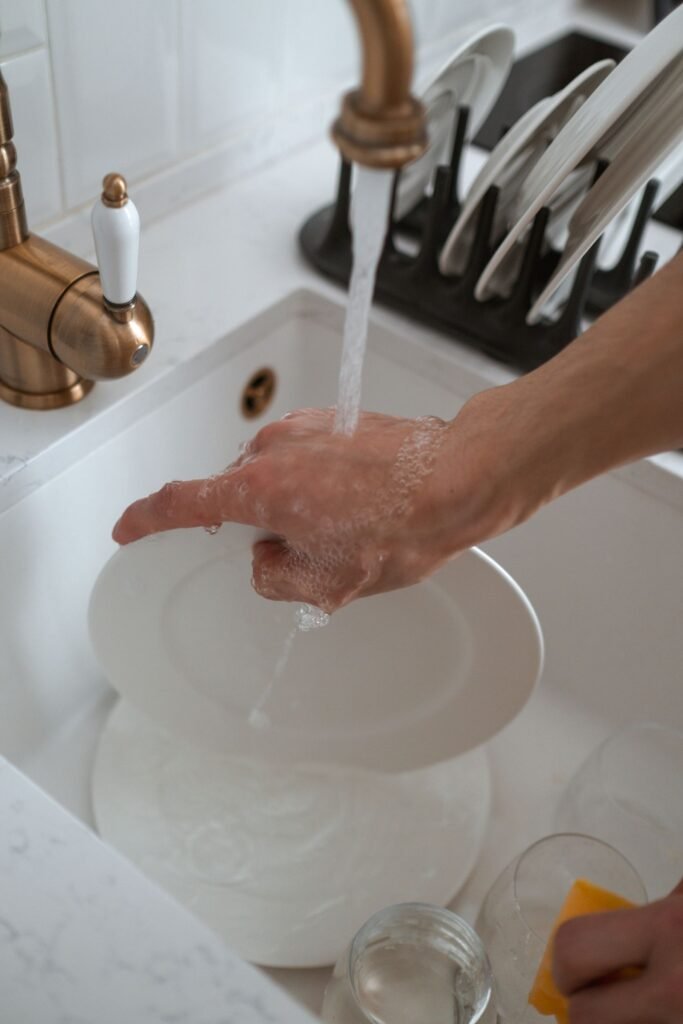
| Washing the dishes | The suds, the weight of each plate, the sound of the water | 5 minutes |
| The first bites of a meal | The color, smell, texture and taste of the food | 1 to 2 minutes |
| Putting the kids to bed | Their breathing and yours, the weight of your body on the bed | 3 to 5 minutes |
In the shower and at the sink
They involve many senses at once. Instead of going over your schedule under the shower, feel the water on the back of your neck and the smell of the shampoo. At the sink, the same goes for the suds and the weight of the plate, and when your mind drifts off to the meeting or the homework, you come back to the plate in your hand.
At mealtimes, without needing total silence
A lot of content about mindful eating suggests eating alone, in silence, for twenty minutes. Lovely, but at the table of a family with three kids, that simply doesn’t exist. The doable version is to pay full attention only to the first two or three bites: look at the plate, smell it, chew slowly and notice the taste. Then the conversation, the spilled glass and the request for more rice come back, and that’s fine.

For whoever is cooking, ingredients set out before turning on the stove, as in mise en place, leave headspace to pay attention to the pan.
At bedtime
Lying next to a child who takes a long time to fall asleep, you can follow their breathing and yours, feel the weight of your body sinking into the mattress and let your shoulders drop. If you are the one with insomnia, slow breathing and other techniques from the article on how to fall asleep fast go well with this practice.
Mindfulness with kids around
You started your three breaths and someone yelled “Mom!” from the living room. The urge is to give up and decide that this isn’t for people with kids at home. But the interruption doesn’t ruin the practice, it becomes the practice. Noticing the irritation rising, taking one breath before answering and then going to see what happened is mindfulness working right where it makes the biggest difference.
Another option is to invite the kids to join in, without turning it into one more chore.:
- Balloon breathing: everyone puts a hand on their belly and slowly fills up “the balloon” (which is the belly), then lets it out. Three times is enough.
- Slow fruit: at snack time, everyone describes the color, smell and texture of their piece of fruit before taking a bite.
- What’s the weather like inside you? Before bed, your child says whether their day was sunny, cloudy or rainy. This helps them name feelings without needing many words. Talking about emotions with kids goes a long way in teaching them how to deal with them day to day.
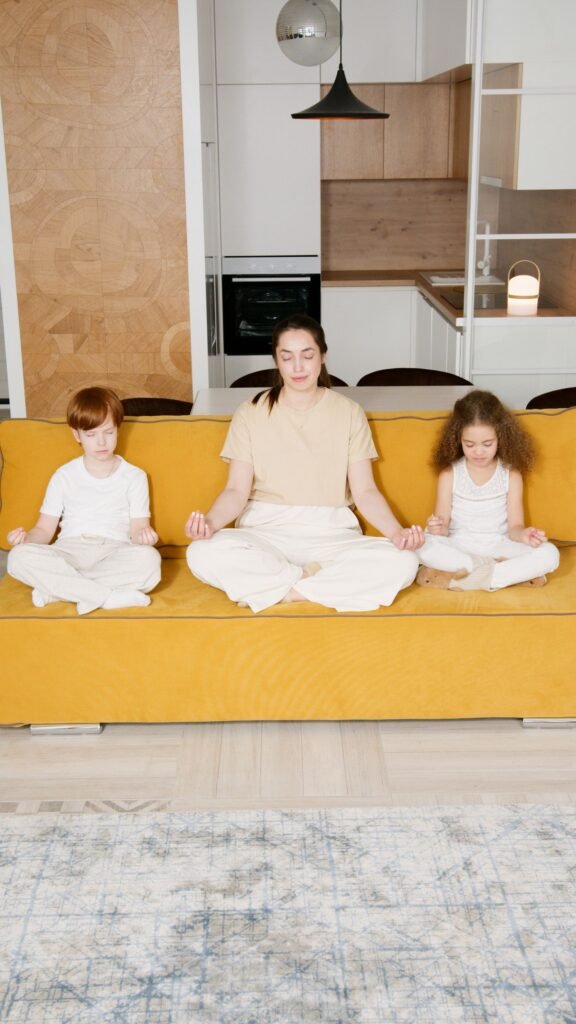
These are games to build the habit at home. You don’t even need a meditation pose for them. If your child has anxiety or attention difficulties, guidance should come from their pediatrician or a child psychologist.
How to keep it up after the first week
I would start small, with a single anchor from the table, for example the minute before picking up your phone in the morning. Once it is automatic, then you add a second one.
A note on the mirror or a discreet alarm helps you remember. And if a day, or a week, goes by without practicing, the logic is the same as the exercise: notice that you got distracted and come back, without an inner lecture.
If you like having someone guide you, UCLA Health offers free guided meditations in audio on UCLA Mindful, from a 3-minute body scan to a 13-minute body scan for sleep. The practice also goes well with other self-care habits.
When the practice is not enough
For most people, the practice is safe, but it is not free of side effects. According to the NCCIH, in an analysis of studies with more than 6,000 participants, about 8% reported negative effects, mainly anxiety or depressive symptoms, a rate similar to that seen in psychological therapies. So if sitting still and paying attention to yourself brings distress instead of relief, stop the exercise and talk to a professional.
The same applies when sadness, anxiety or insomnia are already getting in the way of work and family life. The practice can complement care, but it does not replace a medical or psychological assessment. In Brazil’s public health system, the first stop is the local primary care clinic (UBS); elsewhere, start with your family doctor.
Still have questions?
How much time a day makes a difference?
There is no magic number. When you are starting out, consistency matters more than duration, so one minute every day tends to do more than half an hour once a month.
Do I need to sit cross-legged and close my eyes?
No. You can practice sitting on a chair, standing in line or walking. Closing your eyes helps some people concentrate, but looking at a fixed point on the floor works just as well.
Is mindfulness related to religion?
It has roots in Eastern meditative traditions, but the form used in health programs does not require any belief. You practice the same way, whatever your religion.
To wrap up
Mindfulness is training your attention to come back to the present, and it fits into one minute before your phone, in the shower or in the first bites of dinner. Choose one anchor, practice every day and accept interruptions as part of the training.
Informational content. It does not replace advice from a health professional, such as a doctor or psychologist.