
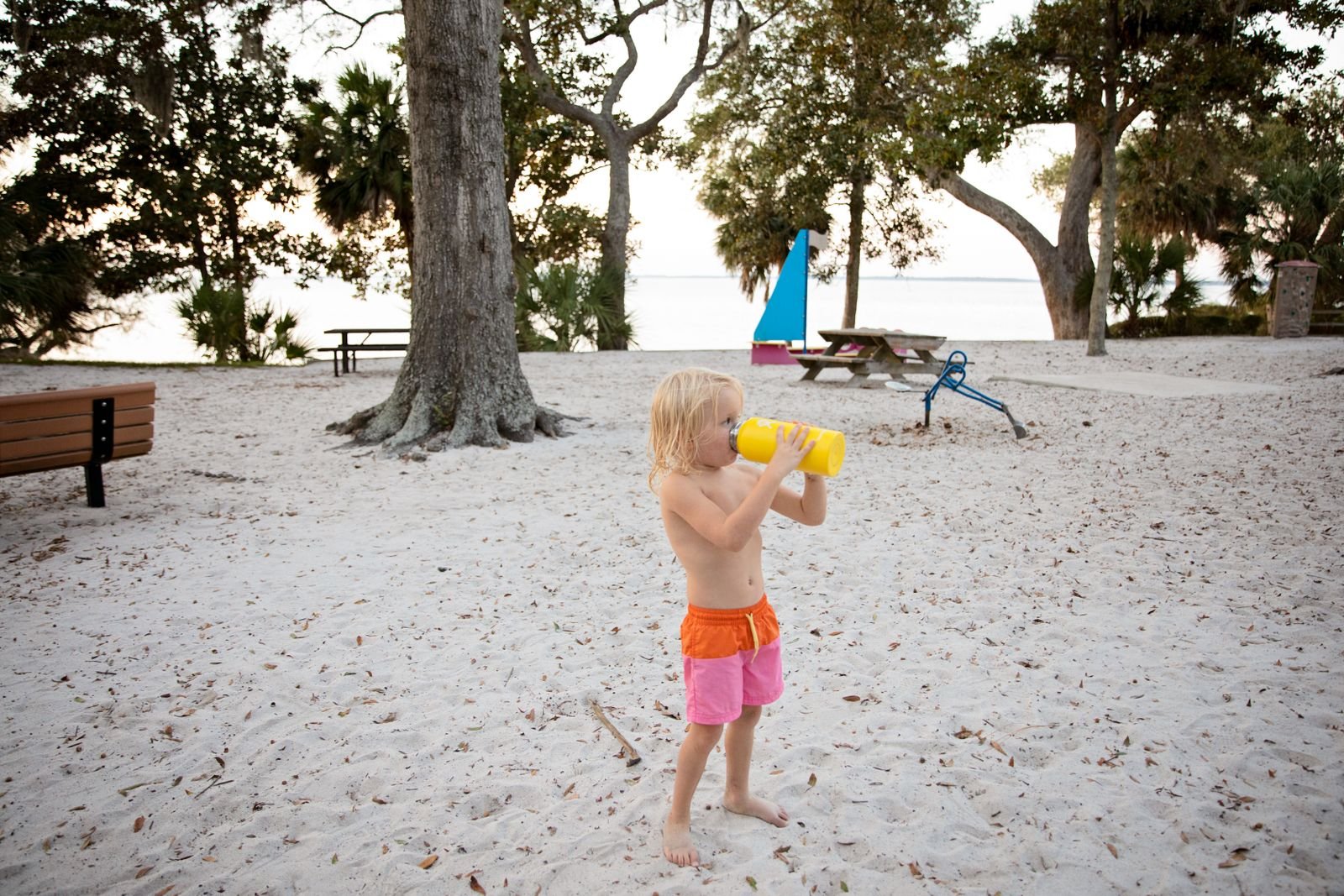
Summer is here, and on some days the heat is just begging for a trip to the beach or the pool. The kids love it and don’t want to get out of the water. Even on a hot day, they are so busy playing that they forget to drink water, and you take the chance to enjoy an ice-cold beer or soda. This is really common, and it can lead to dehydration, which sometimes gets serious. Ever notice how, on days like these, everyone comes home exhausted? The question is: is it just tiredness, or is the body already short on water?
Dehydration in children happens when the body loses more water than it takes in, and on a sunny day that loss comes mainly through sweat. That is why it pays to get ready before you leave the house with the kids on hot days. And if mild dehydration does happen, you can handle it at home, and I will show you how in a moment. I also want you to be able to recognize the signs that call for medical care. I pulled together what the CDC, the American Academy of Pediatrics (AAP) and the Merck Manual recommend.
Why kids dehydrate faster on a hot day
In the heat, the body cools itself by sweating, and every drop of sweat is water leaving the body. The thing is, for a child the urge to play is louder than thirst, and they often only remember the water once they are already very thirsty. No wonder the CDC points out that infants and young children rely on others to keep them cool and hydrated when it’s hot outside.
How to enjoy the beach or the pool without getting dehydrated
Prevention starts at home, before you leave, and it doesn’t take anything complicated:
- One water bottle per person. Bring enough water for the whole day and keep the bottles where everyone can see them, because a bottle buried at the bottom of the bag is a forgotten bottle.
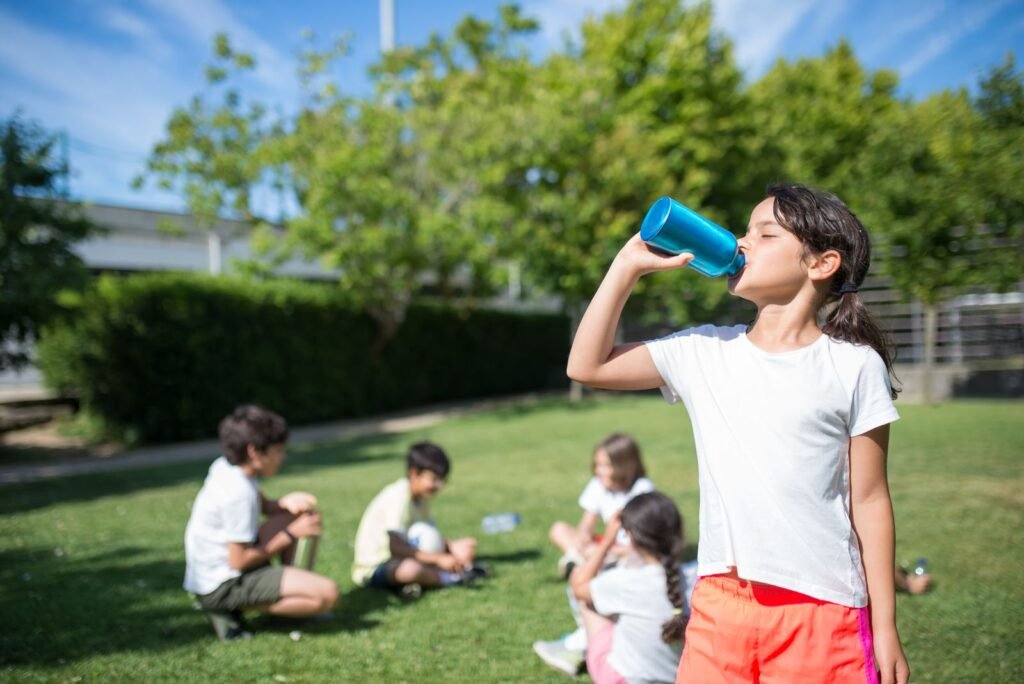
- Water at set times, not only when they ask. The AAP recommends encouraging children to drink water frequently, with plenty of water, not sugary drinks, throughout the day. In practice, set a simple rule: out of the water, take a sip.
- Fruit in the cooler. Watermelon, oranges or pineapple chunks take care of the snack and add some extra fluid.
- Timing, shade and light clothes. The AAP suggests scheduling the most active play for the cooler parts of the day, and the CDC recommends loose, light-colored, lightweight clothing. If you can, go early in the morning or late in the afternoon, with an umbrella and a hat.
- Never a parked car. Not even for a few minutes: the CDC warns never to leave infants or children in a parked car, even with the windows open.
For babies, the rule is different, and it’s in the questions at the end.
Back home and the kids seem wiped out: tiredness or dehydration?
After a whole day of sun and water, it’s normal for a child to come home tired. What separates tiredness from a sign of dehydration is the overall picture. According to the Merck Manual, mild to moderate dehydration in children usually causes a dry mouth and lips and more thirst, and kids may pee less and seem less lively or playful.
So, before everyone hits the shower, ask three questions: when was the last pee? Is the mouth dry? Is the child gulping water in a hurry, almost desperately? The chart Brazil’s Ministry of Health uses to assess hydration was made for diarrhea, but it helps you see where your child stands:
| What to look at | Hydrated | Dehydrated | Severe |
|---|---|---|---|
| General state | Active and alert | Irritable or restless | Very limp, drowsy or unconscious |
| Eyes | Normal | Sunken | Sunken |
| Tears | Present | Absent | Absent |
| Mouth and tongue | Moist | Dry | Very dry |
| Thirst | Normal | Drinks fast and eagerly | Cannot drink |
| Pulse | Full | Full | Weak or absent |
Source: Brazil’s Ministry of Health, poster “Assessing the hydration status of patients with diarrhea” (in Portuguese).
According to the chart, two or more signs in the middle column already point to dehydration. And when you’re torn between two columns, the guidance is to follow the more serious one. Keep an eye on behavior too: among the symptoms of heat-related illness, the AAP lists intense thirst, not peeing for many hours, feeling faint or extremely tired, confusion, an unusual headache, nausea or vomiting and faster breathing.
What if it’s heat stroke?
Heat stroke is different from ordinary dehydration, and more serious. The CDC lists a body temperature of 103°F (39.4°C) or higher, hot, red, dry or damp skin, a fast and strong pulse, headache, dizziness, nausea, confusion and passing out. It’s a medical emergency: call 911 right away, move the child to a cooler place and lower their temperature with cool cloths or a cool bath. While waiting for help, the CDC advises not giving anything to drink.
What to do at home in the first few hours
If the signs are mild (dry mouth, more thirst, less pee, a quieter child) and none of them is a red flag, you can take care of it at home. Bring your child to a cool place, take off extra clothing (the AAP suggests a cool bath or water mist when a child feels hot) and offer fluids little by little and often.
To replace what the body lost, an oral rehydration solution is the best choice. The Merck Manual explains that plain water, undiluted juice and sports drinks are not ideal for treating dehydration, because water has too little salt and the others have too much sugar. You’ll find ready-made solutions at the pharmacy, and the article on homemade oral rehydration solution has the right measurements.
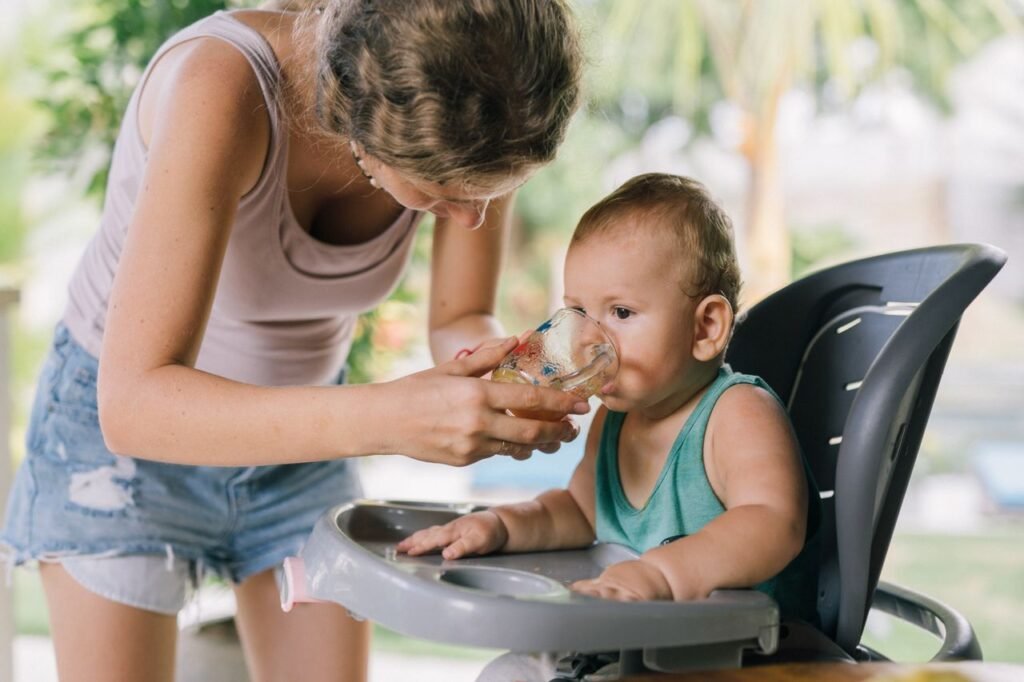
And what if your child refuses? Sometimes they feel queasy and any full cup feels like a punishment. In that case, swap the cup for a spoon or a tiny cup and offer a sip every few minutes. If they throw up, start again even more slowly. Just don’t let the refusal drag on all night, because not being able to drink is one of the warning signs further down.
After a few hours, check again: if they’re peeing again, livelier and keeping fluids down, the worst is over. If nothing has changed, get medical care.
Diarrhea and vomiting dehydrate too
Heat isn’t the only way in. According to the Merck Manual, vomiting and diarrhea are the main causes of dehydration in children, because they make the body lose fluid all at once. In these cases, the Brazilian Ministry of Health poster recommends offering, after each watery stool:
- Under 1 year: 50 to 100 ml (about 2 to 3 oz).
- From 1 to 10 years: 100 to 200 ml (about 3 to 7 oz).
- Over 10 years: as much as the child will take.
If your baby is exclusively breastfed, keep nursing, because in that case the only extra fluid recommended is oral rehydration solution. The poster also says to seek care if the child doesn’t improve in 2 days, the diarrhea gets worse, the vomiting keeps coming back, there is blood in the stool, they pee less or get very thirsty, or they refuse food.
When to get help without waiting
Sometimes home care isn’t enough. Get urgent care right away if your child:
- is very limp, drowsy or hard to wake, or can’t drink;
- is a baby with a sunken soft spot, sunken eyes, crying without tears, a dry diaper or less alert than usual, which the Merck Manual lists as reasons for immediate care;
- has a high fever with hot, dry skin, confusion, fainting or a seizure after a day in the sun, which are signs of heat stroke.
If your child faints, has a seizure or doesn’t respond, call 911. With a little one, it’s better to err on the side of caution, because taking in a child who hasn’t wet a diaper since morning is never an overreaction.
Don’t forget yourself: beer and soda don’t protect anyone
And there’s a part of the story that’s about you. An ice-cold beer or soda feels like relief in the moment, but it doesn’t prevent dehydration and can even help bring it on.
Here’s what happens with alcohol: it blocks a hormone that tells the kidneys to hold on to water. Without that signal, the kidneys let more water go, and you end up peeing more and losing more fluid, as the National Institute on Alcohol Abuse and Alcoholism explains. Caffeine, found in colas and coffee, also makes the body get rid of more urine, according to the Merck Manual. In other words, out in the sun, you drink and your body sends a good part of it right back out.
That’s why the CDC suggests limiting drinks high in sugar, caffeine and alcohol in the heat. And whoever is looking after the kids needs to feel well to notice when something isn’t right with them.

Quick questions about dehydration in children
Does an exclusively breastfed baby need water in the heat?
No. The AAP advises that babies should not be given water, especially in the first 6 months. On hot days, a breastfed baby can simply nurse more often, or get extra breast milk from a bottle, and a formula-fed baby can get extra formula.
Is a sports drink a good idea after a day in the sun?
Not really. For everyday thirst, the AAP recommends water rather than sugary drinks, and when a child is already dehydrated, the Merck Manual explains that sports drinks are not ideal, because they have too much sugar. In that case, reach for an oral rehydration solution.
For the next sunny day
Before you head out, pack one water bottle per person and agree on the “out of the water, take a sip” rule. And when you get home, ask the simplest question of all: when was the last pee?
This content is for information only and does not replace an evaluation by a doctor or other health professional, especially for babies, older adults, pregnant women and people with chronic conditions.