

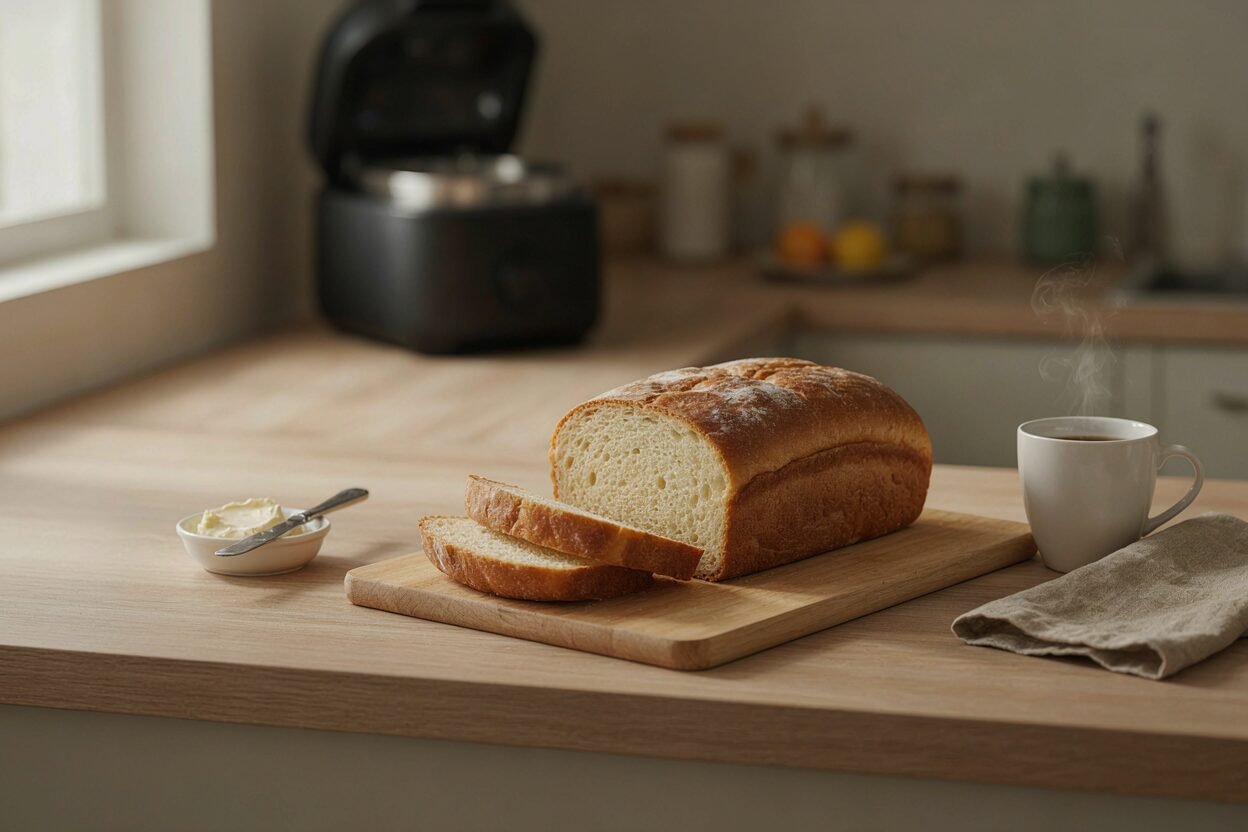
Some bread machines live in the cupboard because the first loaf came out short, the second turned into a brick and then nobody had the courage to try a third. If that sounds familiar, the good news is that the problem is almost always the recipe, not the machine. Bread machine recipes work best when they follow a single logic: liquid at the bottom, flour on top, yeast kept away from the salt and flour measured by weight.
That is why, instead of ten unrelated recipes, I put together one base recipe and ten variations that come from it. You learn the base once and then swap one or two ingredients to have whole wheat bread on Monday, carrot bread for the kids’ snack and pizza dough on Friday.
Before the recipes: what makes bread turn out well in the machine
The machine mixes, kneads and bakes on its own, but it does not fix anything. Three things solve almost every problem.
The order of the ingredients
First the liquids (water, milk, egg, oil or butter), then the sugar and salt, and on top the flour, covering everything. The yeast goes in last, in a small well in the middle of the flour, without touching the liquid or the salt. Manuals ask for this because salt hinders the yeast, and yeast that gets wet too early starts working too soon.
Weigh the flour instead of using cups
A cup of flour weighs about 120 grams when measured carefully, but can top 140 grams if you scoop it straight from the bag. Over four cups, that changes the whole loaf. If you can, weigh the flour and set everything out beforehand, the famous mise en place.
For every 500 g of white flour, the dough needs about 300 ml of liquid. Whole wheat flour, oats and cornmeal absorb more water.
Program, loaf size and crust color
The basic program works for most of the recipes, and the whole wheat, sweet and dough programs come in when a recipe calls for them. With 500 g of flour (about 4 cups) you get a loaf of roughly 800 g, so check your manual for the loaf size setting that matches that amount of flour. Recipes with more sugar brown quickly and are better on a “light” crust.
The basic homemade bread recipe
All the variations start from this table.
| Order | Ingredient | Amount |
|---|---|---|
| 1 | Room-temperature water (lukewarm only on cold days) | 300 ml (about 1¼ cups) |
| 2 | Oil | 2 tablespoons |
| 3 | Sugar | 1 tablespoon |
| 4 | Salt | 1 teaspoon |
| 5 | Wheat flour | 500 g (about 4 cups) |
| 6 | Instant dry yeast, in the well in the flour | 2 teaspoons, about 6 g |
- Put the water and oil in the pan first, then the sugar and salt.
- Add the flour on top, covering everything.
- Make a small well in the middle of the flour and add the yeast, without touching the liquid or the salt.
Basic program, medium crust. During the first five minutes of kneading, open the lid and look: the dough should form a smooth ball that sticks slightly to your finger. If it is crumbly, add a tablespoon of water; if it is sticking to the sides, a tablespoon of flour. Then close the lid and do not open it again, because the dough loses heat and the bread can collapse. Since the base only has ingredients that can wait, it works on the timer.
10 bread machine recipes from the base
Each recipe only lists what changes from the base. Anything not mentioned stays the same.
1. Simple homemade bread
This is the base itself, with nothing changed. It is the best first try, because it shows you your machine’s quirks.
2. Soft milk sandwich loaf
- Swap the water for 300 ml of milk.
- Instead of oil, use 2 tablespoons of butter in small cubes.
- Increase the sugar to 2 tablespoons.
Basic or “soft” program, if your machine has one. The crumb is tighter and softer, great for lunch box sandwiches. To use the timer, swap the milk for 300 ml of water with 3 tablespoons of milk powder.
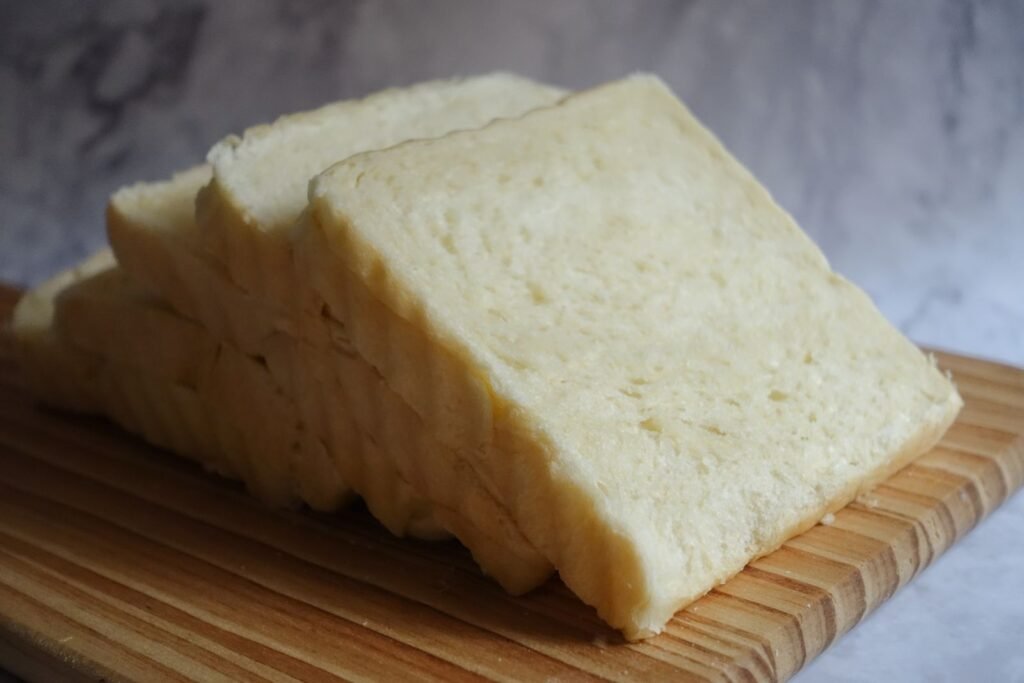
3. Whole wheat bread that does not turn into a brick
- Use 250 g of whole wheat flour and 250 g of white flour.
- Increase the water to 320 ml.
- If you like, swap the sugar for brown sugar.
Use the whole wheat program, which gives the dough more time to rise. A 100% whole wheat loaf in the machine usually comes out short and dense, which is why half and half is the best place to start.
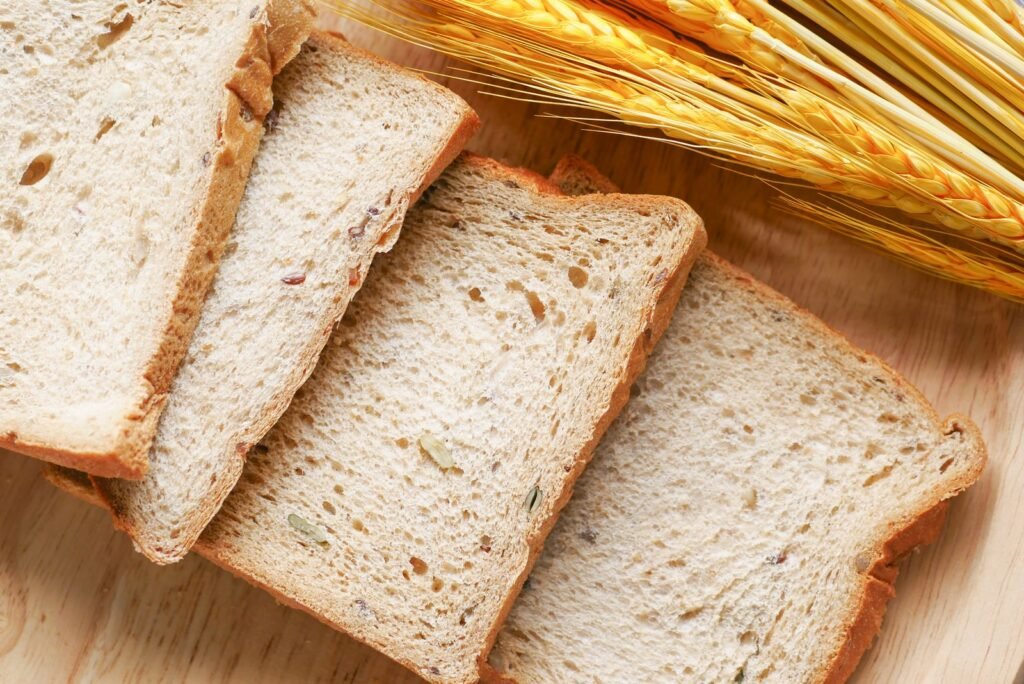
4. Oat and honey bread
- Remove 80 g of the flour and add 80 g of rolled oats.
- Swap the sugar for 2 tablespoons of honey.
- Reduce the water to 280 ml, since honey is also a liquid.
Basic program, medium crust. The oats add fiber and a slightly sweet flavor.
5. Carrot bread for the kids’ snack
Blend 1 medium raw carrot (about 120 g) with 220 ml of water and use this instead of the 300 ml of water. Since every carrot releases a different amount of water, check the dough in the first few minutes and adjust with a spoonful of flour or water.
6. Cornmeal bread
- Remove 100 g of the wheat flour and add 100 g of fine cornmeal.
- Increase the sugar to 2 tablespoons.
- If you like, swap half of the water for milk.
Do not go over about 120 g of cornmeal, because it has no gluten and, with too much, the bread stops rising.
7. Cheese and oregano bread
- Add 1 teaspoon of dried oregano on top of the flour.
- Reduce the salt to ¾ teaspoon, since the cheese is salty.
- Set aside 100 g of semi-cured cheese or mozzarella in small cubes.
Add the cheese when the machine beeps the add-ingredient signal. If it goes in at the start, the kneading breaks up the cubes and the cheese disappears into the dough.
8. Sweet cinnamon raisin bread
- Crack 1 egg into the measuring cup and top it up with milk to 300 ml; use it instead of the water.
- Swap the oil for 3 tablespoons of butter and increase the sugar to 4 tablespoons.
- Add 1 teaspoon of ground cinnamon with the flour and half a cup of raisins at the add-ingredient signal.
Sweet program and light crust, because with this much sugar the crust browns quickly.
9. Crusty rolls
The machine does the tedious part and the oven does the rest. Use the base with only 1 tablespoon of oil and 1 teaspoon of sugar, on the dough program. Then divide it into 10 balls, shape them tightly, make a cut on top and let them rise covered for 30 to 40 minutes. Bake in an oven preheated to 220 °C (428 °F), with a tray of water on the bottom rack for steam, for 18 to 22 minutes.
10. Friday pizza dough
- Water: 280 ml. Oil: swap it for 3 tablespoons of olive oil.
- Sugar: 1 teaspoon. Salt: 1½ teaspoons.
- Yeast: reduce to 1½ teaspoons.
Dough program. It makes two medium pizzas: roll out the dough, pre-bake for about 5 minutes at 230 °C (446 °F), add the toppings and bake until the cheese melts.
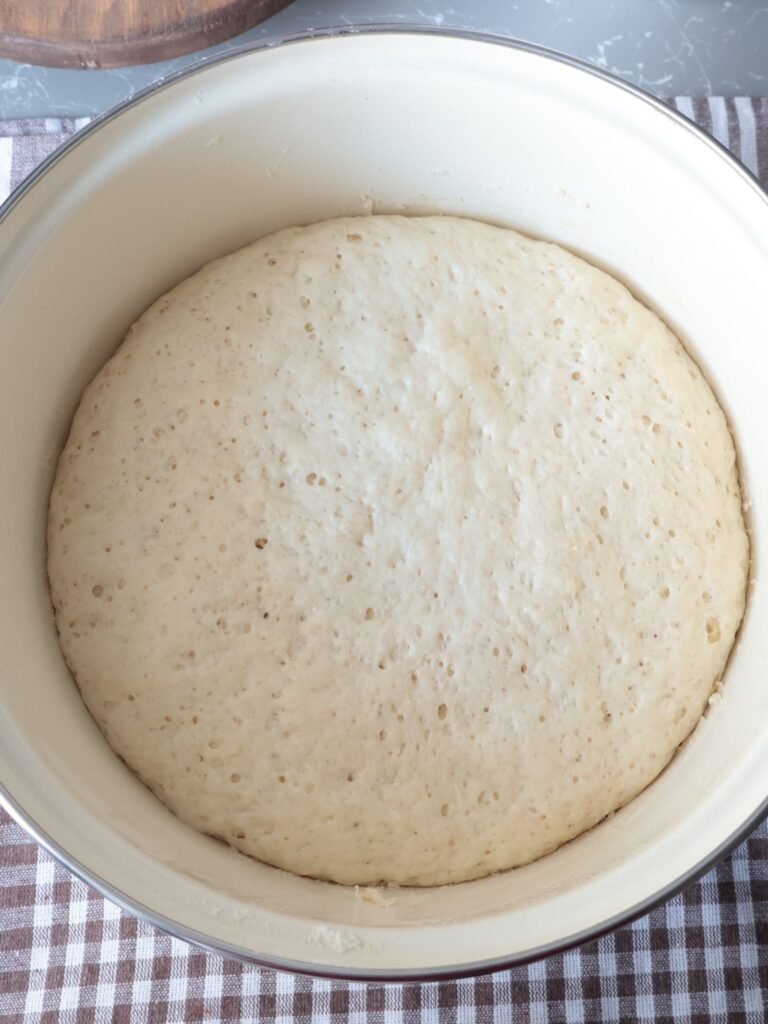
Warm bread on the timer: which recipes work
With the timer, you set everything up at night and wake up to bread coming out. On most machines, it counts the time until the bread is ready.
But eggs, fresh milk, yogurt and butter can spoil sitting for hours at room temperature, and manuals such as those from Panasonic and Philips advise against using the timer with perishable ingredients. Of the recipes above, 1, 3, 4, 6 and 2 in the milk powder version work on the timer. The others are for the weekend. If you already make a cheap weekly meal plan, homemade bread fits easily into breakfast and snacks.
How to store homemade bread
Wait for it to cool before slicing, because the warm crumb is still setting and clumps on the knife. Then, in a well-sealed bag or container, it keeps for about three days outside the fridge (Healthline puts homemade bread at 3 to 4 days). Beyond that, slice it, separate the slices with parchment paper and freeze: in the morning, put the day’s slices straight into the toaster.
When the bread does not turn out as expected
| What happened | Most likely cause | What to change next time |
|---|---|---|
| It did not rise | Expired yeast, water that was too hot or yeast touching the salt | Check the expiration date and make the well in the flour |
| It came out heavy and short | Too much flour (measured in cups) or a lot of whole wheat flour | Weigh the flour and mix whole wheat with white |
| It rose and then sank in the middle | Too much liquid or yeast, or the lid opened mid-cycle | Remove 20 ml of liquid and do not open it after kneading |
| The crust is too dark | A lot of sugar with a medium or dark crust setting | Use the light setting for sweet recipes |
Still have questions?
Can I make gluten-free bread in the machine?
Yes, but not by swapping the wheat flour in the base for another flour. Gluten-free bread needs its own flour blend and a specific program, which many machines already have. Follow a recipe made for it or the manufacturer’s booklet.
How long does the machine take to make bread?
On the basic program, about three to four hours, depending on the model: the manual for the Panasonic SD-2501, for example, lists 4 hours to 4 hours 5 minutes. Whole wheat takes longer, and the dough program finishes much sooner, because it does not bake.
To wrap up
The best bread machine recipes come from a single base: 300 ml of liquid, 500 g of weighed flour, yeast kept away from the salt and the right program. Swap one or two ingredients and you get ten different breads, and the timer, used only with recipes that have no perishable ingredients, puts warm bread on the table on Monday morning.
This content is for information only. It does not replace advice from a nutritionist or doctor in cases of dietary restrictions, such as celiac disease or diabetes.