

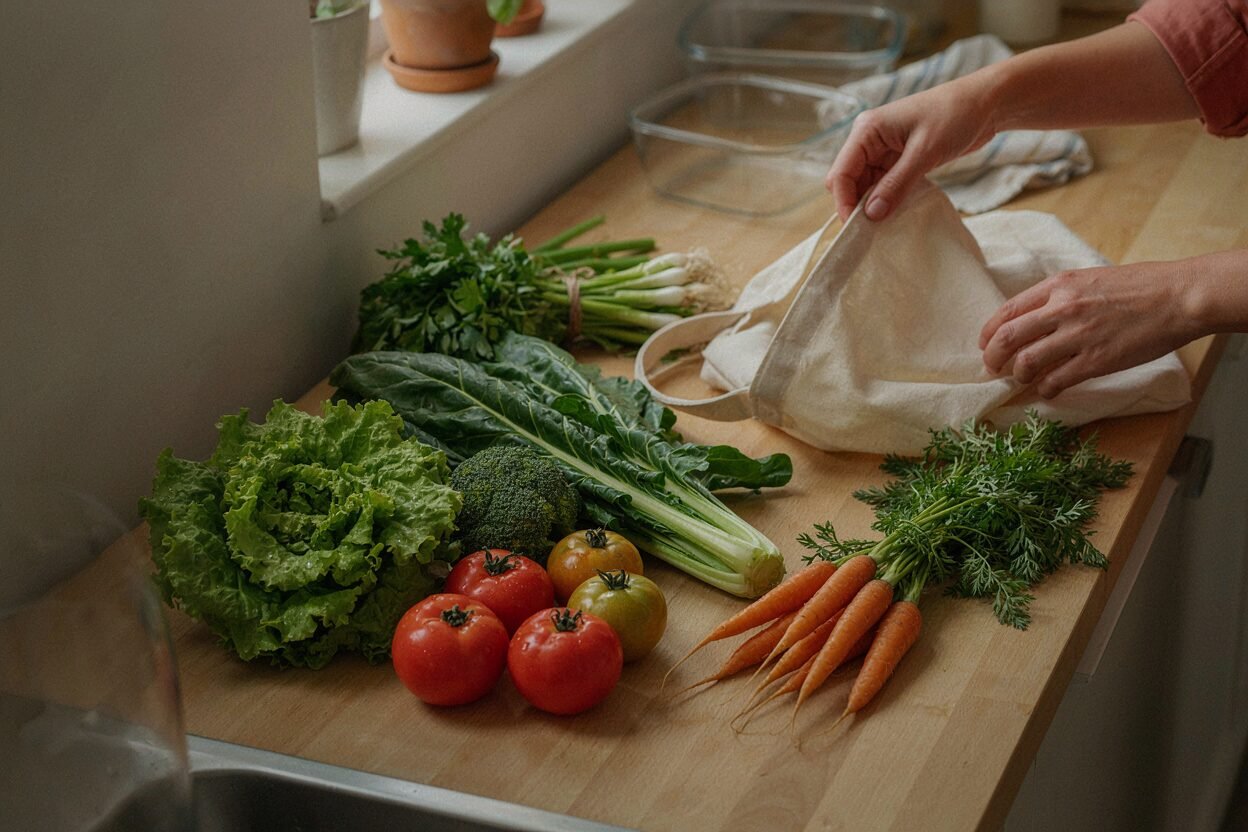
You get home from the market with a bag full of beautiful greens, put everything in the fridge and, three days later, open the drawer to find wilted lettuce and the parsley turning into a dark soup at the bottom of the bag. Then it all goes in the trash, along with the money and that wish to eat better during the week.
In this article, I will show you the right way to store these vegetables so they last longer. These are simple steps that show how to store vegetables in the fridge without the lettuce and other greens going limp or getting black spots.
Why vegetables wilt or rot in the fridge
And it does: according to Embrapa Hortaliças (in Portuguese), cold slows down yellowing, wilting, rotting and loss of flavor. The catch is that the inside of the fridge is a dry environment, so leaves left loose in the drawer keep losing water until they wilt, even in the cold.
The opposite problem also exists. When there is leftover water on the surface, especially on vegetables with small bruises, it opens the way for rot.
And there are two more details few people notice. The back wall is usually the coldest part, so lettuce, arugula and watercress pressed against it can get frost damage. The other is ethylene, a gas that speeds up ripening: bananas, apples, tomatoes, papayas and avocados release a lot of it, but leafy greens, broccoli and cucumbers are sensitive to it, so the two groups should stay apart.
Not everything goes in the fridge: what to keep inside and what to leave out
Some vegetables are damaged by cold, sometimes with spots and soft patches, sometimes only with changes in flavor and texture that you notice when you eat them. Embrapa Hortaliças splits vegetables into four groups, and this is the table I would stick on the fridge door:
| Group | What to do | Examples |
|---|---|---|
| Always in the fridge | Store as soon as you get home and take out only when cooking | Leafy greens, broccoli, carrots, beets, cauliflower, cabbage, radishes, fresh corn |
| Fridge if not used within 2 days | Do not keep refrigerated for more than 4 to 7 days | Ripe tomatoes, zucchini, eggplant, chayote, cucumber, bell peppers, okra, green beans |
| Outside the fridge | Cool, well-ventilated place | Potatoes, sweet potatoes, onions, garlic, cured squash, yams, tomatoes not yet fully ripe |
| Peeled or cut | Always in the fridge, in a closed container | Any vegetable after peeling, cutting, chopping or grating |
The rule in the last group saves a lot of food, because the skin is the vegetable’s natural protection and, without it, it spoils much faster.
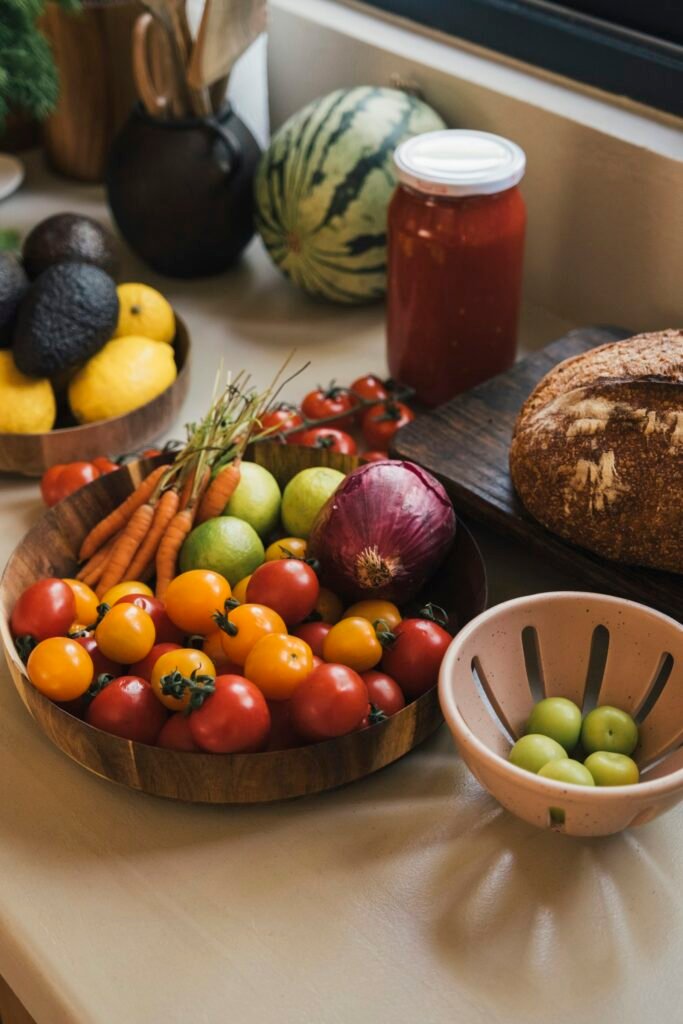
Step by step when you get home from shopping
What decides whether greens last three days or a week is what you do in the first minutes after getting home. The order is this:
- Take them out of the market bags. Do not store them in the same bag they came home in. As the FDA explains, produce passes through many hands after it is harvested, which increases the contamination risk, and it can carry dirt into the fridge.
- Clean before storing. Yellowed leaves and dark or rotten parts come off right away, because the spoiled part contaminates the good part and its drawer neighbors.
- Decide whether to wash now or later, which depends on the vegetable (I explain just below).
- If you washed them, remove the excess water. Leaves can simply be drained, but smooth-skinned vegetables, like carrots and bell peppers, need to be dried with a clean cloth or paper towel.
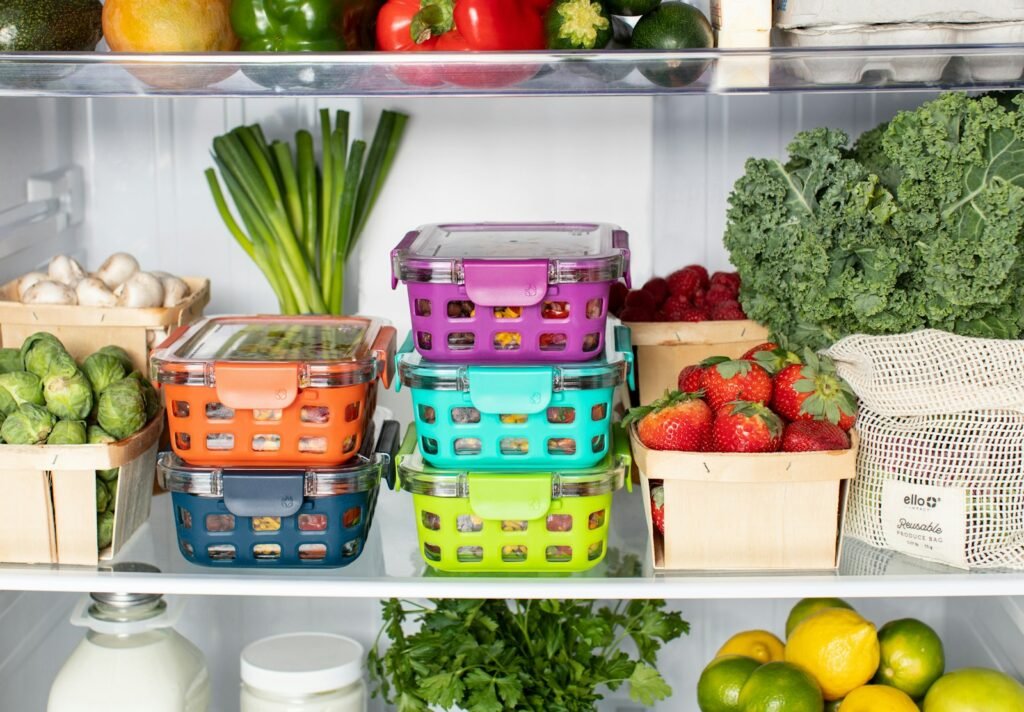
- Always pack them, in a food-safe plastic bag or a lidded container, glass or plastic. Without packaging, the fridge dries vegetables out.
- Store them in the crisper drawer, away from the back wall and from fruits that release a lot of ethylene.
Wash before storing or only when you use them?
It depends on the vegetable, and this is the part few people explain. According to Embrapa Hortaliças, washing removes dirt and microorganisms from the surface, but the water left behind can speed up spoilage when the vegetable has small wounds. In practice, the rule goes like this:
- You can wash and just drain: greens that do not form a head, like collard greens, arugula, watercress, chicory, Swiss chard and mustard greens.
- You can wash, as long as you dry them well: carrots, beets, tomatoes, cucumbers, bell peppers, eggplant, chayote and green beans.
- Better not to wash before storing: broccoli, cauliflower, cabbage, zucchini, okra, fresh corn, peas and arracacha.
Lettuce sits in the middle, because Embrapa says you can store the whole head unwashed or the leaves already separated, washed and drained, in a lidded container.
What about sanitizing what you eat raw?
Running water removes visible dirt, and for food eaten raw that is the step the FDA recommends: wash all produce thoroughly under running water, scrub firm produce, such as cucumbers, with a clean produce brush and dry it with a clean cloth or paper towel. Then drain well before storing.
A note about chlorine (bleach): you may come across advice in Brazil to soak raw produce in diluted household bleach. The FDA advises against using soap, detergents or bleach solutions on produce, and says there is no need for a produce wash, so plain running water is the safe default. If you live outside Brazil, skip the bleach soak.
How to store vegetables in the fridge, item by item
The numbers below come from Embrapa’s fact sheets for each vegetable (in Portuguese) and apply to produce that arrived in good condition, because greens that spent days on a market stall last less at home. For comparison, the University of Maine Cooperative Extension gives somewhat different times, such as 5 to 7 days for lettuce, 3 to 5 days for broccoli, 1 to 2 weeks for carrots and 2 to 3 days for herbs, so treat every number as an estimate.
How to store lettuce in the fridge
Lettuce is among the vegetables that spoil fastest. Whole, in a plastic bag or lidded container, it lasts 3 to 4 days in the fridge, according to Embrapa’s lettuce fact sheet (in Portuguese), and ideally you take the leaves off as you use them, instead of pulling the whole head apart at once. Chopped, it drops to 2 to 3 days.
Butterhead lettuce is the most delicate, while loose-leaf and iceberg hold up longer, so for an end-of-week salad they are safer choices. And no freezer, because lettuce does not tolerate freezing.
How to store collard greens
Collard greens wilt and yellow quickly, so they go into the fridge in a closed plastic bag or lidded container. Whole leaves last up to a week, and chopped, up to three days. But if you love sautéed collard greens cut into very thin strips, I have good news: unlike lettuce, collard greens can be frozen. Cut the strips as usual and store them in a plastic bag with as much air removed as possible, ideally already split into the right amount for each use.
How to store fresh herbs
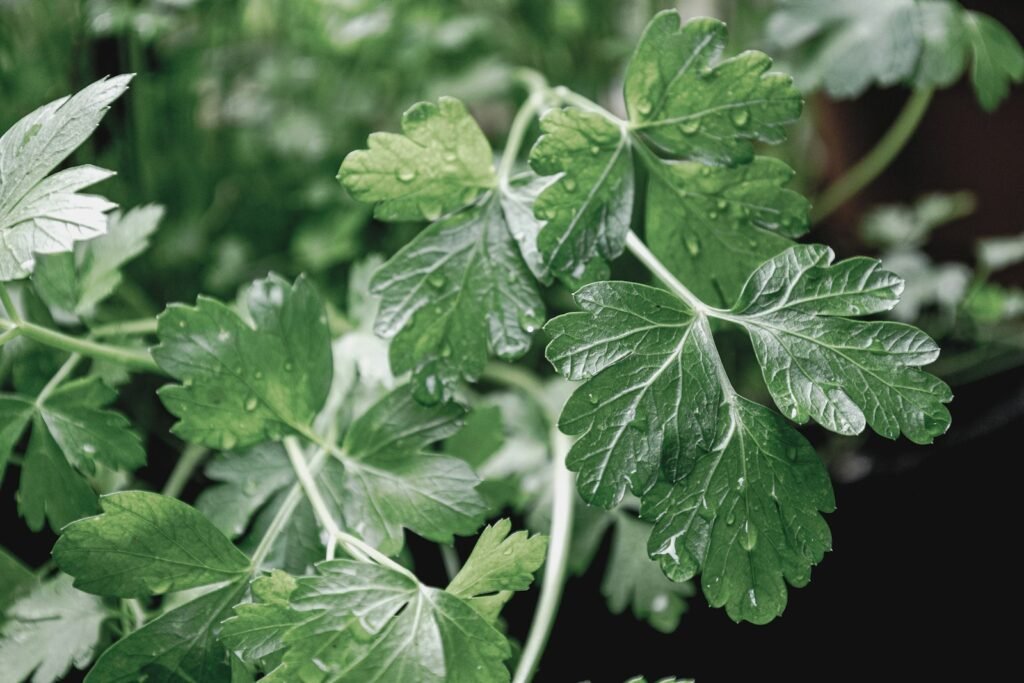
Outside the fridge, parsley and chive leaves wilt and yellow fast. To make fresh herbs last, Embrapa recommends removing yellowed or spotted leaves, washing under running water, draining well and storing in a bag or lidded container. That way they keep for about five days without losing quality. If the bunch is too big for the week, chop it, put it in an ice cube tray with water and freeze it, so later you just drop a cube straight into the pan.
How to store broccoli
Broccoli is one of the most delicate. It yellows and wilts fast and, in the fridge, lasts up to four days stored unwashed in a perforated plastic bag, so it goes at the very start of the week’s menu. If you do not have time to use it, freeze it, but first do a process called blanching.
How to blanch broccoli: separate the florets, dip them in boiling water for 2 minutes, transfer them to ice water, dry them well and put them in the freezer in a bag with the air pressed out. Single-head broccoli is the best type for freezing.
How to store carrots
Carrots last the longest on this list: up to 15 days in the fridge, in a food-safe plastic bag. If little drops of water appear inside the bag, poke holes in it with a fork, and if you washed them before storing, dry them with a clean cloth or paper towel. The rule for vegetables without skin applies here too, because grated, chopped or peeled carrots last much less and need to be kept in a closed container or bag.
If you are like me and take so long to use the carrots in the fridge that they go limp, there is a way to keep them crunchy for much longer: peel all the carrots and put them in a container with water, in the fridge. They need to be completely submerged for this to work, and the water should be changed every 5 days.
How to store tomatoes
Tomatoes that are not fully ripe should ripen outside, because in the cold they lose flavor and aroma. Red ones spoil faster, so if they are not used soon, they go to the bottom of the fridge in a perforated plastic bag, away from leafy greens, because of ethylene. Raw, whole or chopped, they should not be frozen; only ready-made sauce holds up in the freezer. English-language guides are stricter: both the University of Maine Cooperative Extension and Purdue Extension say ripe tomatoes should not go in the fridge, and Purdue adds that even red tomatoes kept in the refrigerator lose their flavor. Purdue also lists cucumbers, eggplant and peppers as room-temperature produce that can be refrigerated for 1 to 3 days if they are used soon after being taken out.
On busy weeks: how to store vegetables in the fridge so they are ready to use
Picture a Tuesday night: if the lettuce is still dirty inside the bag, the salad does not happen, but if it is washed in a container, it makes it to the table.
That is why I would plan the week by storage time. Broccoli and butterhead lettuce go in the first days, whole collard greens and loose-leaf lettuce stay for midweek, and carrots, beets and cabbage cover the end of the week. To make this work, set aside a little time after shopping to wash and pack what can be washed, which is the mise en place idea applied to the fridge.
If you have kids at home, a container of carrot sticks at their eye level makes the afternoon snack easier, but peeled carrots last much less (unless they are submerged in water, as I explained above), so cut a little at a time.
How to avoid food waste with the fridge on your side
Even well stored, vegetables have a shelf life, because cold only slows spoilage down. So waste really drops when the fridge becomes part of a routine, and three simple habits already make a difference.
The first is to check the fridge before going to the store and plan recipes with what is close to spoiling. With the menu planned, it is easier to buy only what will be used, and I left a ready-made template in the article on the cheap weekly meal plan.
The second is to eat first what expires first, the same FEFO logic I explain in how to organize your pantry: in the crisper drawer, what arrived first stays in front.
The third is cleaning, because removing what has spoiled keeps it from contaminating what is still good.
And when you already know you will not get through it in time, the freezer comes in as plan B for carrots, collard greens, broccoli and fresh herbs.
Still have questions?
Can I keep vegetables in the supermarket bag?
It is better to switch. According to the FDA, produce passes through many hands after it is harvested, so you do not want to bring that dirt into the fridge. A food-safe plastic bag or lidded container does the job.
Closed bag or one with holes?
Leafy greens need closed packaging, because they have to hold moisture so they do not wilt. If after a day there is a lot of condensation inside the bag, it means there is too much moisture: dry whatever is wet and poke a few holes.
Does hydroponic lettuce last longer?
According to Embrapa, it lasts longer when stored with its roots. So do not cut the root when you get home: store the whole head in the bag and take the leaves off as you use them.
To wrap up
To sum up: always pack them, remove excess water and keep them away from the back wall and from fruits that release ethylene. Wash beforehand only what tolerates water, eat first what lasts least and send to the freezer whatever you will not have time to use.
Sources: FDA: Selecting and Serving Produce Safely, FDA: 7 Tips for Cleaning Fruits, Vegetables, FDA: Fruits, Veggies and Juices (Food Safety for Moms-to-Be), University of Maine Cooperative Extension: Storing and Washing Fresh Fruits and Vegetables and Purdue Extension: Storing Fresh Fruits and Vegetables for Best Flavor (PDF).
This content is for information only and brings together guidance from Embrapa Hortaliças, the FDA, the University of Maine Cooperative Extension and Purdue Extension. Storage times may vary depending on the quality of the produce when you buy it and on the temperature of your fridge.