

It’s six in the evening, the pasta water is almost boiling and tonight’s bolognese depends on a pack of ground beef that is still in the freezer, hard as a brick. I don’t know if this has ever happened to you: forgetting to take out the main ingredient of the meal and then having to cook with it still frozen. The question is: are we losing all the flavor and juiciness of the meat at moments like this?
To know how to thaw ground beef without losing quality or taking risks, the rule is short: the ideal way is in the fridge, overnight. Forgot? Cold water or the microwave will do the job, as long as the meat goes straight into the pan, and you can even cook the block while it’s still frozen, as many of us already do (at least, I speak for myself). The counter, the sink and hot water are out.
I put together here what the Food Safety and Inspection Service of the US Department of Agriculture (FSIS/USDA) recommends for ground beef, which has shorter time limits than a steak. The general logic is in the article on how to thaw meat the right way, and here the focus is on what changes when the meat is ground.
Why ground beef is in more of a hurry than a steak
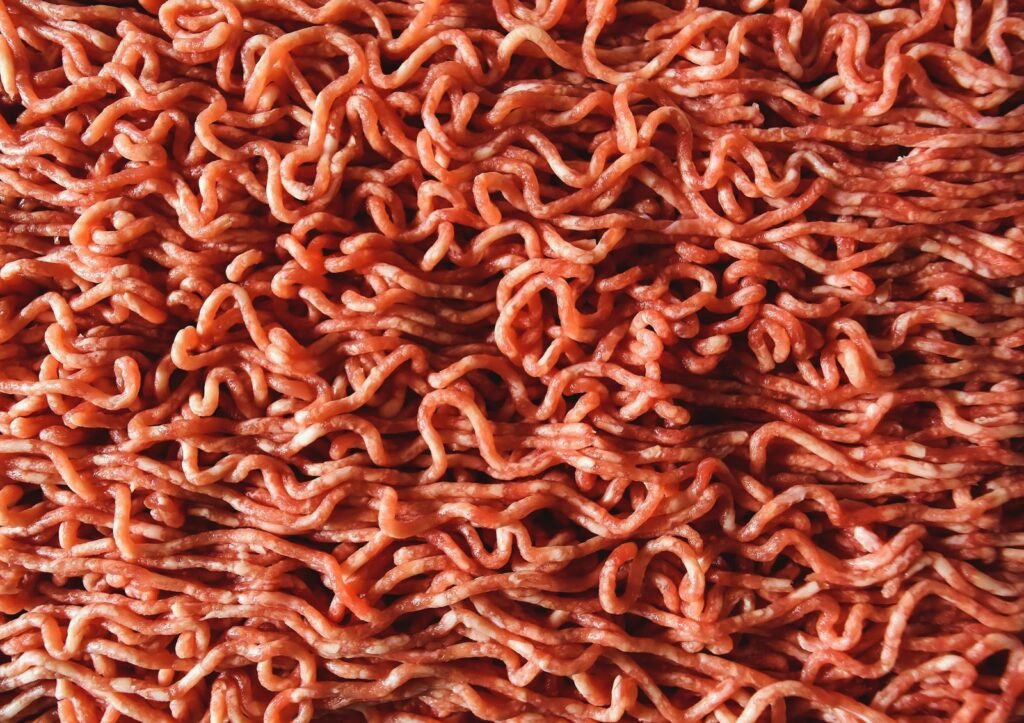
In a steak, any bacteria that happen to be on the meat stay on the surface. When the meat goes through the grinder, that surface gets mixed into the whole mass, and much more of the meat is exposed. That’s why the advice is to use raw ground beef kept in the fridge within 1 or 2 days.
That changes the thawing math, because ground beef has little waiting time once it softens. So it’s worth taking out of the freezer only what is going into the pan, with the cooking day already set. And the usual rule still applies: bacteria multiply fast between 40 °F and 140 °F (4 °C and 60 °C), and meat left on the counter spends hours in that range on the outside while the middle is still hard.
In the fridge: count on a full day, even for a pound
You’ll find claims out there that ground beef thaws in 8 hours in the fridge. But the FSIS/USDA thawing guide warns that even small amounts, like a pound of ground beef, need a full day. In practice, tomorrow night’s meat comes out of the freezer tonight.
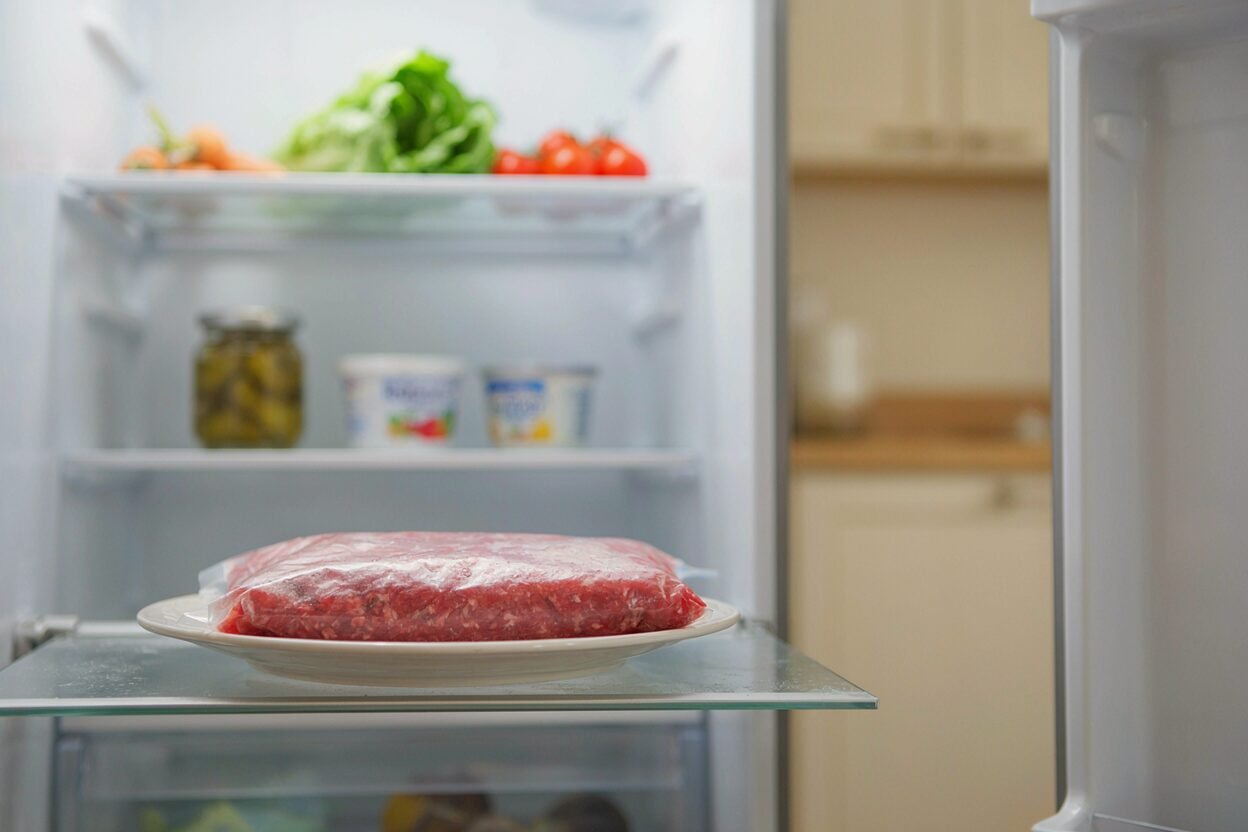
- Move the sealed package to the fridge on a deep plate or in a container, because the liquid that drips can’t be allowed to fall on other food.
- The bottom shelf is the right place, away from anything that’s ready to eat.
- When it’s time to cook, press the package in the middle. Did it give evenly? It’s ready. If there’s still a hard core, finish it in the microwave and take it straight to the stove.
- Throw away the liquid on the plate and wash the container with detergent.
Thawed this way, it keeps another 1 or 2 days in the fridge before going into the pan. It’s also the only method where the FSIS/USDA allows refreezing the raw meat, with some loss of quality. Even so, the simplest thing at home is to take out of the freezer only the portion for the meal. Or to prepare all the meat, even if it’s 2 to 4 pounds, because that leaves the next meals with ground beef already done.
How to thaw ground beef fast when you forgot
For those days, the FSIS/USDA accepts two more methods and even allows a shortcut, all with the same condition: once it’s thawed, cook it.
In cold water, in a sealed bag
Put the meat in a bag that won’t leak, press out the air and submerge it in a bowl of cold tap water, changing the water every 30 minutes. By the agency’s numbers, a package of about a pound thaws in an hour or less. If the store packaging is intact it can go in the water, but when in doubt, put it inside another bag, because meat that takes in water turns watery and can also pick up whatever is in the sink.
This option is really only for people who don’t have a microwave, since it’s slow and still needs water changes. But it’s a safe way to thaw the meat and make sure it will take on the flavor of the seasonings well when you cook it.
In the microwave, to go straight into the pan
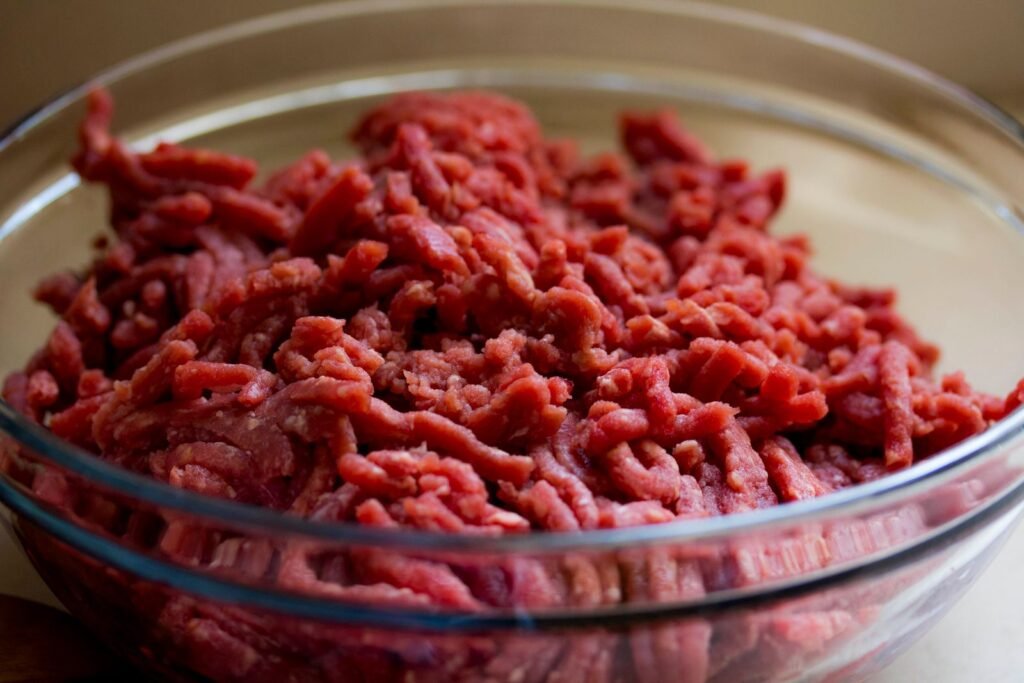
Take the meat out of the foam tray and the plastic, put it in a microwave-safe dish and use the defrost function with the weight the appliance’s manual indicates. As the edges soften, separate with a fork the part that has already come loose, because it starts to cook while the middle stays frozen. That’s exactly why the FSIS/USDA says to cook right afterwards: that warm piece can’t sit around waiting, and it won’t, because whoever is hungry is in a hurry.
Straight from the freezer into the pan
The FSIS/USDA considers it safe to cook from frozen, and ground beef is one of the meats that best fits this shortcut, since it gets broken apart in the pan anyway. Put the block in a pan over medium heat with a drizzle of oil and, as the bottom layer cooks, scrape it with a spatula, flip the block and repeat until no hard part is left. Count on about 50% more time than usual and leave the seasoning for when the meat is all loose, because it spreads better.
I’ve already become an expert at this technique, because there are many times I forget to thaw. What I’ve adopted, and always recommend, is what I mentioned above. When you get home with the groceries, prepare all the ground beef at once and keep it already cooked in the fridge. If you’re very tired, leave it in the fridge, and the next day you prepare it. But with sauteed ground beef you can make up to 10 different recipes, which helps diversify the menu.
Whichever path you take, the end point is the same. The FSIS/USDA gives 160 °F (71 °C) for ground beef, checked with a food thermometer. In burgers and meatballs, which are thicker, the thermometer is what settles any doubt about the middle.

Vinegar, hot water and gray meat: watch out for viral tips
When you search the topic, the first results are videos that thaw meat in ten minutes with hot water, vinegar and salt. Hot water is on the list of what the FSIS/USDA says not to do, because the outside heats up long before the center. As for the salt and vinegar, I didn’t find guidance from any official agency recommending the trick, and until there is, I’m sticking with the methods above.
The same goes for the trick of the two flipped pans, which in the end is leaving the meat at room temperature. The FSIS/USDA limit is 2 hours out of the fridge, or 1 hour when it’s 90 °F (32 °C) or above, which is far from rare in a summer kitchen.
Another common doubt comes up when you open the package and see the meat red on the outside and grayish on the inside. According to the FSIS/USDA, that’s usually normal: the red comes from contact with oxygen in the air, and the middle turns grayish brown precisely for lack of it. The warning sign is meat that is gray or brown all over, a bad smell or a sticky texture on the outside. In those cases, don’t risk it.
Without losing quality: the care that starts in the freezer
If your ground beef always releases a lot of water in the pan, the way you thaw it isn’t to blame. The FSIS/USDA explains that ice crystals break down the cell walls of the meat when it freezes, and that liquid comes out in cooking, both in meat frozen at the store and in meat frozen at home. What helps is cooking over medium heat, without overdoing it, because too much heat and too much time draw out more fat and juice, and the meat ends up dry and bland. So cooking it as soon as you get home also keeps the meat juicy.
But if I haven’t convinced you, and you’d still rather freeze everything, then do it the right way:
- Freeze in a bag made for the freezer, flattening the meat into a thin layer, because it thaws much faster than a thick block and takes up less space.
- Before sealing, mark squares in the meat with the handle of a spoon. Once frozen, it breaks along those lines and you take out only the amount the recipe needs.
- One portion per family meal avoids thawed leftovers with nowhere to go.
- Write the date on the bag. In the freezer ground beef stays safe, but the FSIS/USDA recommends using it within 4 months to keep the quality.
So tomorrow’s dinner comes out without a scare
Tonight, before bed, move tomorrow’s ground beef from the freezer to a deep plate on the bottom shelf of the fridge. Forgot? Cold water, microwave or straight into the pan, and cook right afterwards. With the meat ready, pick one of the 10 ground beef recipes to save dinner.
This content is informational and does not replace advice from a dietitian or other health professional.