
Every morning is chaos: one kid looking for their sneakers, another asking for milk, and you gulping down coffee standing up while zipping a backpack. It may not be exactly like that at your house, but you know mornings tend to be pretty stressful when you have kids. And that’s exactly why it’s so hard, in all that madness, to make a healthy breakfast, because it seems to require time, recipes and special ingredients.
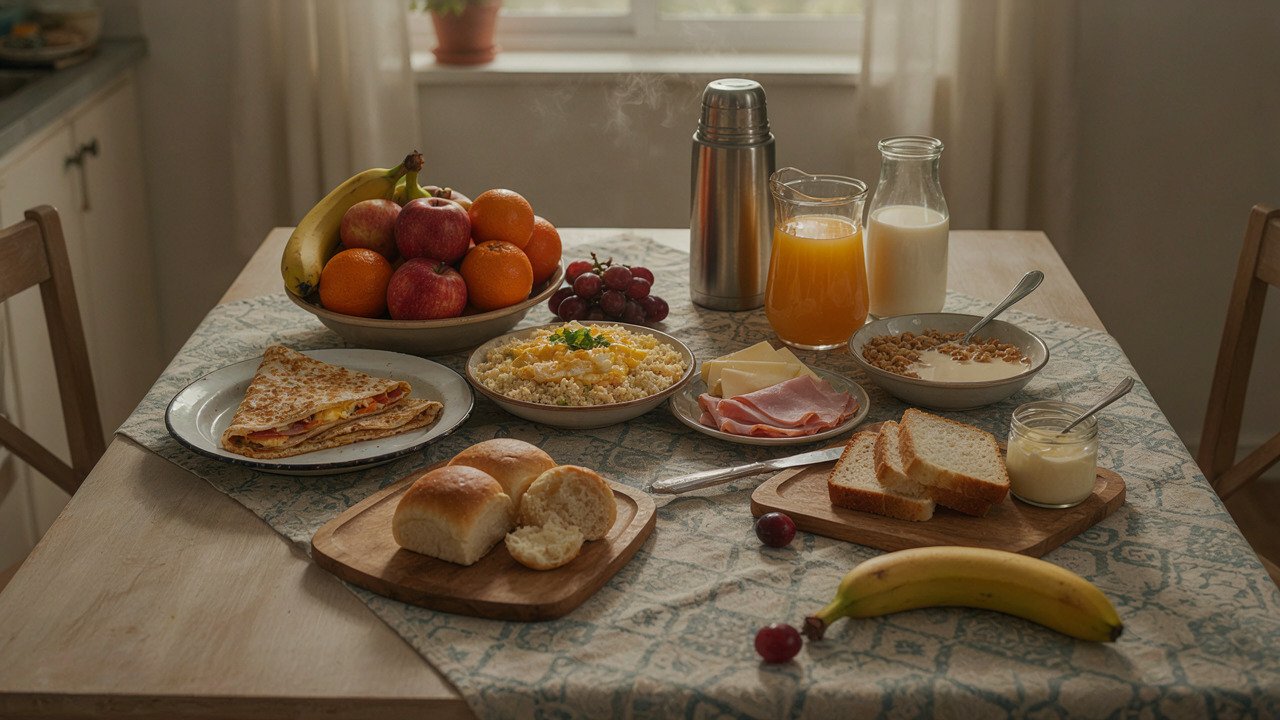
A quick, healthy breakfast brings together three simple things: a base that gives energy (bread, oats, corn couscous or tapioca), something that keeps you full (eggs, milk, yogurt or cheese) and a piece of fruit. That’s exactly the logic behind the breakfast examples in Brazil’s official dietary guidelines, and you can put almost all of it together in a few minutes, especially if part of it is prepped the night before.
What a healthy breakfast is, without overcomplicating it
Many people give up before they start because they picture a healthy breakfast as a colorful social media bowl with seeds you don’t even know where to buy. But when you look at the official sources, the picture is much simpler. The Dietary Guidelines for the Brazilian Population (in Portuguese) include breakfast examples like coffee with milk, tapioca and a banana; milk, corn couscous, eggs and a banana; coffee, whole wheat bread with cheese and a plum; and even fresh orange juice with a bread roll and butter, plus papaya.
Notice that none of these examples has anything difficult, and they all follow the same pattern. That’s why I like to think of breakfast as a three-part formula you put together with whatever you have at home:
- A base: white or whole wheat bread, oats, corn couscous, tapioca, sweet potato, homemade cake.
- Something that keeps you full: eggs, milk, plain yogurt, cheese, peanut butter.
- A piece of fruit: banana, papaya, mango, orange, melon, whichever seasonal fruit is cheapest.
The guidelines sum up the choice in what they call the golden rule: always prefer fresh or minimally processed foods and home-cooked dishes over ultra-processed foods. At breakfast, that means bread with eggs and a banana beat cream-filled cookies with chocolate milk, even if both are ready in the same amount of time.
What to save for the exception (and how to read the label)
Among the examples of ultra-processed foods, the guidelines list sugary breakfast cereals, sweetened and flavored dairy drinks, cookies and packaged sliced bread. For bread, they explain that it becomes ultra-processed when the ingredient list includes things like hydrogenated vegetable fat, sugar, starch, whey or emulsifiers. In other words, it’s more useful to read the ingredient list than to trust the word “whole grain” printed on the front.
On U.S. labels, the Nutrition Facts panel shows a separate line for added sugars, and the FDA suggests a simple rule of thumb for the % Daily Value: 5% or less per serving is low, and 20% or more is high. So when choosing granola, yogurt or a boxed drink, a high number on the added sugars line is a sign it shouldn’t be your everyday breakfast item.
12 quick healthy breakfast ideas, by how much time you have
I split the ideas into three groups: the ones you just assemble, the ones that need a quick turn on the stove or in the microwave, and the ones you make ahead.
| Idea | In the morning | What you can prep ahead |
|---|---|---|
| 1. Plain yogurt with banana and oats | Just assemble | Nothing |
| 2. Bread with fresh white cheese and fruit | Just assemble | Fruit washed and cut |
| 3. Banana and oat smoothie | Blender | Peeled bananas in the freezer |
| 4. Overnight oats | Grab from the fridge | Everything, the night before |
| 5. Corn couscous with eggs | Stove or microwave | Flaked cornmeal already hydrated |
| 6. Tapioca crepe with cheese | Skillet | Filling ready in a container |
| 7. Scrambled eggs with bread and tomato | Skillet | Tomato sliced |
| 8. Crepioca (tapioca and egg crepe) | Skillet | Batter mixed in a container |
| 9. Oatmeal | Stove or microwave | Oats measured out |
| 10. Homemade frozen cheese bread | Air fryer or oven | Frozen dough balls |
| 11. Simple homemade cake | Just slice | Cake baked on the weekend |
| 12. Roasted sweet potato with eggs | Reheat | Sweet potato roasted ahead |
When you just assemble (ideas 1 to 4)
These are lifesavers on days when someone overslept. A banana and oat smoothie works well for people who can’t chew anything early, and one trick is to keep ripe bananas peeled and sliced in the freezer, because they make the smoothie creamy and cold without any sugar.
Overnight oats are made at night: oats, milk or yogurt and fruit in a jar with a lid, straight into the fridge. In the morning they’re soft and ready to eat, even on the go.
When you can use the skillet (ideas 5 to 9)
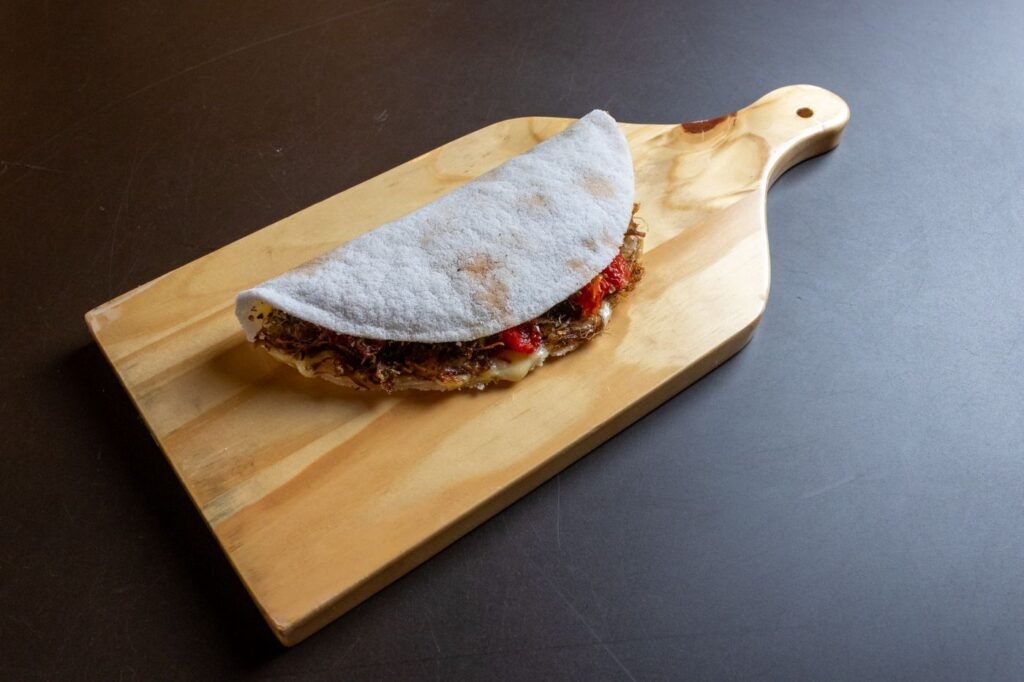
Corn couscous with eggs is a classic from northeastern Brazil and appears in the guidelines’ examples, with milk and a banana on the side. Tapioca with cheese follows the same idea: hydrated tapioca starch goes straight into the skillet, the filling goes on top, and if you mix an egg into the tapioca it becomes a crepioca, which keeps you full a bit longer.
Scrambled eggs with bread and a few slices of tomato is the breakfast almost every home already has the ingredients for, and oatmeal made with milk and mashed banana is great on cold days or for anyone who prefers something warm.
When you cooked ahead (ideas 10 to 12)
Homemade Brazilian cheese bread (pão de queijo) can be rolled, frozen in balls and baked straight from the freezer in the air fryer or oven. A simple homemade cake (corn, cassava or banana) appears in the guidelines’ examples with coffee with milk and fruit, and one pan gives you slices for several days.
Roasted sweet potato is the least obvious one on the list, but it makes a lot of sense: you roast a batch, keep it in the fridge and in the morning just reheat it and add an egg. If you want to get it just right, I’ve already explained time and cuts in air fryer sweet potatoes.
How to prep breakfast the night before
What really takes the rush out of the morning is leaving the decision and half the prep for the night, while the kitchen is still up and running after dinner.
- Choose tomorrow’s breakfast while tidying the kitchen. It seems silly, but it takes one decision out of the tightest time of day.
- Get the slow part ready. The overnight oats in a jar, the cornmeal already hydrated in the fridge, the tapioca starch sifted into a sealed container.
- Wash and set out the fruit. Bananas don’t need it, but papaya and mango cut into containers get eaten far more in the morning than whole fruit in the fruit bowl.
- Set the table or counter. Cups, plates and cutlery in place save you a few minutes without you noticing.
- Program the coffee. If your coffee maker has a timer, it’s worth learning to use it, and I show the step-by-step in how to use a coffee maker.
This logic of having everything set out before you start even has a name in professional kitchens, and I explain how to bring it home in the post on mise en place.

Just one precaution: anything prepped the night before that contains milk, yogurt or eggs needs to spend the night in the fridge, in a covered container, not on the counter.
What about kids who leave early for school?
The formula is the same for kids, but the challenge here is usually different, because sleepy kids eat little and don’t welcome new things at seven in the morning. That’s why I’d save experiments for the weekend and, on school days, repeat two or three combinations they already like.
Brazil’s Ministry of Health (in Portuguese) has guidance for children aged 2 to 10 that helps a lot with this choice. It advises avoiding sweetened ultra-processed drinks, like chocolate milk, flavored dairy drinks and boxed juices, as well as processed meats, like ham, bologna and turkey slices. For children under two, the official advice is not to offer anything with added sugar, so no sweetening the little ones’ smoothie or oatmeal.

Two things usually help more than any recipe. The first is sitting down together, even if just for five minutes and with no screens at the table, which is another recommendation on that same Ministry of Health page. The second is giving your child a small task, like choosing the fruit of the day or spreading cheese on the bread, because kids who help make the food usually eat it with less resistance.
How to keep the habit going without losing steam
A healthy breakfast usually dies after a few days for two reasons: an ingredient ran out or everyone got sick of the same thing. Both can be solved with a little planning, which the guidelines themselves recommend when talking about the small meals of the day.
At our house, what kept the healthy breakfast going, even after our third child arrived, was precisely repetition. It started when our first daughter was two and we noticed she was constantly constipated. So we decided to change breakfast to include more fiber and help her with that problem.
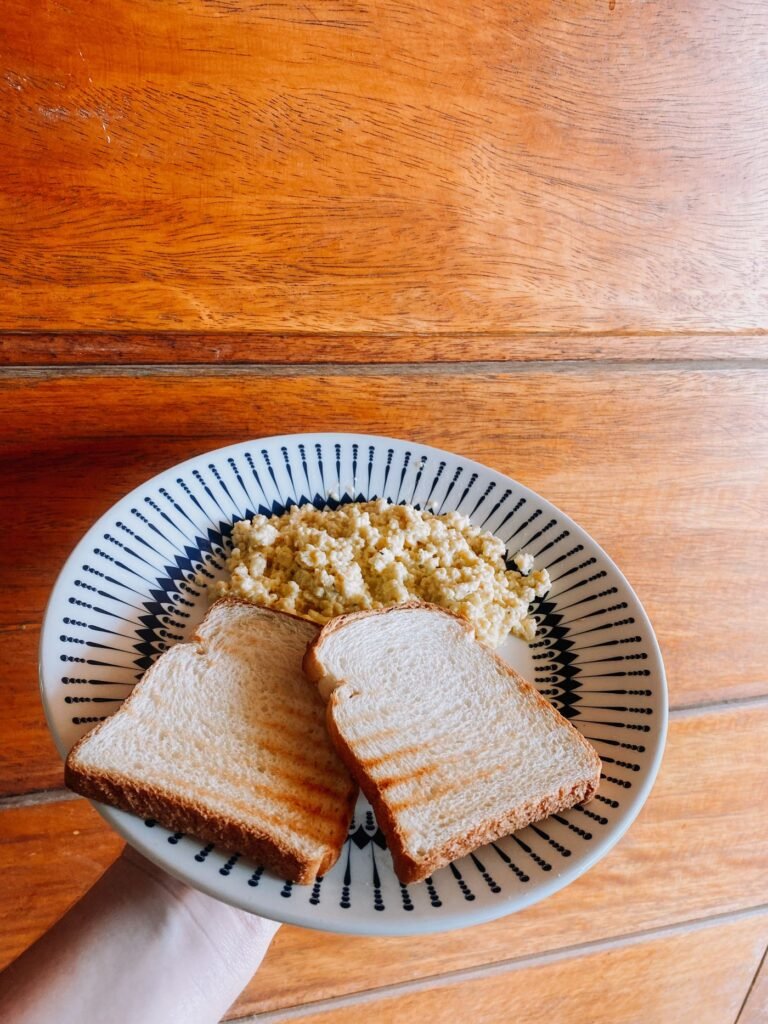
On about 80% of our mornings, we eat the same things. Yes, the same things! Here they are: scrambled eggs for my husband and me, and egg whites for the kids (they like them better, but sometimes they’ll also eat scrambled eggs). Two slices of sandwich bread for the adults, the kind that passes the ingredient-list test, as I said above, and the kids eat banana with oats and honey (except the youngest, who doesn’t have honey yet; honey isn’t recommended for babies under 1). We drink coffee with milk or just coffee, and the kids mostly drink water. That’s always the base, every day. To it we add other fruit, sometimes cut-up papaya or mango, and the youngest also has plain yogurt.
On weekends, we add a few extras: sometimes pancakes, sometimes fried bacon, other times tapioca with cheese, eggs or simply butter. But if you hate eating the same thing every day, I suggest a fixed rotation, like corn couscous on Monday, yogurt on Tuesday, tapioca on Wednesday and so on, because it already sets your shopping list and avoids the “what is there to eat?” question. With the rotation set, just add the breakfast items to your weekly plan.
And always keep a plan B in the pantry and freezer: oats, flaked cornmeal, tapioca starch, eggs, frozen bananas and a few cheese bread balls. That way, even on the messiest day, you can put the formula together. Start simple and improve little by little: your family’s health will thank you.
Still have questions?
Can white bread be part of breakfast?
Yes. A bread roll with butter appears in one of the breakfast examples in the Brazilian guidelines, alongside fresh orange juice and papaya.
Is store-bought granola a good option?
It depends on the brand. Many have a lot of added sugar, so check the added sugars line and read the ingredient list. Rolled oats with chopped fruit do the same job, and you control what goes in.
How do you make a healthy breakfast on a budget?
By sticking to the simplest bases, like oats, eggs, corn couscous, tapioca and seasonal fruit. They’re fresh or minimally processed foods, they go a long way and they appear in the guidelines’ own examples.
If I’m not hungry early, do I need to eat breakfast?
If your appetite takes a while to show up, one option is what the Brazilian guidelines suggest for small meals: bring a piece of fruit or another fresh food from home, like overnight oats, to eat when hunger arrives, instead of grabbing whatever is for sale on the way.
To wrap up
In the end, it’s a base, something that keeps you full and fruit, made with real food. Pick two or three combinations your family already likes, prep what you can the night before and let a rotation decide for you on busy days.
This content is informational and does not replace advice from a dietitian or doctor, especially in cases of diabetes, allergies, intolerances or other health conditions.