

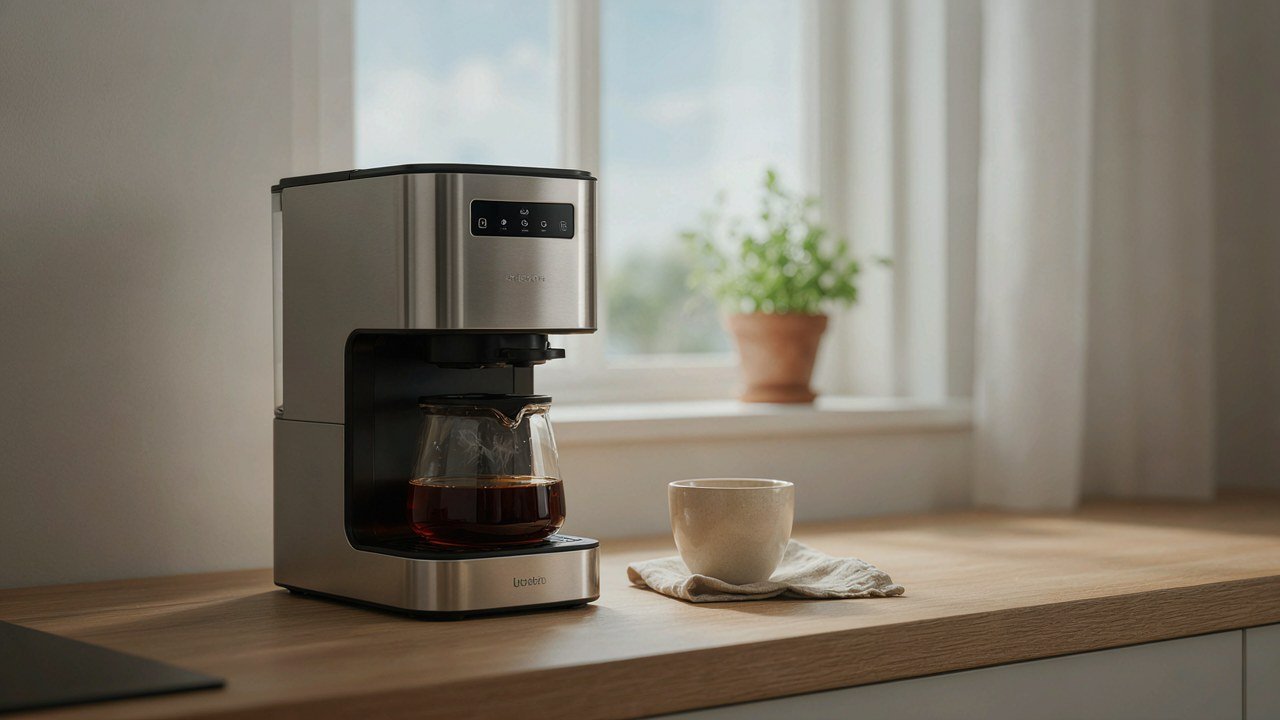
A coffee maker arrives home looking like an appliance you can’t possibly get wrong: add water, add coffee, press the button. But then the coffee comes out too weak, or bitter, or with a strange plastic taste, and you’re left wondering what went wrong if it was all so simple.
If you came here looking for how to use a coffee maker, here’s the short version: the first time, run the machine with water only; day to day, pour filtered water into the reservoir while it’s switched off, set the carafe in place, add the filter with the right amount of ground coffee, switch it on and wait until it stops dripping. Then switch it off, unplug it and wash the parts.
What changes the flavor are a few details the manual mentions in passing and almost nobody reads, like the size of the “cups” marked on the reservoir.
Before your first pot: what to do with a new coffee maker
It may seem like overkill, but the first use is what matters most for the taste of your first coffee, because new parts come out of the factory with a plastic smell and packaging residue. That’s why manufacturers usually ask for a cleaning cycle before you brew real coffee.
In the manual for the Mondial Dolce Arome (in Portuguese), a popular coffee maker in Brazil, for example, the instruction is to run the machine twice with water only at the maximum level, throw that water away and repeat the process whenever it has gone unused for a long time. I’ll use this manual as a reference throughout the post, because drip coffee makers work in a very similar way, but always check your own model’s manual too. Not every manual agrees: the manual for a drip coffee maker sold in Spain, the Ecron CM2022 from Eroski (a multilingual PDF), asks for 2 or 3 cycles with cold water and no coffee, with the reservoir filled to the maximum level.
Before that cycle, wash the carafe and the filter basket with mild dish soap and wipe the base with a damp cloth. And while it’s in your hands, choose the spot carefully: a firm, dry counter, away from the stove and with about 10 cm (4 inches) of space from the wall, which is the clearance that same manual asks for.
The reservoir has a gauge marked in cups, the filter basket takes a paper filter or comes with a permanent nylon filter, the carafe sits on a warming plate that keeps the coffee hot, and some models have a drip-stop (pause-and-serve) feature that holds the coffee back when you take the carafe out.
How to use a coffee maker every day: step by step
Your daily coffee takes less than two minutes of your time, and it does the rest on its own:
- Add water with the coffee maker switched off. Fill the reservoir to the mark you want, always before switching it on, because that’s what the manufacturer advises.
- Set the carafe properly on the plate. On models with drip-stop, a crooked carafe keeps the valve closed, and then the coffee fills the filter basket and can overflow.
- Add the filter. If it’s paper, use the size listed in your model’s manual; if your coffee maker came with a permanent filter, just put it in clean.
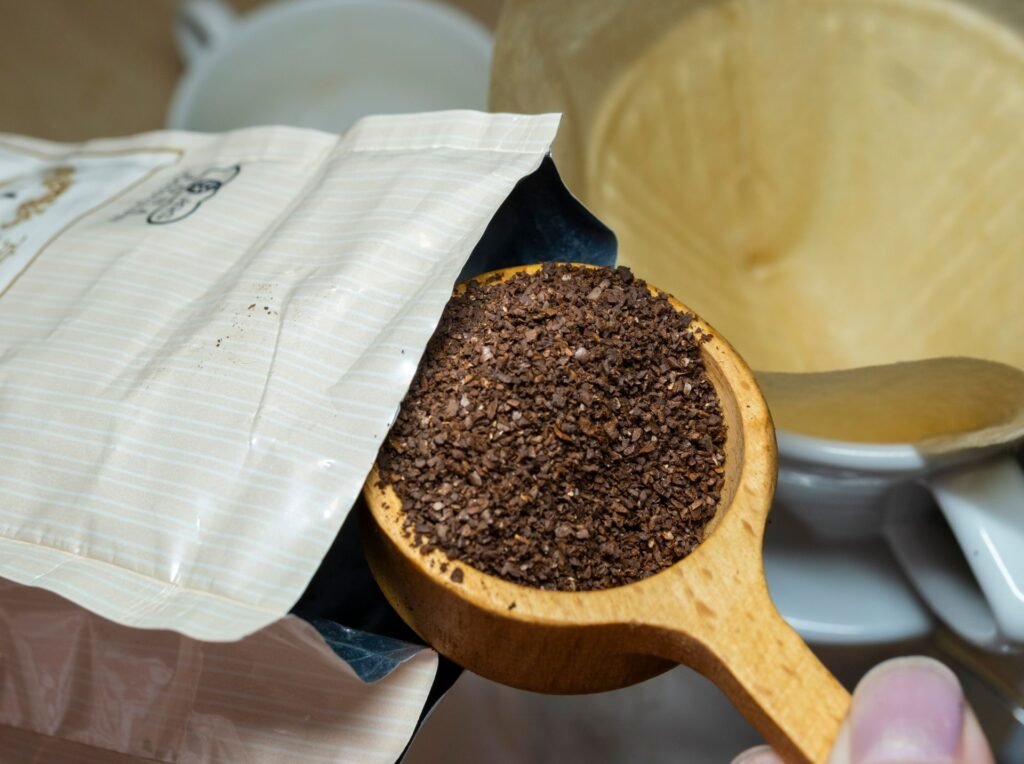
- Add the coffee without packing it down. Leaving a little mound in the middle helps, since on many models the water falls right in the center of the filter.
- Close the lid, switch it on and wait. Depending on the amount, it usually takes 6 to 10 minutes, and the coffee is ready when it stops dripping.
- Switch it off and unplug it if you’re not going to brew another pot, as the manual recommends.
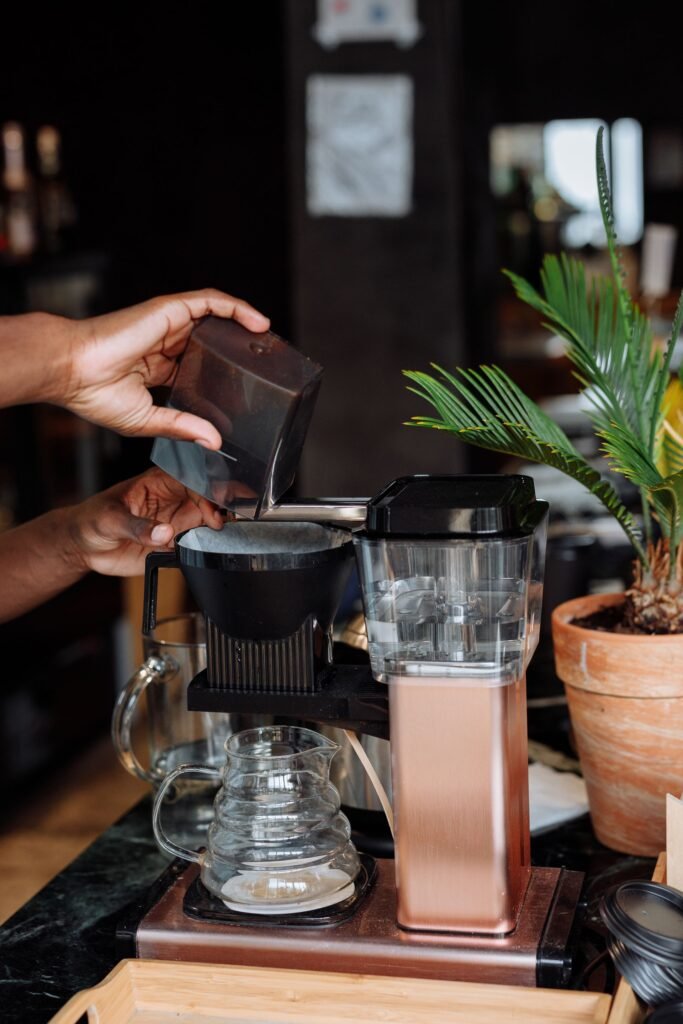
If yours has drip-stop, you can take the carafe out mid-brew to pour a cup, but it has to go back on the plate in less than 1 minute. Otherwise the filter fills up and overflows, which is exactly the warning in the Mondial manual.
How much coffee and water to put in a coffee maker
The step-by-step is the same for any brand, but the ratio is where almost everyone goes wrong, and the reason is written right on the reservoir. Those “cup” markings aren’t the cup or mug you use at home: each manufacturer defines its own cup, and it’s usually much smaller. In the Mondial manual, the math is based on cups of about 40 ml, and on at least one U.S. model, the Ninja CE200C, a “12-cup” machine has a 60 fl oz (about 1.8 L) reservoir, so each “cup” is 5 fl oz (roughly 150 ml), still less than a regular mug. If you measure the coffee thinking in mugs and the water by the gauge, the coffee comes out too strong, and the other way around it comes out watery.
That’s why I suggest forgetting about cups and thinking in milliliters. ABIC, the Brazilian Coffee Industry Association (in Portuguese), recommends 80 to 100 grams of ground coffee for every liter of water. If the coffee tastes flat, add more; if it’s bitter and harsh, use less. Spanish references are given per cup: the Spanish consumer organization OCU (in Spanish) says each cup needs between 5 and 7 grams of coffee, and the Ecron manual gives 5 to 6 grams per large cup. If you prefer a milder coffee, start with less than the table says and work up until you find your sweet spot.
| Water in the reservoir | Ground coffee (80 to 100 g per liter) | Heaping tablespoons, roughly |
|---|---|---|
| 300 ml (about 10 fl oz) | 24 to 30 g | 1.5 to 2 |
| 500 ml (about 17 fl oz) | 40 to 50 g | 2.5 to 3 |
| 750 ml (about 25 fl oz) | 60 to 75 g | 4 to 4.5 |
| 1 liter (about 34 fl oz) | 80 to 100 g | 5 to 6 |
The tablespoon column follows ABIC’s own math, which says 5 to 6 tablespoons per liter. But the weight of a spoonful changes a lot depending on whether it’s level or heaping, so if you have a kitchen scale, weigh it once and find out how much your spoon holds.
Notice too that the carafe always ends up with a little less coffee than the water you put in, because the grounds absorb some and some evaporates. If it’s barely enough for the whole family, add a splash more water and adjust the coffee to match.
What water to use in the reservoir
ABIC advises using filtered or bottled water, and it makes sense, because coffee is almost all water. If your tap water tastes of chlorine, that taste will end up in your cup. If you live in Brazil and still have questions about your tap water, the guide on whether you can drink tap water in Brazil explains what changes from one region to another.
Weak, bitter or overflowing coffee: what’s going wrong
Even with the right ratio, sometimes the coffee comes out off, and the cause is almost always one of these:
| What happened | Most common cause | How to fix it |
|---|---|---|
| Weak or watery coffee | Too little coffee, a coarse grind or coffee opened a long time ago | Add more coffee within the table’s range and check that the bag is stored well |
| Bitter coffee | Too long on the warming plate, too much coffee or a very fine grind | Serve within 1 hour and use a little less coffee |
| Overflowed in the filter basket | Carafe out of place, wrong filter size or too much coffee | Set the carafe properly and use the filter listed in the manual |
| Plastic or stale taste | New coffee maker without the water cycle, or no internal cleaning | Run a cycle with water only and do the cleaning in the last section |
And as practical as it might seem, sugar doesn’t go in with the grounds or in the reservoir. The Mondial manual says never to put sugar, milk or coffee in the reservoir, because it damages the heating system, so the time to sweeten is in the cup. And here’s a challenge: try drinking your coffee without sugar.
Once the bag is opened, ground coffee loses aroma in contact with air, moisture and heat, and ABIC recommends keeping what’s left in a well-sealed container, inside its own bag. If your pantry is still a mess of open bags held shut with clips, the step-by-step to organize your pantry sorts out the coffee and everything else too.
How to fit the coffee maker into a busy morning
Picture the usual scene: the kids taking forever to get out of bed, you’ve called them three times already and know you’ll have to go in there, but you’re in the kitchen measuring coffee spoon by spoon. What changes this is getting almost everything ready the night before.
Before bed, leave the clean carafe in place, the right amount of water in the reservoir, a new filter in the basket and the coffee already measured inside. In the morning you only need to press a button, and while it works there’s time to pack the lunch boxes or go help the kids get up. If you also use a bread machine with a timer, the bread machine recipes fit this same set-it-and-forget-it approach. And if your model is programmable, everything is ready the night before, and your fresh coffee starts brewing at the time you set.
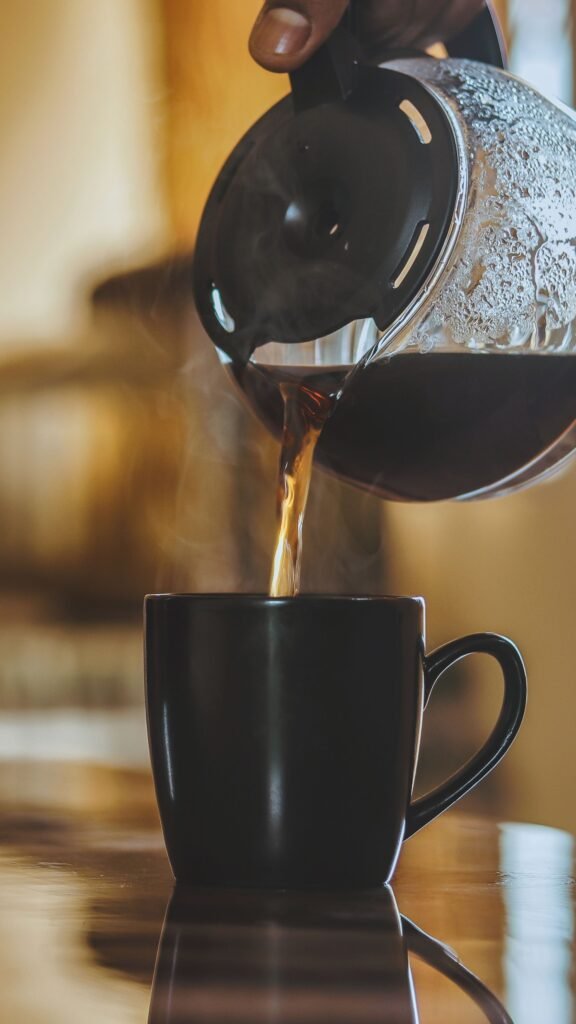
Now, if the coffee has to last all morning, don’t leave the carafe on the plate for hours. The Mondial manual recommends keeping coffee warming for no more than 1 hour, because evaporation changes the flavor. After that, a thermal carafe or flask keeps it hot without continuing to cook the coffee, and you can switch the coffee maker off sooner. The Ecron manual is stricter: it keeps the coffee warm for 35 minutes at most and then switches the coffee maker off by itself.
With kids at home, a few more precautions make a difference. The cord shouldn’t hang over the edge of the counter, which is exactly the kind of thing a curious little hand pulls. The plate stays hot for a while after it’s switched off, and a hot glass carafe shouldn’t go straight onto a cold surface, because the thermal shock can crack it.
How to clean a coffee maker so the coffee doesn’t change taste
And for the coffee to stay good over time, not just on the first day, it’s cleaning that keeps the flavor. There are two parts: the quick one, which goes with every use, and the inside one, which is every so often.
After every use
Throw out the filter with the grounds and wash the carafe and filter basket with water and mild dish soap, using a soft sponge. On the Mondial model, the carafe can go in the dishwasher, but the permanent filter can’t, because the dishwasher’s heat can warp it, so check what applies to yours. The base never goes under the tap: unplug it, let it cool and wipe the plate with a damp cloth, without steel wool. Before putting it away, leave the reservoir empty with the lid open to dry.
Once a month, on the inside
Over time, minerals from the water build up in the internal tubes, and then the coffee starts taking longer to brew and picks up a strange taste. According to the Brazilian recipe site TudoGostoso (in Portuguese), you should do this cleaning at least once a month, or every 1 to 2 weeks if you use the coffee maker daily. The method is this: mix equal parts water and apple cider vinegar and fill the reservoir almost to the limit; switch the coffee maker on and switch it off when it reaches the middle of the cycle; leave the hot mixture working for about 1 hour; switch it on again to finish the cycle; then discard the mixture and repeat the process twice with water only. TudoGostoso adds that the apple cider vinegar can be replaced with baking soda, at 3 tablespoons per liter of water. The Ecron manual suggests a shorter version: fill the reservoir with vinegar, run the coffee maker without coffee in the filter, and then run at least three cycles with water only to rinse. But check your model’s manual first, because some manufacturers ask you not to use any substance for internal cleaning, and in that case their recommendation comes first.
Still have questions?
Can you put hot water in a coffee maker?
There’s no need, because the coffee maker heats the water itself. The appliance brand Midea (in Portuguese) advises using room-temperature water and following your model’s manufacturer instructions.
Can you make a small amount of coffee in a large coffee maker?
Yes, but respect the model’s minimum. The Mondial Dolce Arome, for example, brews 10 to 32 cups of 40 ml, so its minimum is around 400 ml. Below that, the result tends to be uneven.
Paper filter or permanent filter: which is better?
It depends on your taste. Paper holds back more of the coffee’s oils and makes a lighter brew; a permanent filter lets those oils through, gives more body and saves on filters, but it needs a thorough wash every day. On a busy morning, paper is quicker to clean up.
How much electricity does a coffee maker use?
Not much. The manual for the Ninja CE200C, a 12-cup model, lists 1,100 W. Brewing for 30 minutes a day uses about 0.55 kWh a day, around 16.5 kWh a month. At the U.S. residential average of 18.31 cents per kWh (EIA, July 2026), that comes to about $3 a month. The warming plate adds to that: on this model it stays on for 2 hours by default and can be set up to 4.
To wrap up
Knowing how to use a coffee maker well comes down to running the first cycle with water only, measuring 80 to 100 g of coffee per liter of filtered water and washing the parts after every use, with an inside cleaning once a month. The rest is pressing the button and going to deal with the kids who are dawdling in their room.
This content is informational and does not replace the instructions in your model’s manufacturer manual.