

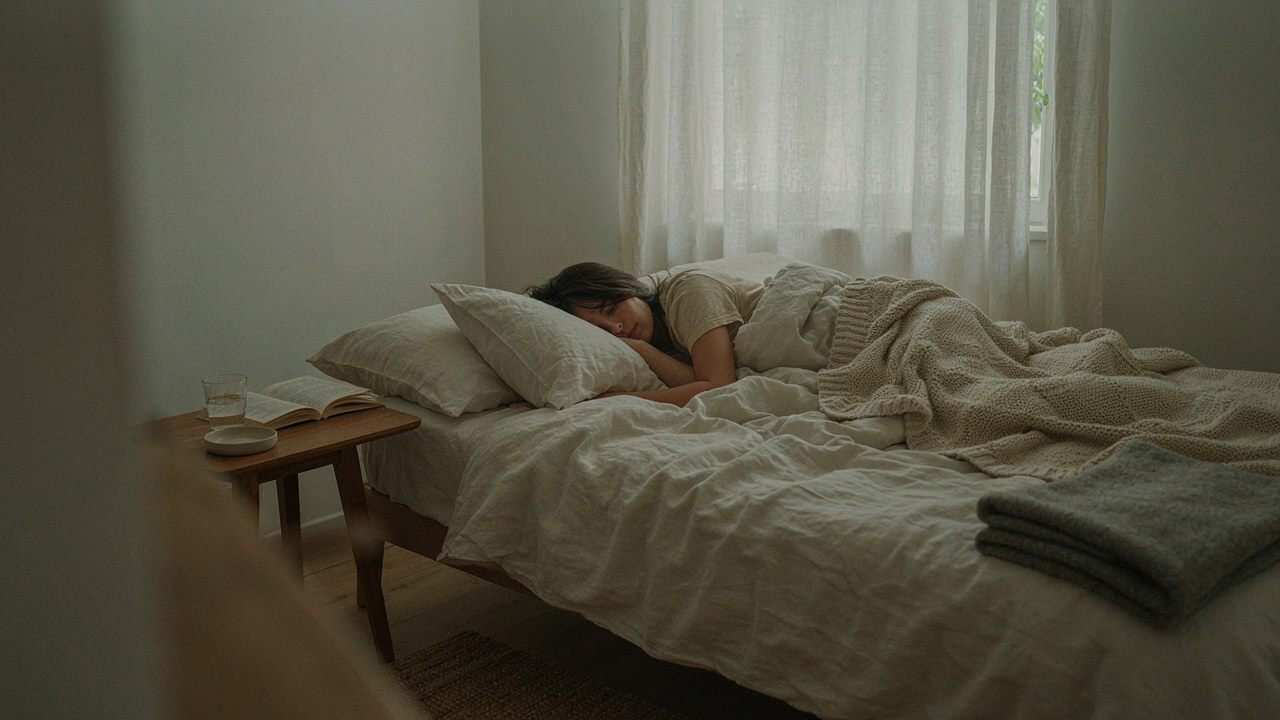
Have you ever spent half an hour tossing and turning before falling asleep, or woken up in the middle of the night for no reason at all? Know that this is very common. After a whole day rushing between work, home and kids, we expect the body to switch off right away, but sleeping well depends much more on habit than on luck. But with small tweaks to your routine, you can sleep better this very week.
The short answer to how to sleep better is 9 small habits, in the order of your day, from the time you wake up to the time you turn off the light: a fixed schedule, natural light in the morning, movement, caffeine under control, a short nap, a light dinner, screens off, a 30-minute routine and a dark, cool bedroom. I explain each one below, because that sequence is how they work best.
Why sleeping better matters and what sleep hygiene is
Poor sleep affects our lives more than it seems. It is not just about that dragging tiredness, the shorter temper and wanting twice as much coffee. The effect goes beyond yawning at work, because constant bad sleep affects your mood, memory and the body’s defenses. It is during deep sleep that the body recovers and the brain organizes what happened during the day, and ignoring that can have serious consequences. Your whole life depends on your body and brain working well, so sleeping better is not a luxury.
The technical name for the habits that help sleep, as summarized above, is sleep hygiene. The name sounds intimidating, but it has nothing to do with cleaning, it is just a way of preparing your body and mind to sleep well every day, without relying on medication or luck.
It all starts with your schedule
1. Fixed schedule
If I had to pick just one habit to start with, it would be your schedule. Going to bed and waking up at very different times from one day to the next confuses your body clock, even when the total hours slept are similar, which is why sleeping until noon on Saturday tends to catch up with you on Sunday night. When the schedule is consistent, weekends included, the body learns to anticipate sleep and you start falling asleep faster.
It does not have to be exact to the minute, a small margin will not ruin the plan. Wake-up time is usually the easiest anchor to keep, because it pulls the rest of the day along with it. After a bad night the temptation is to make up for it by sleeping in, but the better choice is to wake up at the same time and use that extra sleepiness to go to bed earlier.
Sleeping better depends on how your day starts: light, movement, caffeine and naps

2. Natural light in the morning
Tonight’s sleep starts being prepared in the morning. A few minutes of natural light right after waking help regulate your body clock, because they show your body when the day begins and, as a result, when it should end. You can have your coffee by the window or on the balcony, or walk the kids to school.
3. Movement
Movement counts too. Regular physical activity improves sleep quality, but intense exercise too close to bedtime can leave the body on alert, so save harder workouts for earlier in the day.
4. Caffeine under control
Caffeine deserves more attention than we usually give it. The body takes 4 to 6 hours just to clear half of the caffeine, which means the 5 p.m. coffee is still working well after bedtime. That is why I would cut it after 4 p.m., and not just coffee, but also black tea, green tea, some sodas and chocolate in larger amounts.
5. A short nap
Finally, naps. A 20-minute nap in the early afternoon usually helps, but a two-hour nap at 6 p.m. almost guarantees trouble falling asleep at night.
In the evening: dinner, screens and a 30-minute routine
6. A light dinner
With the day sorted, what is left is the part that matters most for sleeping better: the evening. Start with dinner, because a heavy meal and alcohol close to bedtime make digestion harder and keep the body working instead of relaxing, which breaks up your sleep even when you fall asleep quickly. A light dinner is much easier when it is already decided, and that is where our cheap weekly meal plan helps. On rushed days, air fryer recipes sort it out without deep frying and without weighing on your stomach.
7. Screens off
After dinner come the screens, one of the biggest silent enemies of sleep. The blue light from phones and TVs can interfere with the production of melatonin, the hormone that tells the body it is time to sleep, so ideally turn everything off at least one hour before bed and swap it for reading, conversation or a warm shower. If you cannot turn everything off, at least switch on your phone’s night mode, and leave it charging outside the bedroom so it does not keep calling you.
8. A 30-minute routine
To bring it all together, put together a short sequence and repeat it every night, because the body quickly learns that it is the signal that the day is over. A 30-minute suggestion:
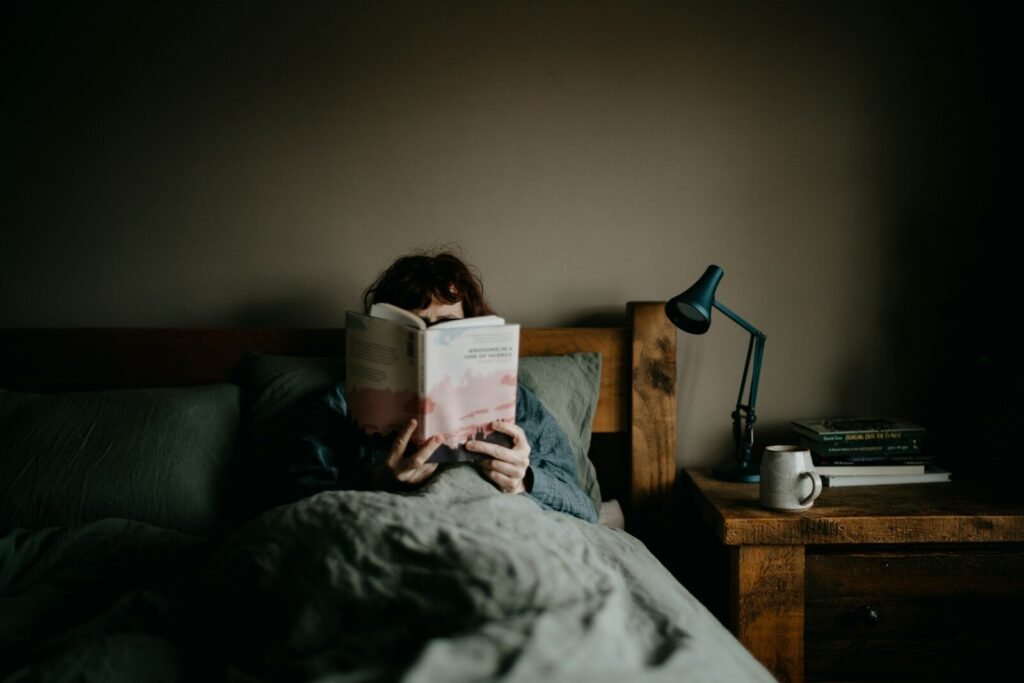
- Turn off the main lights in the house and leave only lamps or warmer lights on.
- Put your phone to charge in another room.
- Take a warm shower or wash your face slowly.
- Lay out tomorrow’s clothes and backpack, so your mind does not keep going over the list.
- If there is something on your mind, write it down in a notebook or notepad, so it does not stay in your head and get in the way of your sleep.
- To finish, read a few pages of a book or have an unhurried chat.
It does not have to be perfect. Doing three of these steps almost every night is worth more than a full routine that lasts a week and is then abandoned.
And what if you get into bed and sleep does not come? Use the bed only for sleeping, because working, watching shows or scrolling on your phone there teaches the brain to associate that space with activity. If you do not fall asleep within about 20 minutes, get up, do something calm in another room and come back when you feel sleepy again. If you wake up in the middle of the night, the same rule applies, ideally without looking at your phone, because the screen lights up and wakes your mind up for good.
How to make your bedroom sleep-friendly
Your bedroom matters more than it seems when it comes to sleeping better, and three points deserve attention.
9. A dark, cool bedroom
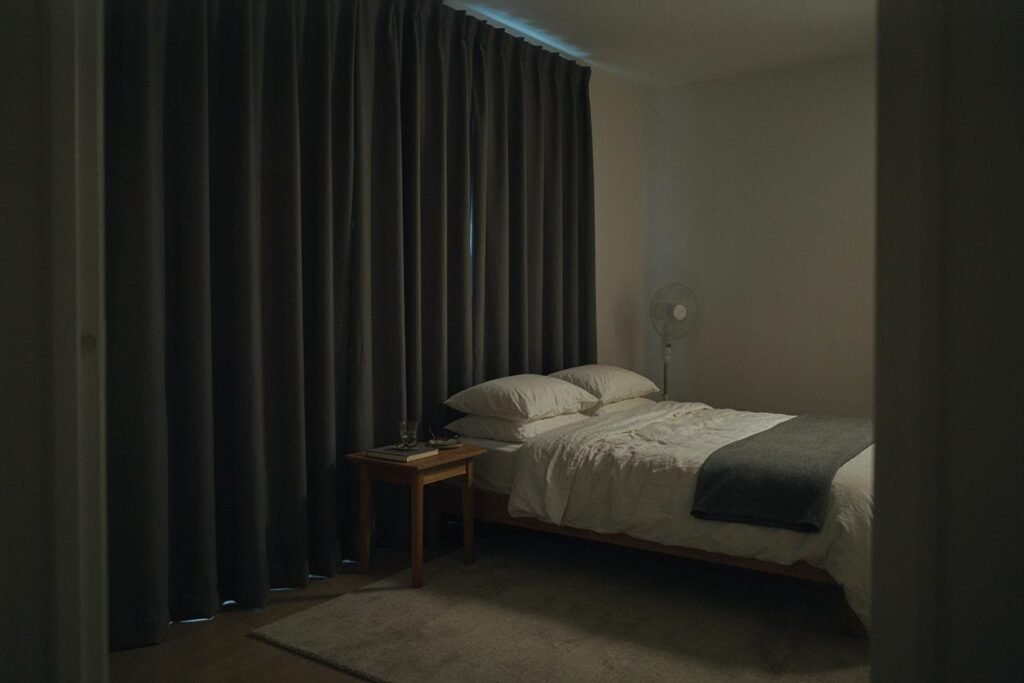
Darkness. Even the little standby light on a device can disturb deep sleep for some people. Blackout curtains or a sleep mask solve this without having to redo the room.
Temperature. For most people a cooler room works better, somewhere around 16°C to 20°C (61°F to 68°F). A room that is too hot is one of the most common, and easiest to fix, reasons for restless sleep and waking up in the night.
Noise. Total silence is not always ideal, especially for those living in a big city. A steady sound, like a fan or an ambient sound app, sometimes helps more than absolute silence, because it masks the sudden noises that wake us up.
If I had to choose just one change in the bedroom, I would start with blackout curtains, because they solve the street light, the lamppost by the window and the sun coming in too early in summer all at once.
And how do you sleep better when you have young kids?
When you have kids at home, your own bedtime is usually the first thing to be sacrificed, because everything else seems more urgent. One way out is to treat your schedule as seriously as you treat the kids’. An end-of-day signal, like turning off the main lights in the house at the same time every night, helps the whole family wind down together, so it does not feel like an annoying rule just for the little ones. If you want to set up that routine for the whole house, from babies to teenagers, I walk you through it step by step in my guide to sleep hygiene with kids.
With a baby or a child who wakes up at night, the conversation changes a little. When you can, share the nights with whoever lives with you and use the weekend to catch up on a few hours, instead of staying up late trying to get some time to yourself (unfortunately, a very common mistake). Try going to bed earlier instead. This ties in with what I share in the guide to self-care habits, because resting is also taking care of yourself.
Still have questions?
How many hours of sleep does an adult need per night?
The general recommendation for adults is between 7 and 9 hours, but the exact number varies from person to person. The most reliable sign that you slept enough is waking up rested, without needing several alarms to get up.
Can I sleep well on fewer hours?
There is no shortcut to replace hours of sleep. The habits on this page improve the quality of the sleep you already get, but they do not make up for sleeping too little every day.
What helps you fall asleep faster?
Besides the evening routine, breathing slowly, letting the air out for longer than you take it in, helps the body slow down. If that does not help, pick up a book that is hard going or a bit boring, it works every time! There are more techniques in this post on how to fall asleep fast.
What should I do when I cannot sleep even while following these habits?
If the difficulty continues for weeks, even with your routine and bedroom adjusted, it is worth talking to a doctor, because there may be a cause that goes beyond habit, such as sleep apnea or anxiety.
Sources: Sleep Foundation: how much sleep adults need, Sleep Foundation: how long caffeine takes to wear off, Sleep Foundation: the best temperature for sleep, NHS: how to fall asleep faster and sleep better and UNA-SUS: sleep hygiene for patients with insomnia (in Portuguese).
To wrap up
Knowing how to sleep better comes down to small, repeated habits, and the first one is a fixed schedule. Choose two or three habits from this page to start this week and leave the rest for later, because changing everything at once rarely lasts.
This content is for information only. It does not replace medical advice.