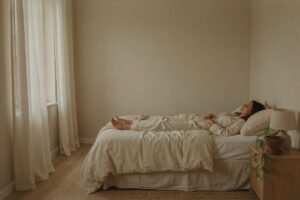

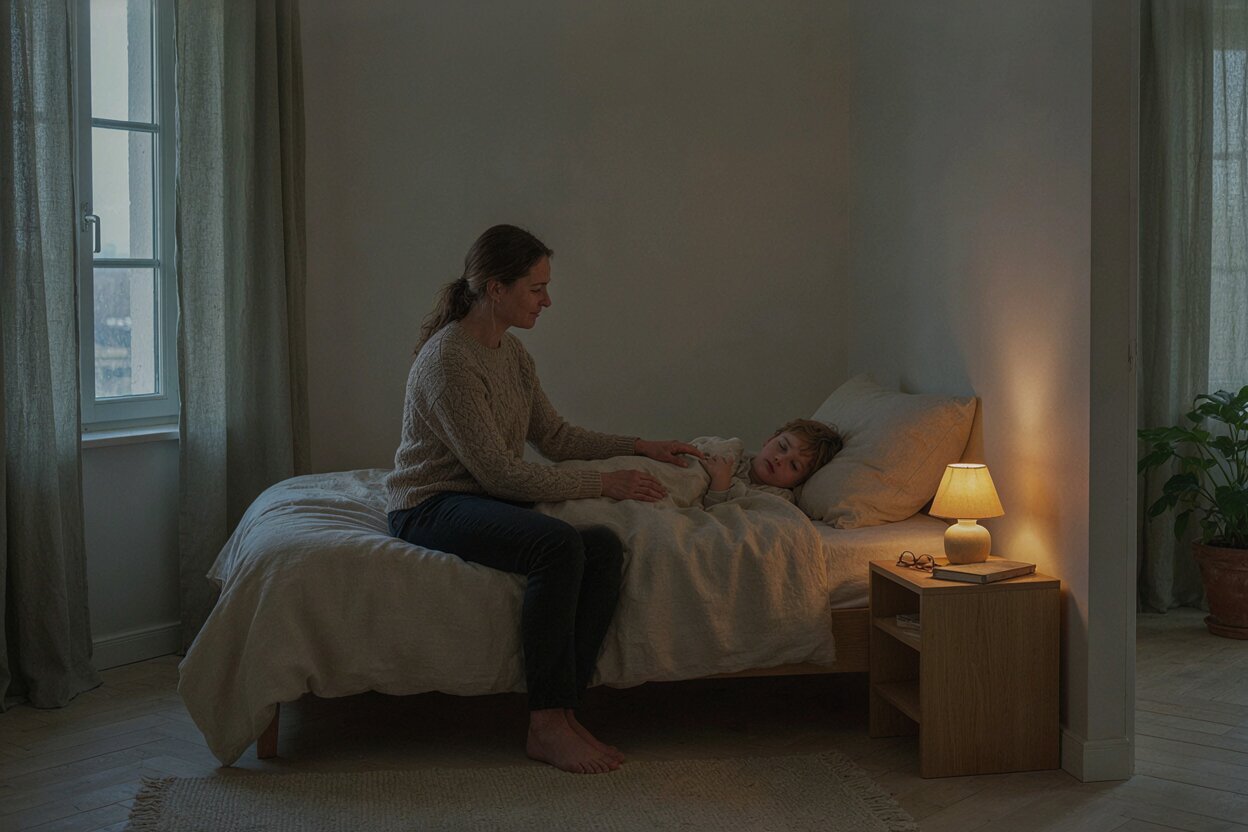
It’s almost ten at night, one kid says he’s hungry, the other refuses to put the phone down with the usual “just a little longer”, and you, exhausted, would really love to watch one more episode of your show, but you know that if you do, nobody is going to sleep at all. The next day everyone wakes up tired, and it’s hard to know where to start fixing the household’s sleep. That’s exactly what sleep hygiene is about: a way of organizing the day and the night so that everyone’s body understands when it’s time to switch off.
In practice, it is the set of habits, routines and bedroom conditions that help you fall asleep and sleep well through the night. For a family, the pillars are a regular schedule (weekends included), daylight in the morning and darkness at night, screens off before bed, a short bedtime ritual that’s always the same, and a dark, quiet, cool bedroom.
If your problem is that sleep won’t come once you’re already lying down, the techniques are in my guide on how to fall asleep fast. Here the focus is the routine that gets the whole house ready for bed.
What it is, and why think about the whole family
The name has nothing to do with baths or cleaning. The Brazilian Society of Pediatrics (SBP) (in Portuguese) points out that it’s the consistency and regularity of this routine that give children a sense of security.
It also says a child’s sleep should be seen within the family, because it works both ways: a baby who sleeps badly wears the parents out, and parental stress is linked to sleep problems in children. There’s no point setting up a perfect routine for the kids while the adults go to bed at one in the morning, phone in hand or binge-watching a series.
That’s why I prefer to think of it as a household agreement, on top of the habits an adult needs to sleep better.
How many hours of sleep each person in the house needs
Each person’s target sets bedtime. The SBP table adds up night sleep and naps over 24 hours:
| Age | Sleep in 24 hours | Naps |
|---|---|---|
| 4 to 12 months | 12 to 16 hours | Included |
| 1 to 2 years | 11 to 14 hours | Included |
| 3 to 5 years | 10 to 13 hours | Included |
| 6 to 12 years | 9 to 12 hours | No |
| 13 to 18 years | 8 to 10 hours | No |
Reading from outside Brazil? The CDC page About Sleep lists the same ranges for 4 months to 12 years, and gives 8 to 10 hours for teens aged 13 to 17 and 7 or more hours for adults aged 18 to 60.
For adults, a report from the Brazilian Federal Senate (in Portuguese) mentions seven to eight hours for most people, and the best measure is waking up rested, without sleepiness getting in the way of your day.
You count backwards: if a 7-year-old has to wake up at 5:30 a.m. for school and needs 9 to 12 hours, they should be asleep by around 8 p.m., and the bedtime ritual starts a little before that. Having the kids in their room by about 7 p.m. helps them fall asleep at the right time.
10 habits for the whole family
1. A fixed time to go to bed and wake up, Saturdays included
The SBP asks for regular times for going to bed, waking up and napping on school days and weekends alike, and the Virtual Health Library of Brazil’s Ministry of Health (in Portuguese) gives adults the same advice. A little sleep-in on Saturday is fine; sleeping until noon throws off Sunday night.
2. Daylight in the morning and low light at night
The body clock is guided by light, which is why the Ministry of Health recommends letting the sun into the bedroom when you wake up. At night it’s the opposite: after dinner, just a lamp on.
3. Moving during the day
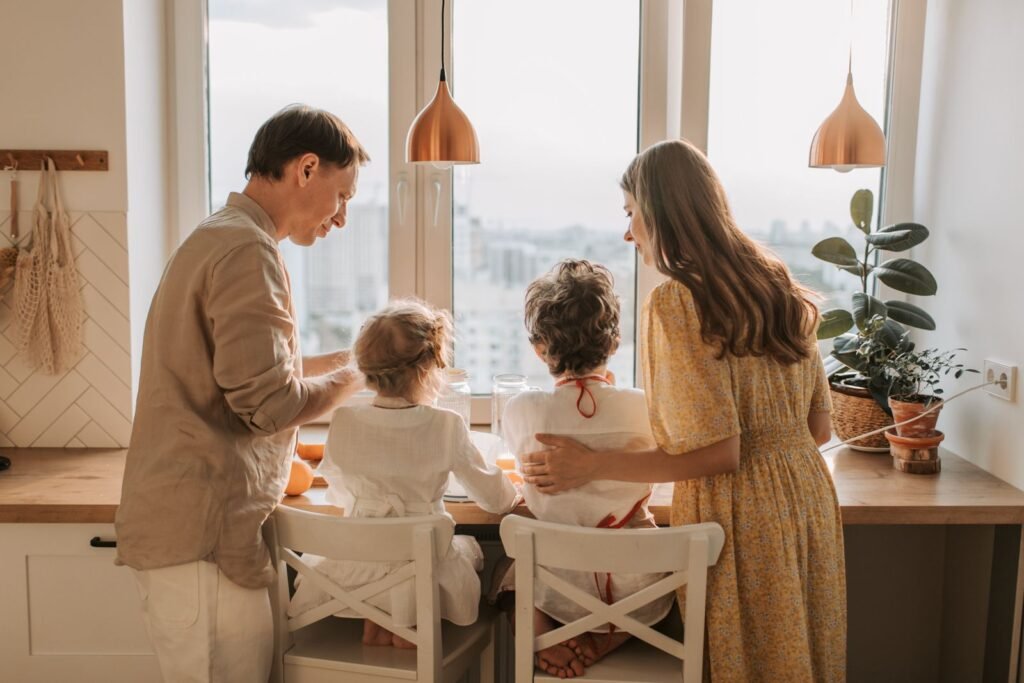
The Brazilian Sleep Association (ABS) (in Portuguese) calls regular physical activity essential for sleep. Playing in the park already counts, and the only caution, according to the Ministry of Health, is not to leave intense exercise for close to bedtime.
4. The right amount of napping for each age
For little ones, naps are part of the total hours, but from age 2 they start to shrink and, according to the SBP, by age 5 the need for them should be gone. The SBP also advises avoiding late-afternoon naps in preschoolers, since that’s exactly the one that steals night sleep.
If your child is 3, nap time, which usually comes after lunch, can be pretty stressful, because lunch also needs to be early, around 11:30 a.m. If your routine doesn’t allow that, or if your child only naps at daycare, don’t feel guilty: on the days they don’t sleep in the afternoon, put them to bed an hour earlier, and it will work out just fine.
5. Caffeine away from the end of the day, for everyone
The SBP lists chocolate, coffee and soda among the stimulating drinks to avoid near bedtime, and the ABS adds energy drinks for teenagers. So the chocolate milk after bath time might explain the wired child at ten at night. Instead, offer warm milk, which tends to help children relax.
6. A light dinner, not too close to bedtime
The Ministry of Health advises against eating a lot close to bedtime, because the body stays busy digesting. If you get home late, a cheap weekly meal plan decided in advance helps the family eat dinner earlier. But hold on! Looking at all these times, it may seem like your life is about to run on a farmer’s schedule, and I have to say yes, that’s pretty much it. The good news is that you’ll adjust these times little by little.
Try to serve dinner by 6:30 p.m. at the latest, because, as we all know, even if the kids head to their room a little after 7, they’ll come up with a thousand excuses before they actually fall asleep, and that gives the body time to get part of the digestion done.
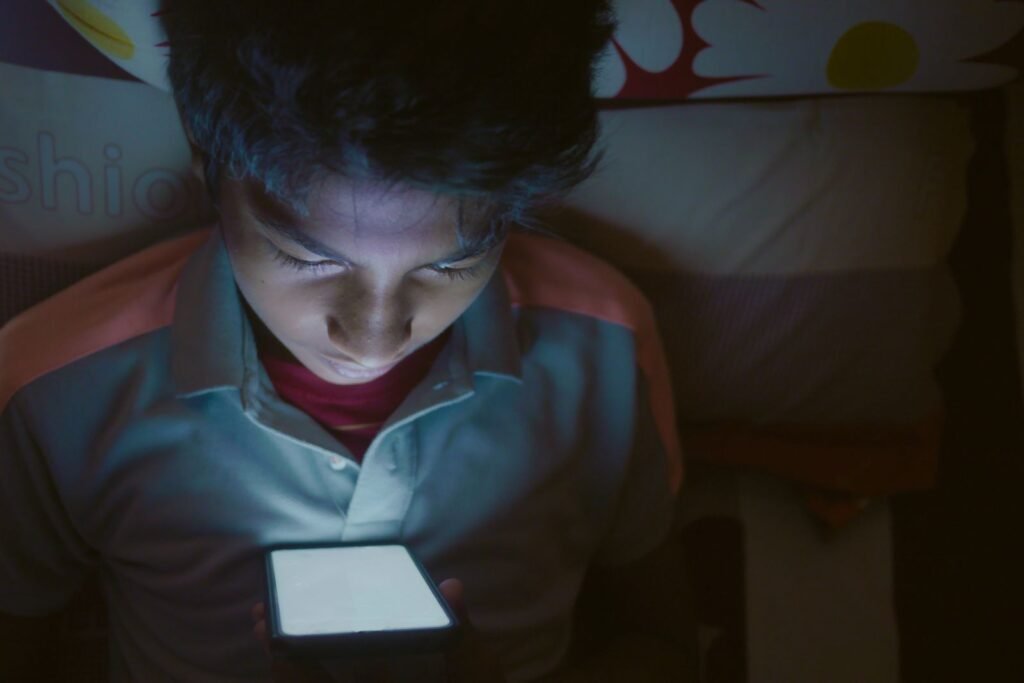
7. Screens off before bed
The SBP recommends avoiding screens for at least 1 hour before sleep,. The rule works best when the adults’ phones go to charge in the kitchen too.
To build this new habit, talk with your kids, create one or two rules and tell them that you and your partner have to follow the new rule as well. It could be something like “No phones at the dinner table” and “All electronics (TV, tablet, computer and phone) are switched off after dinner”. That becomes “family time”.
8. A short bedtime ritual that’s always the same
The SBP suggests a bath, massage, calm activities and relaxation, and the ritual should be brief, up to 30 minutes, and enjoyable. Bath, pajamas, teeth, a story and lights out are enough, as long as it’s always in the same order.
For the adults, once the kids’ lights are out, swap the screen for a book, and if your mind won’t switch off, a few minutes of mindfulness help with the transition.
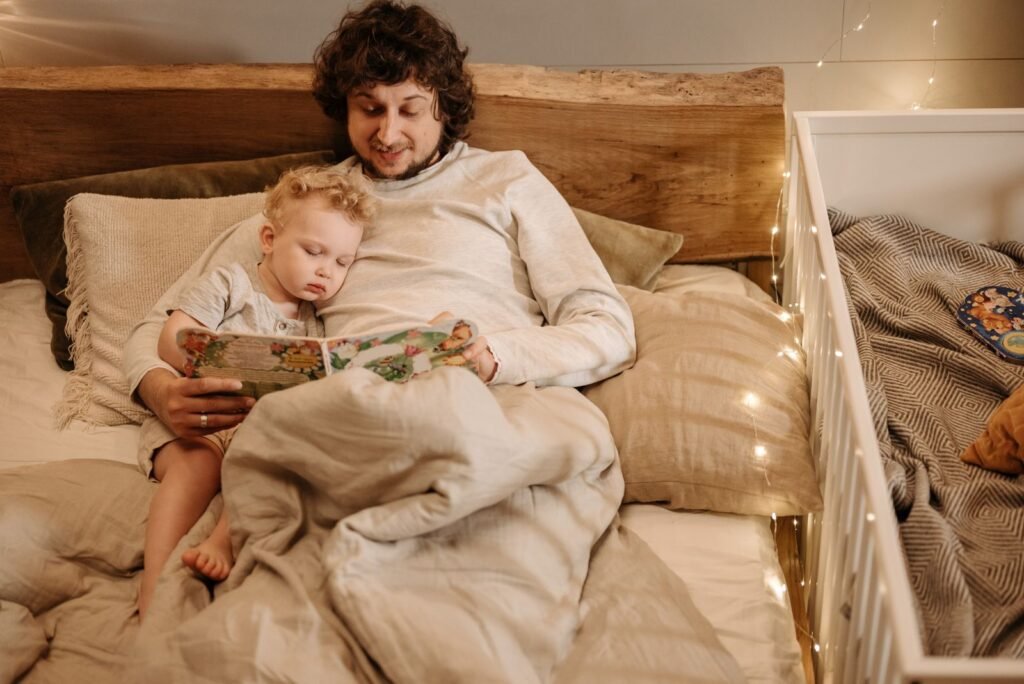
9. A dark, quiet bedroom at a comfortable temperature
The SBP and the ABS both ask for a dark, quiet bedroom at a comfortable temperature. In practice, curtains that block the streetlight and no TV, tablet or game console in the bedroom.
10. The bed is for sleeping
The Ministry of Health advises not going to bed when you’re not sleepy, not using the bed to watch TV and, if sleep doesn’t come within 15 to 30 minutes, getting up and reading in another room. With children, the ABS offers a precious detail: while the child is still small, put them to bed drowsy but still awake, so they learn to fall asleep without someone beside them.
Sleep hygiene for kids, babies and teenagers
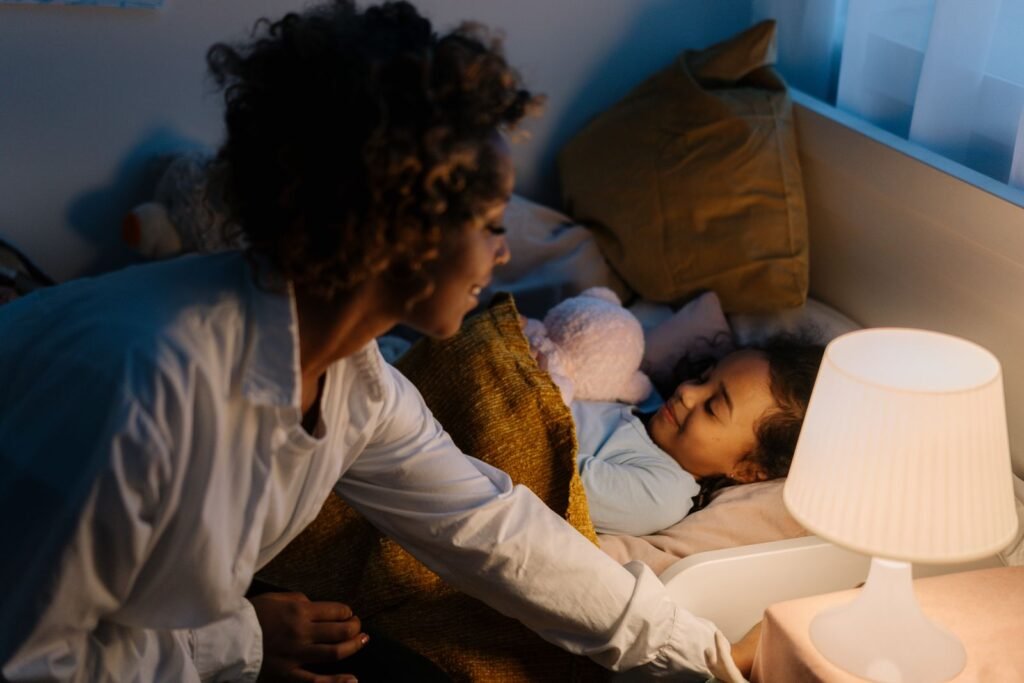
Babies
According to the ABS, a bedtime routine can start at around 3 months, with a diaper change, pajamas and a song. And safety is non-negotiable: the ABS advises putting the baby to sleep on their back, on a firm surface, with no pillows, bumpers or stuffed animals in the crib. Safety comes first.
For readers outside Brazil, the NHS guidance on sudden infant death syndrome (SIDS) says the same: place the baby on their back to sleep, in a separate cot or Moses basket in the same room as you for at least the first 6 months, on a firm, flat mattress, with no pillows, cot bumpers or soft toys.
Children from 2 to 12
This is the stage where the routine pays off the most, because they already like predictability. Waking up at night now and then is to be expected. For little ones, the SBP also allows comfort objects, like a small blanket or a stuffed toy.
Teenagers
The SBP explains that teenagers have a natural delay of 1 to 2 hours in when they fall asleep and wake up. With early school start times, the math doesn’t add up, and they try to make up for it on the weekend, which, according to the ABS, makes the routine worse. Instead of fighting, agree on a phone curfew together and explain why.
How to fit it into your routine
I’d start with three: a fixed schedule, screens off an hour before bed and a short ritual. They pull the others along, because once there’s a set bedtime, dinner and bath time naturally move earlier.
When sleep hygiene isn’t enough
The routine solves a lot, but it doesn’t treat illness. The Ministry of Health points out that people who snore may not be sleeping well even if they think they are, and advises seeing a doctor if you notice any change. In children, the SBP asks parents to pay attention to kids over 5 who still need to sleep during the day, because it may be a sign of insufficient night sleep, and that’s a conversation to have with the pediatrician.
Still have questions?
Does sleep hygiene work for insomnia?
It helps a lot, but it isn’t always enough. According to the Senate report, chronic insomnia is difficulty falling asleep, staying asleep or waking up too early at least three times a week for three months or more, and that needs to be treated by a health professional.
Can my child sleep in our bed?
The SBP recommends encouraging children to fall asleep in their own bed and their own room. For babies, the ABS advises sleeping in the parents’ room, but on a separate surface, until 1 year of age (or at least for the first 6 months).
Is it different for adults?
The basics are the same; what changes are the hours of sleep and a few precautions, like avoiding alcohol close to bedtime, which is also on the Ministry of Health’s list.
To wrap up
Sleep hygiene is the routine that gets the body ready for sleep, and it works best when it becomes a family agreement, with the adults setting the example. Start with a fixed schedule, screens off an hour before bed and a short ritual, then add the rest little by little.
Informational content based on guidance from Brazilian health institutions. It does not replace medical advice.