

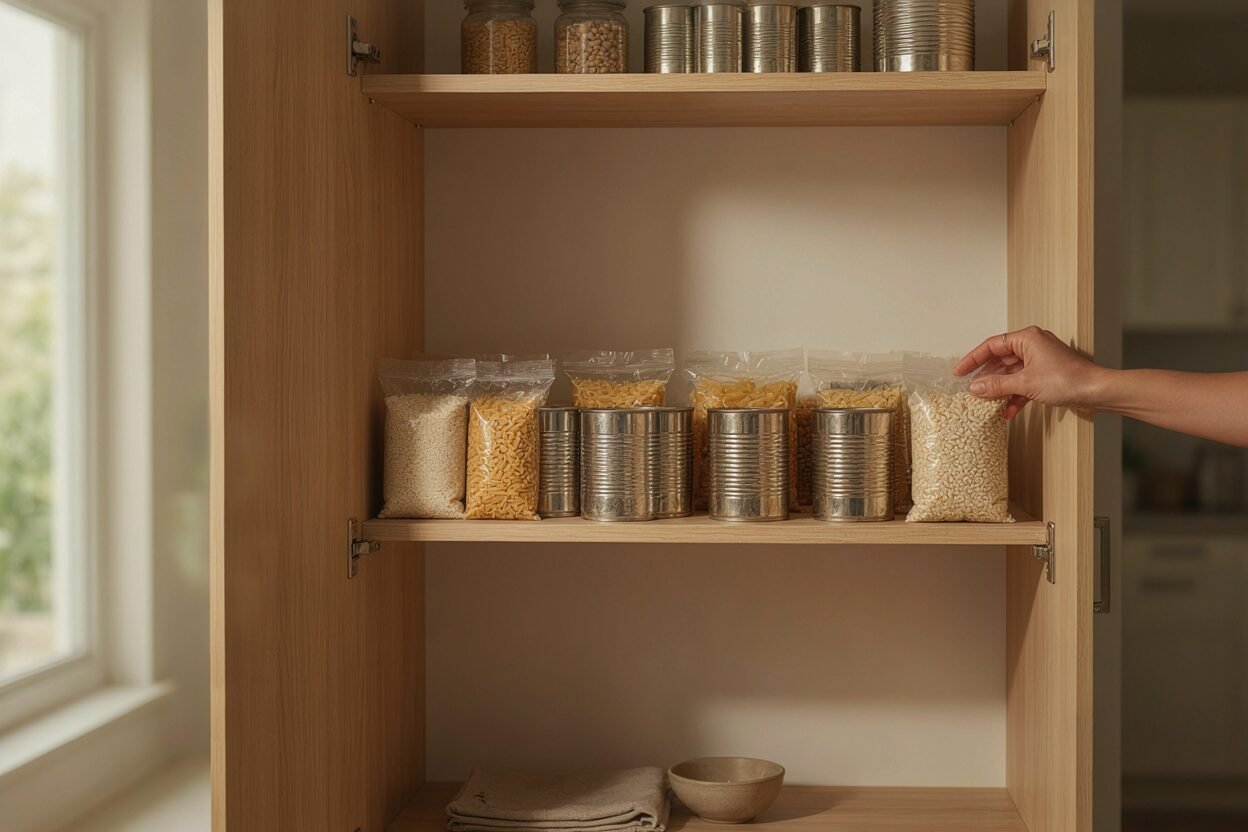
You open the cupboard to make a sauce and find two cans of tomato paste. You grab the one in front, which is the newer one, and only next month discover that the one in the back expired unopened. I don’t know if this has ever happened to you, but anyone who does a big grocery haul knows how, among so many packages, one always ends up forgotten at the back of the shelf.
There’s a simple fix for this, and it has a name. Stores and warehouses call it FIFO, “first in, first out,” and a lot of people already use the idea for a FIFO pantry at home. For food, though, there’s an even better version: FEFO, “first expired, first out.” It comes down to one thing: you use first whatever expires first, even if you bought it later.
I put together what the U.S. Food and Drug Administration (FDA) recommends for storing food at home and turned it into a step-by-step plan that fits into one afternoon and stays on track with a quick look before you go grocery shopping.
Why the order goes by expiration date, not purchase date
When you get home from the store, the natural move is to put the new package in front, because that’s the easiest spot to reach. Then the older one keeps getting pushed back, week after week, until someone finds it expired during a deep clean.
Classic FIFO says to use first whatever came in first. It works for things that don’t expire, but with food it can fail, because what you bought last doesn’t always expire last. Imagine a box of crackers bought on sale, with a shorter date than the box already in the cupboard: going by purchase order, it would sit there waiting and expire first.
That’s why lining food up by the date on the package makes more sense in a home kitchen. In practice, it means less food in the trash and less money thrown away, plus an advantage few people notice: you open the cupboard and know what you have, which makes deciding on dinner easier.
How to set up a FIFO pantry in 4 steps
You don’t need to empty the whole house on a Saturday. If your pantry is packed, do one shelf a day, and in a week it’s all done. If it also needs a cleanout and categories, the full step-by-step is in the guide on how to organize your pantry in 5 steps, and here I’ll focus only on the order of the dates.
- Take everything off the shelf and read the dates. Look on the label for “best by,” “best if used by” or “use by,” which is sometimes on the lid, the bottom of the can or the fold of the bag. Anything already past its date goes into a separate pile to check (more on that below).
- Set aside what expires in the next few weeks. These items go on the menu first, so keep them apart so they don’t end up in the back again.
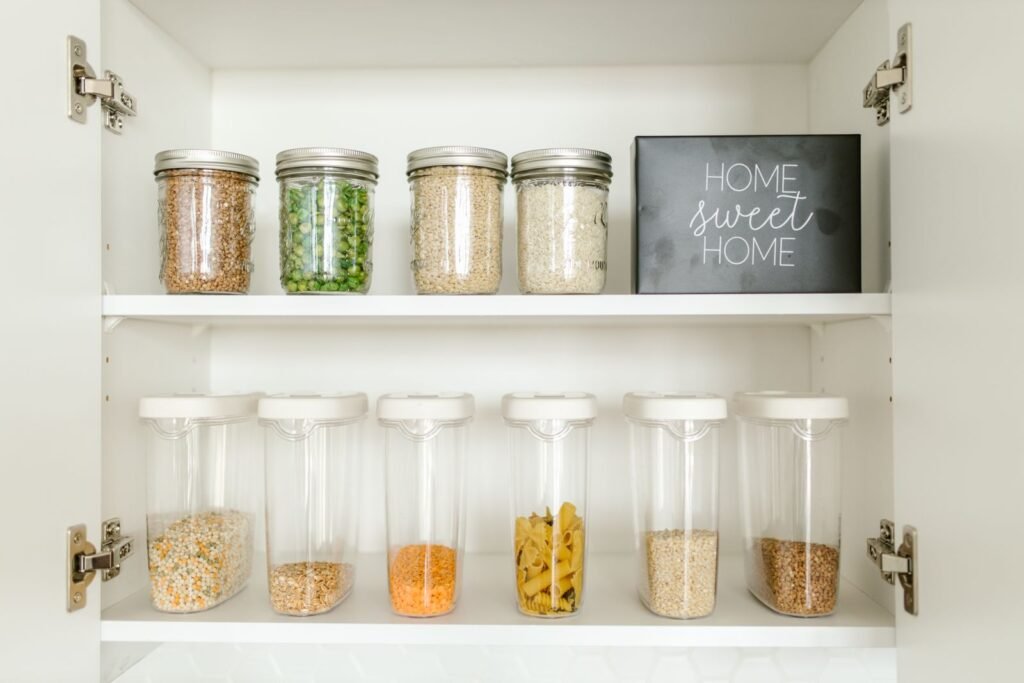
- Make rows of the same product. Rice with rice, sauce with sauce, always with the earliest date in front and the latest in back. On deep shelves, a bin or basket you pull out like a drawer helps, because nothing gets forgotten in the back.
- Write the date on anything that goes into a container. When rice or flour leaves its original package, the date goes with it. A strip of masking tape with the date in marker does the job, no label maker and no neat handwriting required.
The step that keeps all of this working happens on grocery day: the new package goes behind the row, never in front (unless it has a tighter date, as I mentioned above, in the case of sale items). But with a child asking for attention and bags on the floor, nobody checks dates calmly. In that case, put the repeat items (the ones that already have a row in the cupboard) in a separate basket and move them to the right spot when you have five minutes, the same day. What you can’t do is let the new package go straight to the front “just this once,” because that’s how the row falls apart.
Where the pantry is also matters. The FDA recommends not storing non-perishable foods near household cleaning products and chemicals. So the cabinet under the sink, where the cleaners usually live, is not the place for your food stock.
Fridge and freezer: where this rule matters most
In the pantry, dates are counted in months. In the fridge, they’re counted in days, and that’s where the yogurt forgotten behind the butter tub turns up with last week’s date. The logic is the same, only the speed changes.
The FDA guidance helps set this up. It says to keep the refrigerator at or below 40 °F (4 °C) and the freezer at 0 °F (-18 °C), to check both with an appliance thermometer, and not to crowd the fridge so tightly that air can’t circulate. It also recommends storing leftovers in covered containers, checking them daily, and using ready-to-eat foods like deli meats as soon as possible.
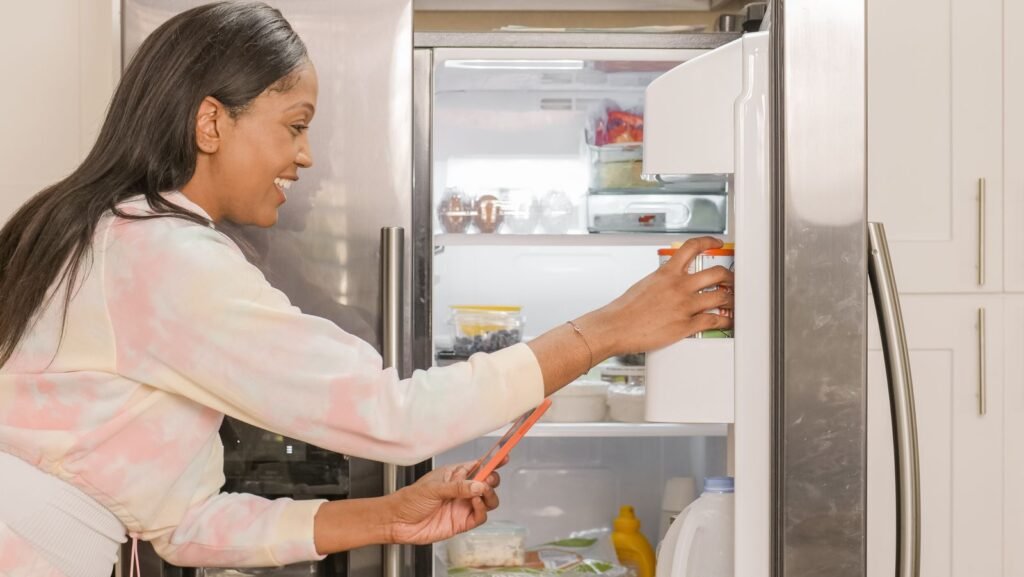
To make it easy, pick a fixed spot at eye level for what needs to go first: leftovers, opened deli meat, the yogurt that expires soon. It can be a tray or a rectangular container that becomes the “start here” spot in the fridge, and anyone who opens the door for a snack knows where to look.
In the freezer, the date you write on the lid or the bag does the job of the label date, and the oldest portions go on top or in front. If you freeze rice for the week, for example, the guide to freezing cooked rice shows how to portion and reheat it. For leafy greens, which spoil first, it’s also worth checking how to store vegetables in the fridge.
What to do with food that’s about to expire
Organizing the rows solves half the problem. The other half is actually using what’s in front, otherwise the row just shows more clearly what’s about to expire. Once a week, ideally before you write your grocery list, take a look at the front row of the pantry and at the “start here” spot in the fridge.
With whatever is close to its date, plan two meals for the week. The tomato paste from the beginning becomes pasta sauce, the corn and peas go into a colorful rice, and the can of tuna turns into a sandwich filling. If you’re out of ideas, these easy recipes for busy days use plenty of pantry staples. And whatever you already have plenty of stays off the list this time.
Two situations need special attention. The first is food past its date. In the U.S., the FDA explains that a “use by” date is the manufacturer’s recommendation for best quality and not a food safety date, so many products stay safe after it. The exception is infant formula and some baby foods, which must be used by the date on the package, and if you’re not sure or the food looks questionable, the FDA says to throw it out. The second is damaged packaging.
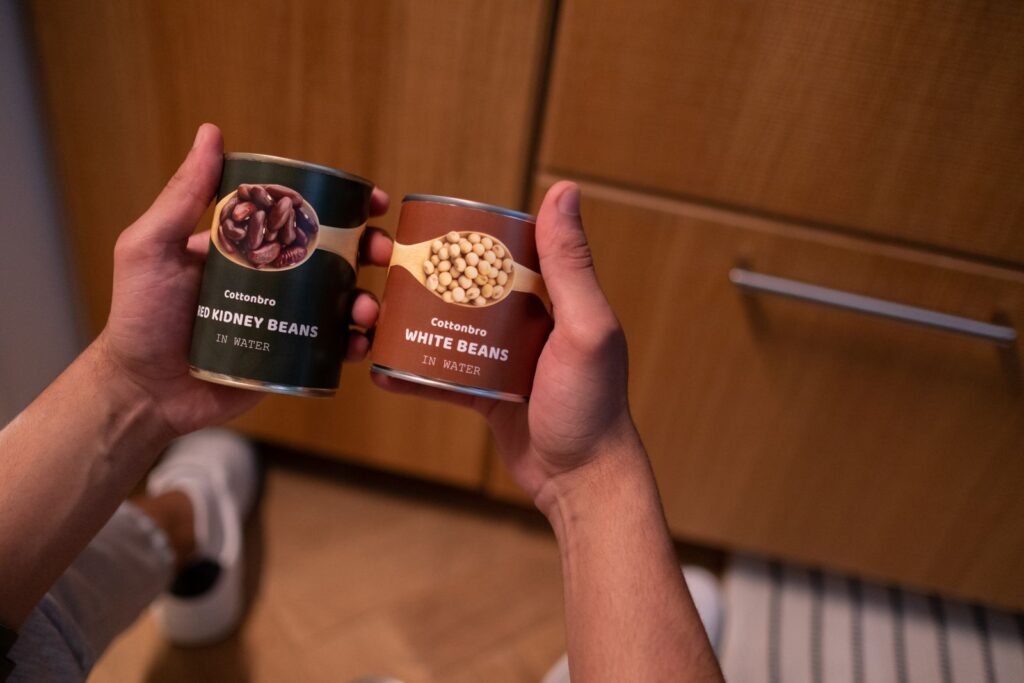
The FDA lists the signs of a damaged can: swelling, leaking, punctures, holes, fractures, extensive deep rust, or dents bad enough to keep it from stacking or opening normally with a can opener. If a can swells in your pantry, it goes in the trash, not in the pot.
One time my husband bought a pack of shelf-stable milk cartons, with the expiration date still far off. However, one of the cartons had a small scrape on the bottom. It didn’t look tampered with. Even so, when we opened it, the milk was completely sour. It gave us a scare: we thought the others were spoiled too, but, thank God, it was only that one. That’s why it pays to check packaging carefully, because a small scrape was enough to let microorganisms in.
If you have kids at home, the snack shelf follows the same rule, and that’s usually where it gets stuck, because kids always want the new package. Agree that one open package gets finished before another one is opened. When they ask for the sealed bag of cookies, show them the open one and say it’s next, and the new one only comes out when that one is finished. The first week there will be complaints (and maybe a little drama), but if you stick to the rule, it becomes a habit.
Frequently asked questions
What if two packages have the same date?
Then use the tiebreaker: first the one that’s already open, then the one that’s been in the house the longest.
Do I need a spreadsheet to track expiration dates at home?
No. For most households, the rows in the cupboard and the date written on containers are enough. A spreadsheet helps people who keep a large stock or do a huge monthly stock-up (like a family of 10).
Does this apply to emergency food supplies?
Even more so, because that stock sits untouched for months. The ideal is to keep using and replacing it so it doesn’t all expire at once. This list of non-perishable foods helps you choose what to keep.
Start with the front shelf
Today, pick a single shelf, the one you use most, and line it up by date. On your next grocery run, put the new items in back. After that, your FIFO pantry, upgraded to first expired, first out, pretty much runs itself.
This content is for informational purposes only and does not replace professional advice.